A deck gets as much use as the family room when the weather is good, and sealing it is what keeps rain, snowmelt and sun from wearing it out. Most sealing jobs that fail in Chicago fail for one of five reasons: the weather window was wrong, the wood was not clean, the coat went on too thick, the deck was used before the finish cured, or the finish was the wrong product for the wood. These five tips cover each one, with the drying times that actually apply in our climate.
Key Takeaways
- Sealing needs highs between 50°F and 90°F, nights above 50°F, and no rain for a day before and one to two days after.
- Clean and brighten the wood first. Sanding is for rough spots and old film, not the whole deck.
- Apply thin. A penetrating sealer that puddles on the surface turns sticky and peels.
- Chicago dry times: 48 dry hours after washing before you seal, 24 to 48 hours before foot traffic, and about 72 hours before furniture goes back.
- Most decks need a pigmented stain and sealer in one, not a clear sealer, because pigment is what blocks the sun.
1. Check the Weather, Then Check It Again
The forecast decides more than the product does. A sealer needs the wood dry when it goes on and the surface dry while it cures, so look for a window with no rain for 24 hours before and 24 to 48 hours after, daytime highs between 50°F and 90°F, and overnight lows that stay above 50°F for the first two nights. Cool nights slow the cure; water-based products can fail to form a film below 50°F.
Avoid sealing in direct afternoon sun. A hot board flash-dries the finish before it penetrates and leaves lap marks. In Chicago the most reliable windows are late August through September, with late spring and early summer workable around the rain. Our guide to the best time of year to stain a deck in Chicago goes month by month.
2. Prep the Wood Properly
Sealer only works on clean, open wood. Move the furniture and planters off, sweep, and clean the gaps between the boards where debris holds water. Then clean the surface with a deck cleaner, an oxygen bleach product for dirt and mildew, and follow it with a wood brightener to neutralize the cleaner and open the grain. If an old finish is peeling, it has to be stripped first; new sealer over a failing finish peels with it.
Sanding is for problem spots, not the whole deck: raised grain, splinters, rough handrails and any remaining film. Use 60 to 80 grit, sand with the grain, and blow or vacuum off the dust. Wear a mask and eye protection. While you are down there, set popped nails or replace them with screws, and replace any board that feels soft. A heavily soiled or mildewed deck may need a proper pressure washing at low pressure before the cleaner, and we cover the settings in deck pressure washing mistakes to avoid.
Cover nearby plants and siding with a tarp or plastic, and stir the sealer rather than shaking it, which puts bubbles in the finish. The full sequence is in our deck preparation guide.
3. Apply It Thin

Can you seal a deck yourself? Yes, and the technique is simple: work two or three boards at a time along their full length, keep a wet edge, and put on a thin coat. A roller or sprayer lays the product down quickly; a brush behind it works the sealer into the wood and evens out the puddles. That back-brushing step is the one most first-timers skip, and it is the difference between a finish that soaks in and one that sits on top.
With penetrating oil products, one thin coat is right for most decks. Very dry, thirsty wood can take a second thin coat while the first is still wet, but a second coat on wood that is already saturated stays tacky for days and eventually peels. Whatever the product says about coats, wipe up anything that has not soaked in after 20 or 30 minutes. Use a small brush for the gaps, railings and corners.
4. Let It Dry: Chicago Times
Drying is where our climate changes the label directions. Humidity, dew and cool nights all stretch the times, and shaded or north-facing decks take longer than the sunny side.
| Stage | Typical Chicago timing | Notes |
|---|---|---|
| After washing, before sealing | 48 dry hours | Longer in spring and in shade. Confirm with the sprinkle test or a moisture meter reading in the low to mid teens. |
| Dry to the touch | 4 to 12 hours | Oil products take the longer end; water-based the shorter. |
| Light foot traffic | 24 to 48 hours | Socks or clean shoes only. No dragging anything. |
| Furniture, planters and grills back | About 72 hours | Put planters on feet so they do not trap water on the new finish. |
| Full cure | Up to a week or more | Cool nights and humidity extend it. Rain in the first 24 hours can spot or wash the finish. |
Keep leaves and debris off the deck while it dries, and rinse any overspray off the siding and plants. If a storm comes through in the first day, let the deck dry fully and check for spotting before deciding whether a section needs recoating.
5. Choose the Right Product, or the Right Help
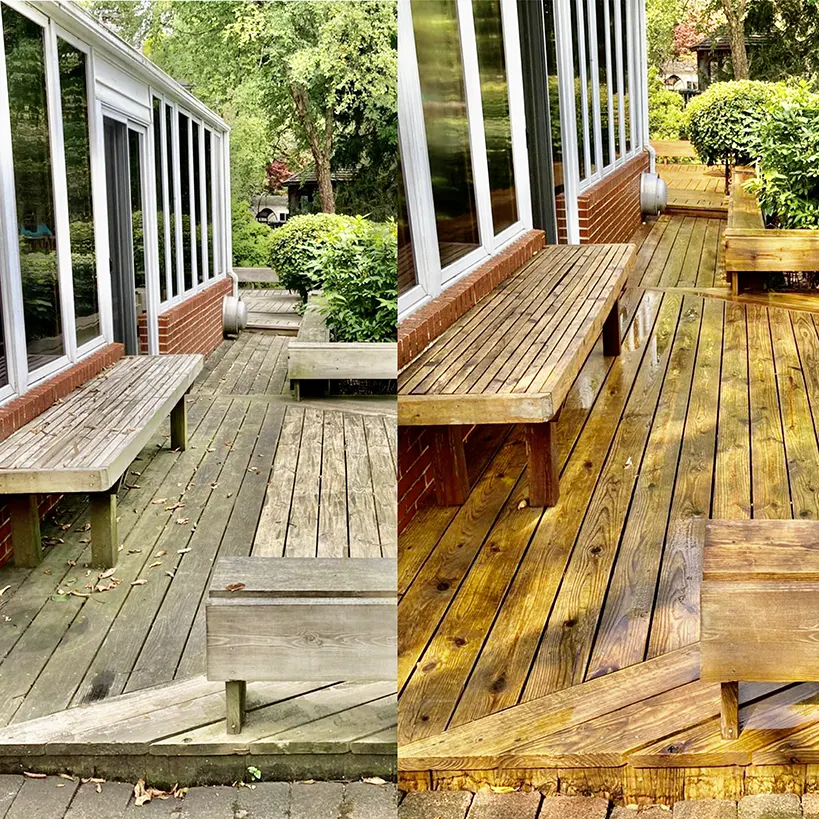
Not every product called a sealer is the right one for a wood deck. A clear water repellent keeps water out but has no pigment, so it does little against the sun and the wood grays within a season or two. For most Chicagoland decks we apply a penetrating stain and sealer in one, which beads water and blocks UV in a single coat, and we explain the specific products on our products page. Hardwoods such as ipe get a penetrating oil instead. Our post on staining vs. sealing walks through which one your deck needs.
How often should a deck be sealed? Watch the water. When rain stops beading and soaks straight in, the deck is due, which for a pigmented penetrating finish is usually every two to four years and for a clear sealer often every year. A big deck, a failing old finish or soft boards are the signs it is time to hand the job to a crew that does it every week.
Deck Sealing Keeps a Deck Looking Good for Years
Sealing is a lot of work done right, and a wasted weekend done wrong. If you would rather have it done once and backed by a warranty, Deck Doc has sealed and stained decks across Chicagoland since 2015, and our deck sealing service includes the cleaning, brightening and repairs the finish depends on. Contact us for a free estimate and we will tell you what your deck needs and the best week to do it.