A pressure washer is the fastest way to clean a wood deck and the fastest way to ruin one. At the wrong pressure, with the wrong tip, held too close, it strips the soft spring wood out of every board and leaves a furred, striped surface that no stain can hide. This guide covers the settings that work on softwood decking, the technique, when to skip pressure entirely, and what a pressure washer cannot fix no matter how hard you push it.
Key Takeaways
- Softwood decking wants 500 to 1,200 PSI, never more than about 1,500, with a 25 or 40 degree fan tip held 12 to 18 inches off the boards.
- Work with the grain, keep the wand moving, and overlap each pass so no stroke starts or stops mid-board.
- The cleaner does the work. Apply a deck cleaner first, then rinse; water alone spreads dirt and mildew around.
- Old, soft or cedar decks and any deck with a loose finish get a soft wash: cleaner, brush and a garden hose.
- Pressure cannot remove gray from inside the wood, tannin or iron stains, or a failing finish. Those need a brightener, a stripper or sanding.
- Let the deck dry at least 48 hours before any stain or sealer.
Why Pressure Washing Damages Decks
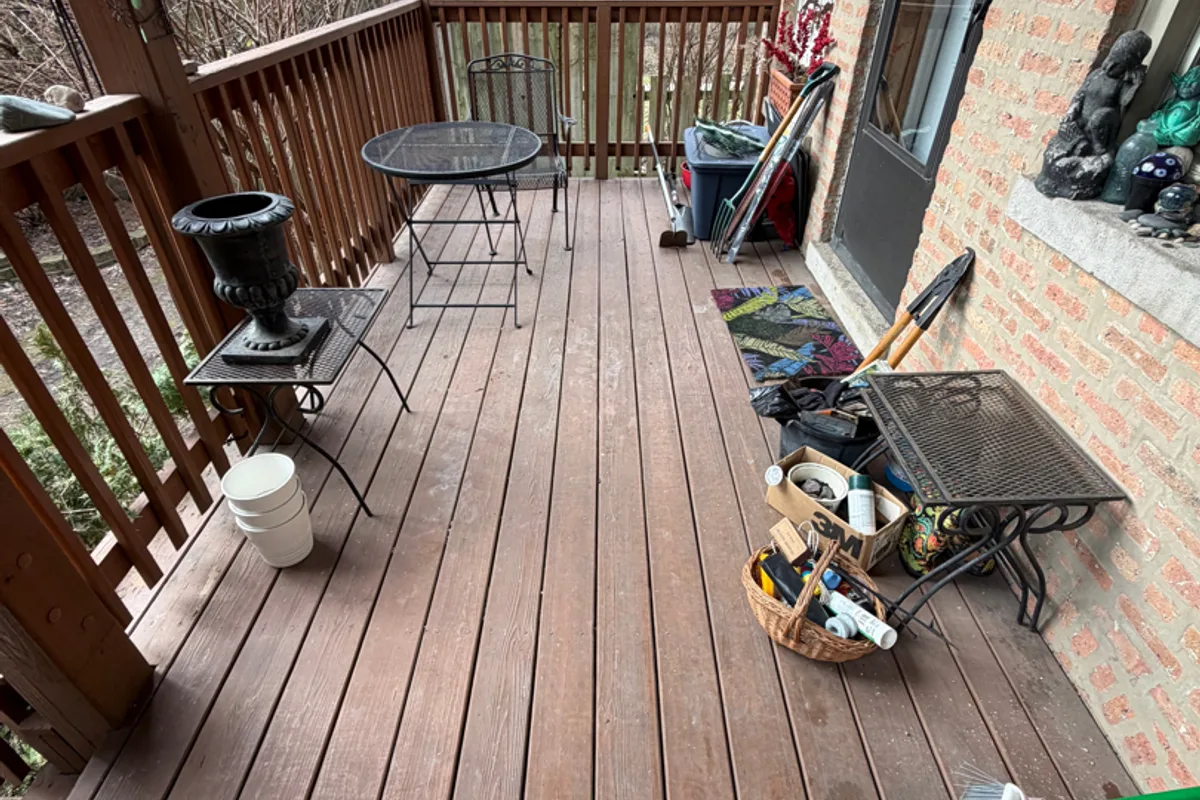
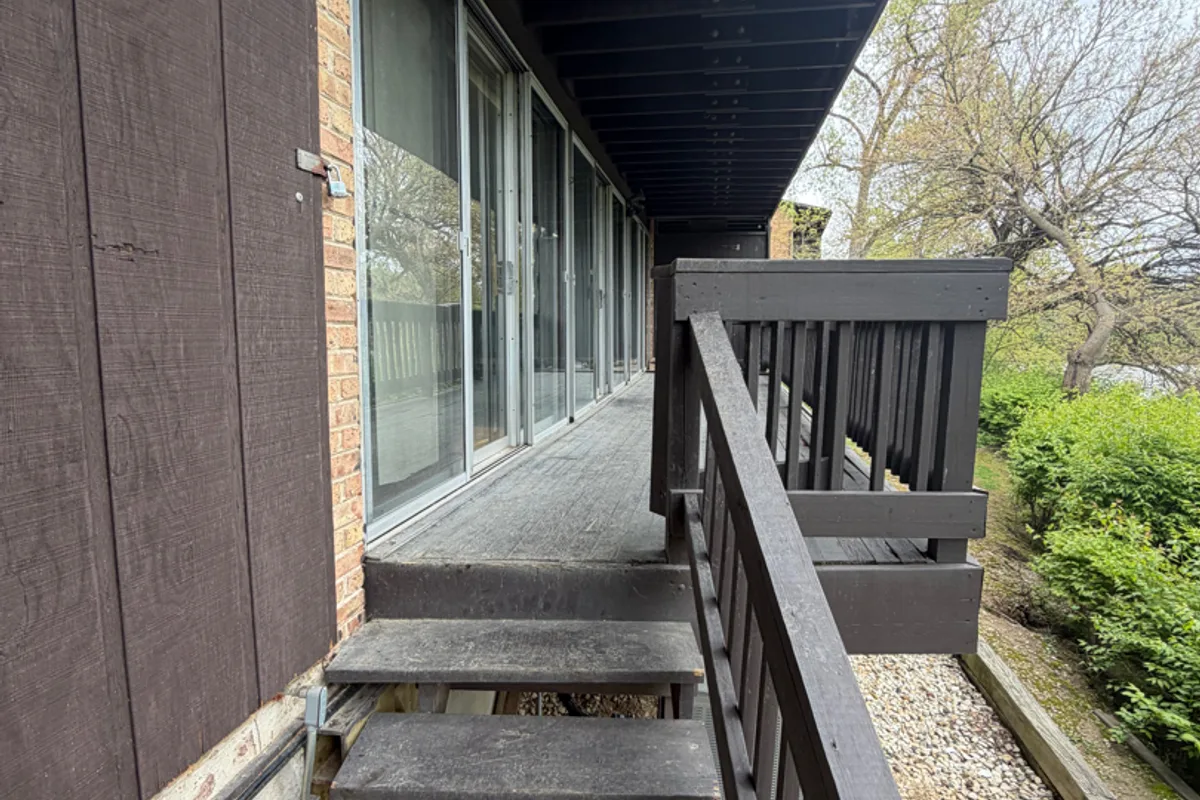
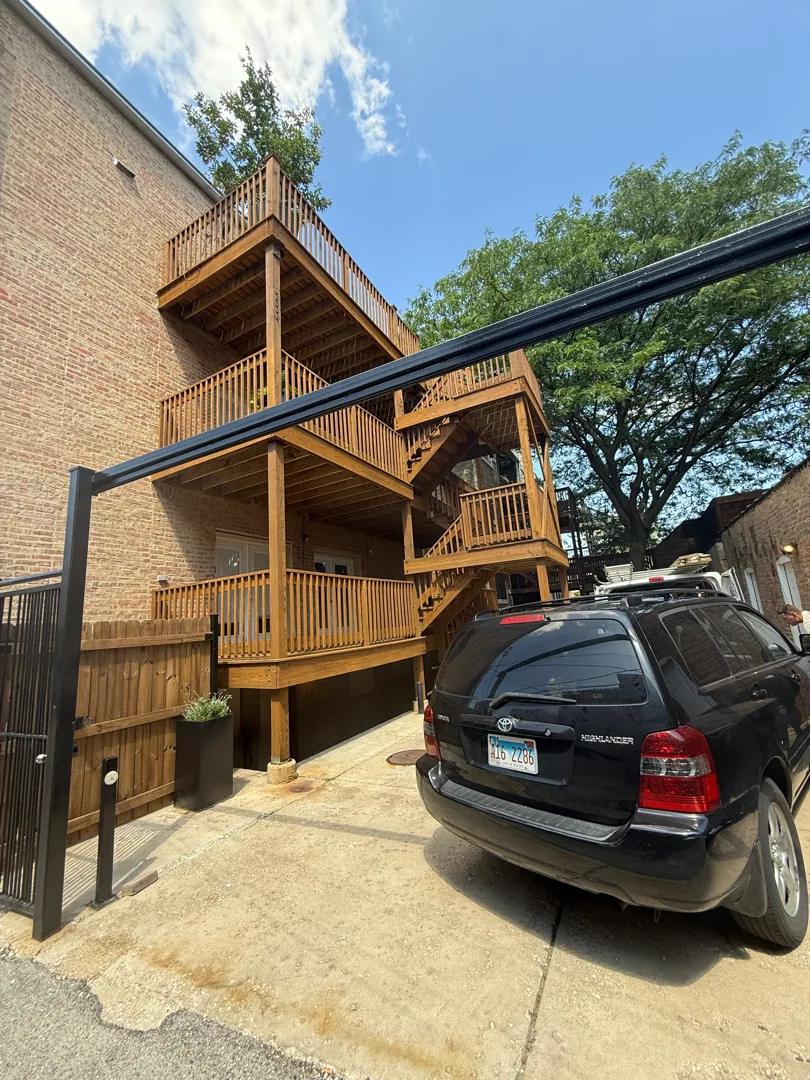
Softwood decking, which is what most Chicagoland decks are made of, has alternating bands of hard summer wood and soft spring wood in every board. A narrow, high-pressure stream removes the soft bands faster than the hard ones. The result is a raised, corduroy texture, splinters, and pale wand marks wherever the spray lingered, all of it locked in when the stain goes on. On an older deck the same stream lifts board ends, drives water deep into checks, and blasts out the fibers around fasteners.
The most common way to clean a wood deck is still pressure washing, and done right it is safe. Done the way most first-timers do it, at full pressure with the tip a few inches off the wood, it is the most expensive cleaning mistake a homeowner can make.
The Settings: PSI, Tip and Distance
| Setting | Softwood deck (pine, cedar, fir) | Notes |
|---|---|---|
| Pressure | 500 to 1,200 PSI | Never above about 1,500. Most consumer machines run 2,000 or more, so turn it down or increase the distance. |
| Tip | 25 or 40 degree fan (green or white) | Never the 0 degree red tip or the 15 degree yellow tip on wood. |
| Distance | 12 to 18 inches | Closer than a foot furs the wood. Start far and move in only if the dirt is not lifting. |
| Direction | With the grain, along the board | Across the grain leaves stripes. |
| Test spot | An out-of-the-way board | If the surface fuzzes or the color lightens in a stripe, back off. |
Hardwoods such as ipe tolerate more pressure, but they are also the decks with the most expensive finish underneath, so we treat them the same way and rely on the cleaner.
Technique: Feathered Strokes, With the Grain
Hold the wand at a slight angle, sweep along the length of the board, and keep it moving. Each pass overlaps the last one by a few inches so the edges blend, and each stroke runs the full length of a board or ends by lifting the wand away rather than stopping on the wood. Starting or stopping mid-board leaves a dark line where the spray sat for a second longer.
Work from the house outward so dirty water runs off the deck, and do the railings and balusters before the floor. Rinse the siding and any plants as you go; deck cleaner left to dry on either leaves marks.
Use a Cleaner, Then Rinse
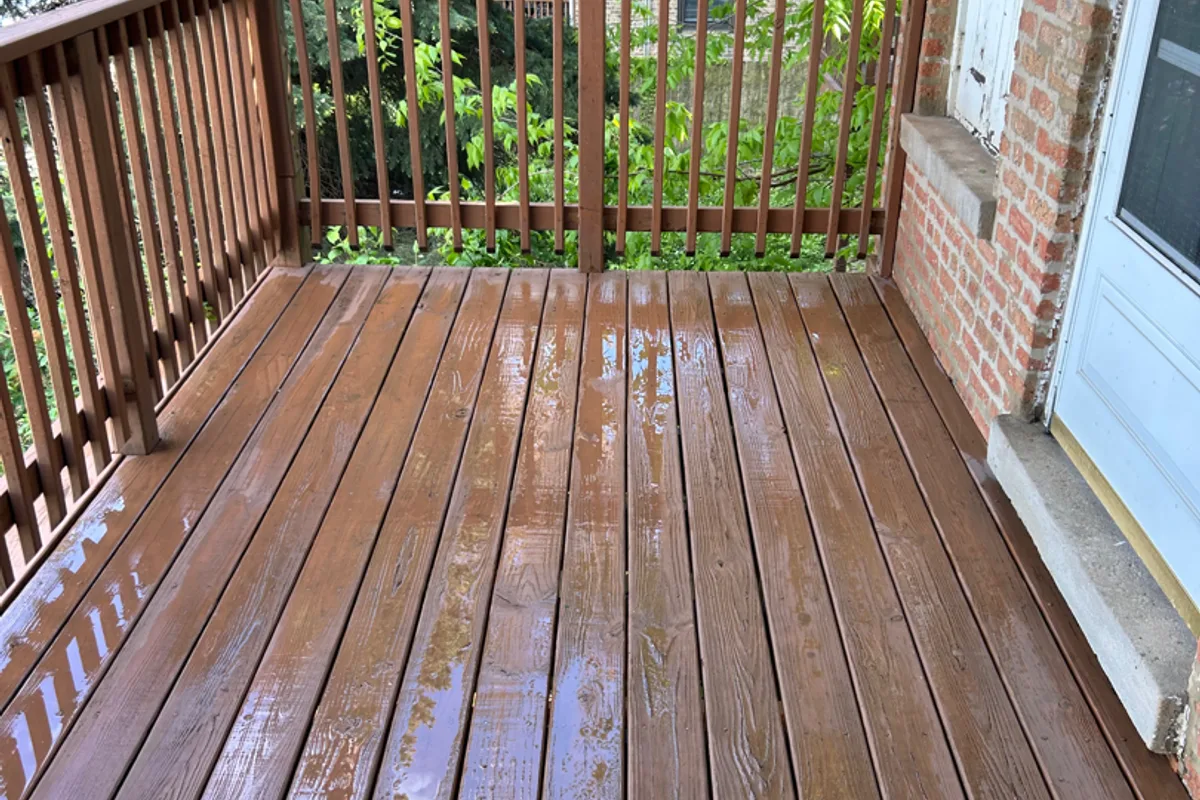
Water alone does not clean a deck. It moves the dirt and the mildew spores around and grinds them into the grain. The pressure washer's real job is rinsing off a cleaner that has already done the work.
Wet the deck, apply a deck cleaner with a pump sprayer or a roller, and keep it wet for the time on the label, usually 10 to 15 minutes. An oxygen bleach cleaner, sodium percarbonate, lifts dirt and mildew without bleaching the wood the way chlorine does. Scrub the worst areas with a stiff synthetic brush along the grain, then rinse with the washer at the settings above. Follow with a wood brightener, an oxalic or citric acid product, which neutralizes the cleaner, lightens the wood and opens the grain for stain. Our deck preparation guide puts this in sequence with stripping and sanding.
When to Soft-Wash Instead
Some decks should not see a pressure washer at all:
- Old or weathered wood. Boards that have already lost their surface, are checking heavily or feel soft at the ends. Pressure takes what is left.
- Cedar and redwood. Softer than pine, and they fur at pressures pine tolerates.
- A finish that is peeling. The washer will lift some of it and leave the rest, which looks worse than either. Peeling finish needs a stripper.
- Loose boards, rot or rusted fasteners. Fix them first. Water forced into a soft board makes the rot worse.
A soft wash is the same cleaner and brush, rinsed with a garden hose or the washer at its lowest setting from two feet away. It takes longer and it is what we do on most decks that are more than a few years old.
What Pressure Cannot Fix
Turning the pressure up is the usual response when something does not come off, and it is wrong every time.
- Gray wood. The gray is dead fiber. A cleaner and brightener lift it; pressure just removes more wood.
- Black stains. Tannin bleed and iron staining around fasteners sit inside the wood fiber, not on top of it. They need an oxalic acid brightener. Our guide to black stains on a deck covers which product lifts each kind.
- An old finish. Semi-transparent stain that is still beading water in places will not wash off. It needs a stripper before a new coat, or the new coat goes on blotchy.
- Furring and wand marks. Once the surface is damaged, the only fix is sanding. That is a full day on a large deck.
Then Let It Dry
Everything that goes on after washing depends on dry wood. A washed deck needs at least 48 hours of dry weather before stain or sealer, longer in spring, in shade, and after a soft wash that soaked the boards. Check rather than guess: sprinkle water on a board, and if it beads, wait; a moisture meter reading in the low to mid teens confirms it. Stain over wet wood traps moisture, dries slowly and peels within the season.
The Mistakes, in One List
- Using the narrow red or yellow tip, or any tip at full pressure, on wood.
- Holding the wand closer than a foot from the boards.
- Spraying across the grain, or stopping the wand on the wood.
- Washing with water only and skipping the cleaner and brightener.
- Pressure washing a peeling finish instead of stripping it.
- Washing a deck with loose boards, rot or rusted hardware before repairing them.
- Staining the next day. Give it 48 dry hours.
About Deck Doc
Deck Doc has cleaned, sealed, stained and repaired decks across Chicagoland since 2015, led by an owner with more than 20 years of finishing experience. Our deck cleaning and repair service uses the settings above, and the brush more often than the washer. Call (847) 979-9299 or request a free, no-obligation estimate.