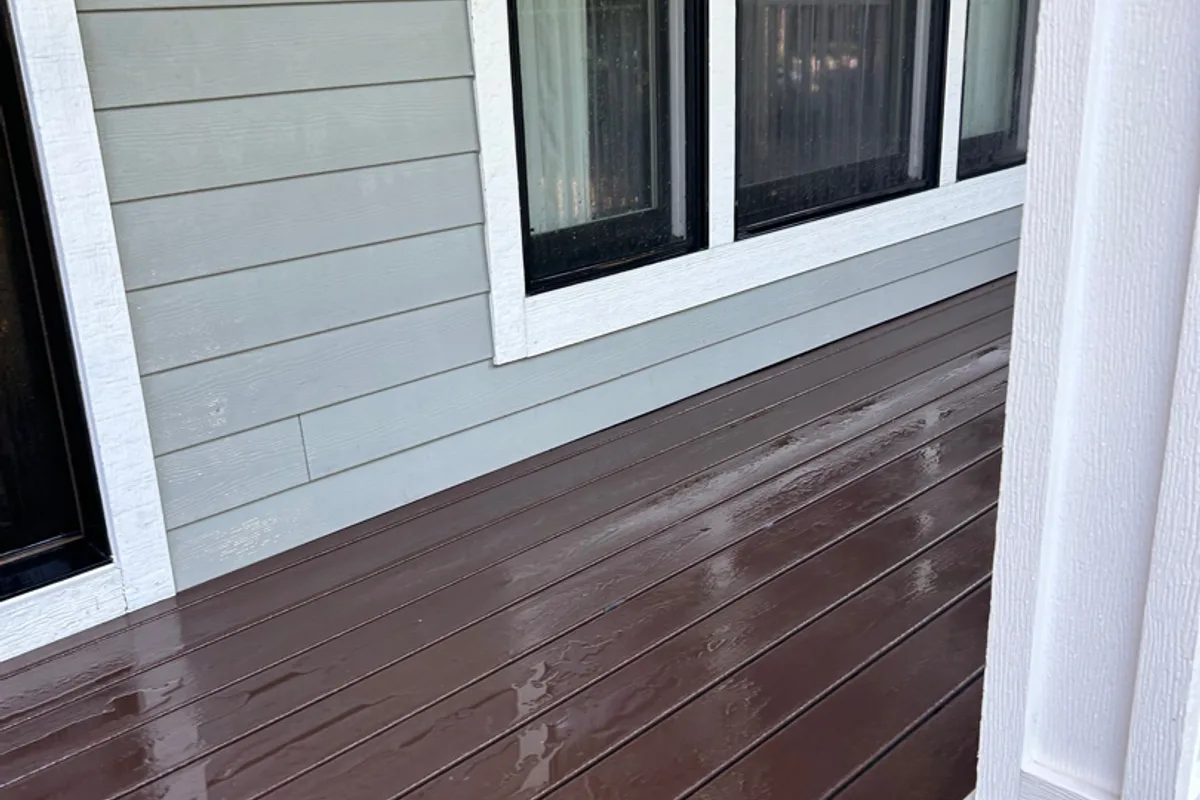
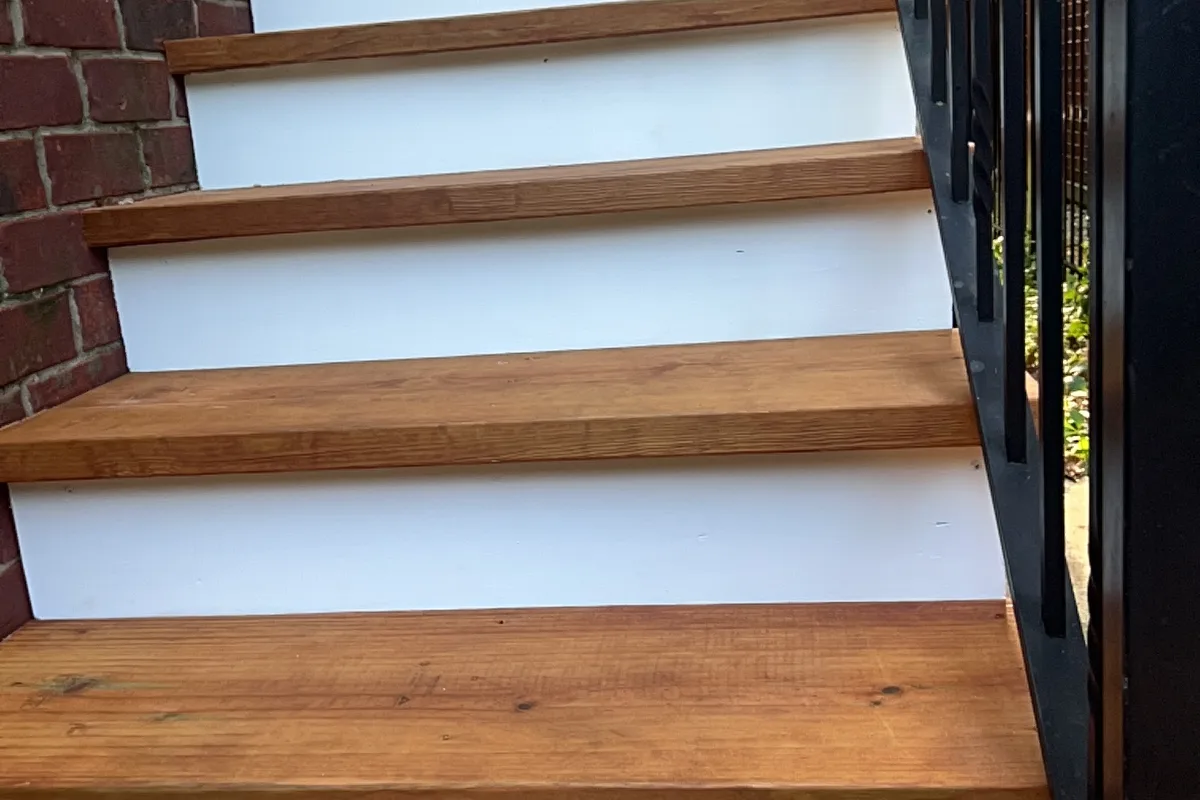
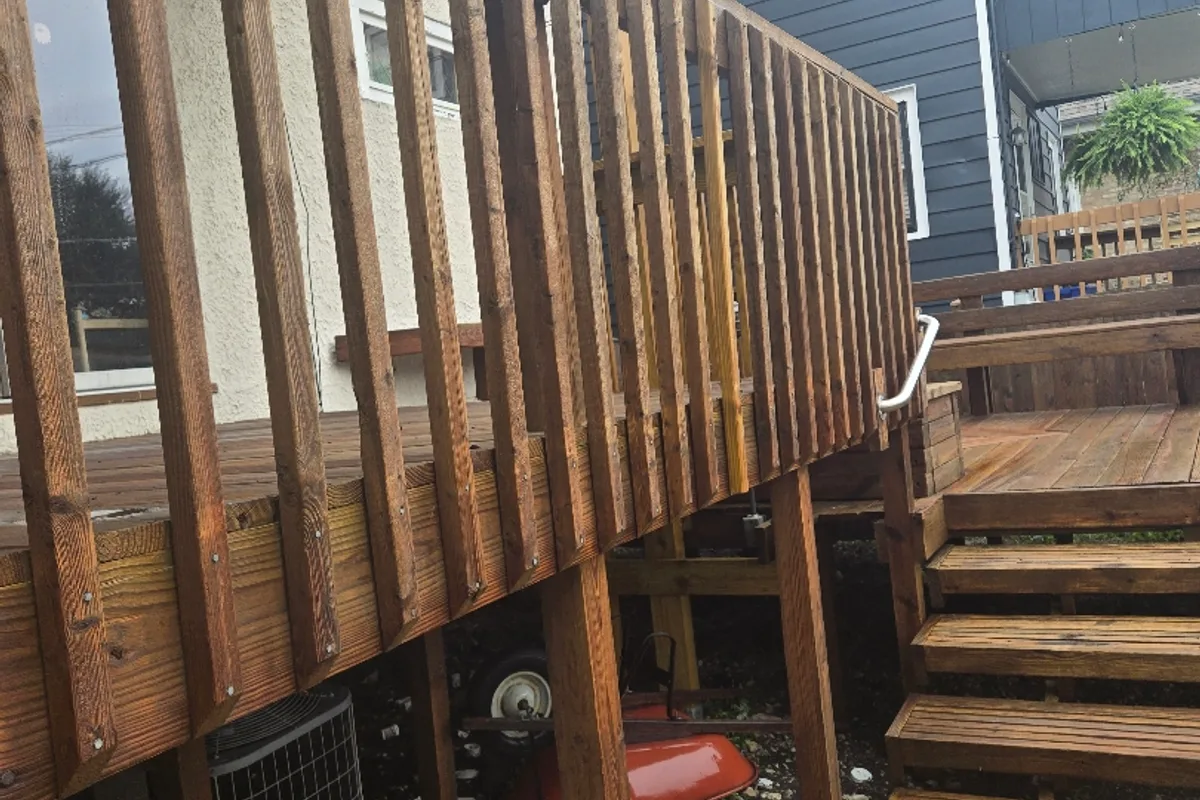
Every Chicago deck reaches the point where it looks worse for wear: gray boards, a wobble in the railing, a soft spot near the stairs. The question that follows is whether to repair it or tear it out and build new. The answer is rarely about how the deck looks. It is about what the framing underneath is doing, how many boards are past saving, and what you want from the space. This guide walks through the assessment, the rule of thumb we use on estimates, what actually drives the cost of each option, and the permit question that surprises most homeowners.
Key Takeaways
- Assess the structure first. A deck with sound framing can almost always be restored; a deck with rotted framing cannot be saved by new boards.
- Rule of thumb: sound frame and fewer than about a quarter of the boards needing replacement means repair and restore. Rotted framing or most of the boards gone means replace.
- Restoration costs a fraction of a rebuild when the frame is sound, and the result is a deck that looks new.
- Replacement wins when safety, code or the layout is the problem, not the finish.
- In Chicago and most suburbs, a rebuild or structural repair needs a permit and inspection. Board replacement in kind usually does not.
How to Assess the Condition of Your Deck
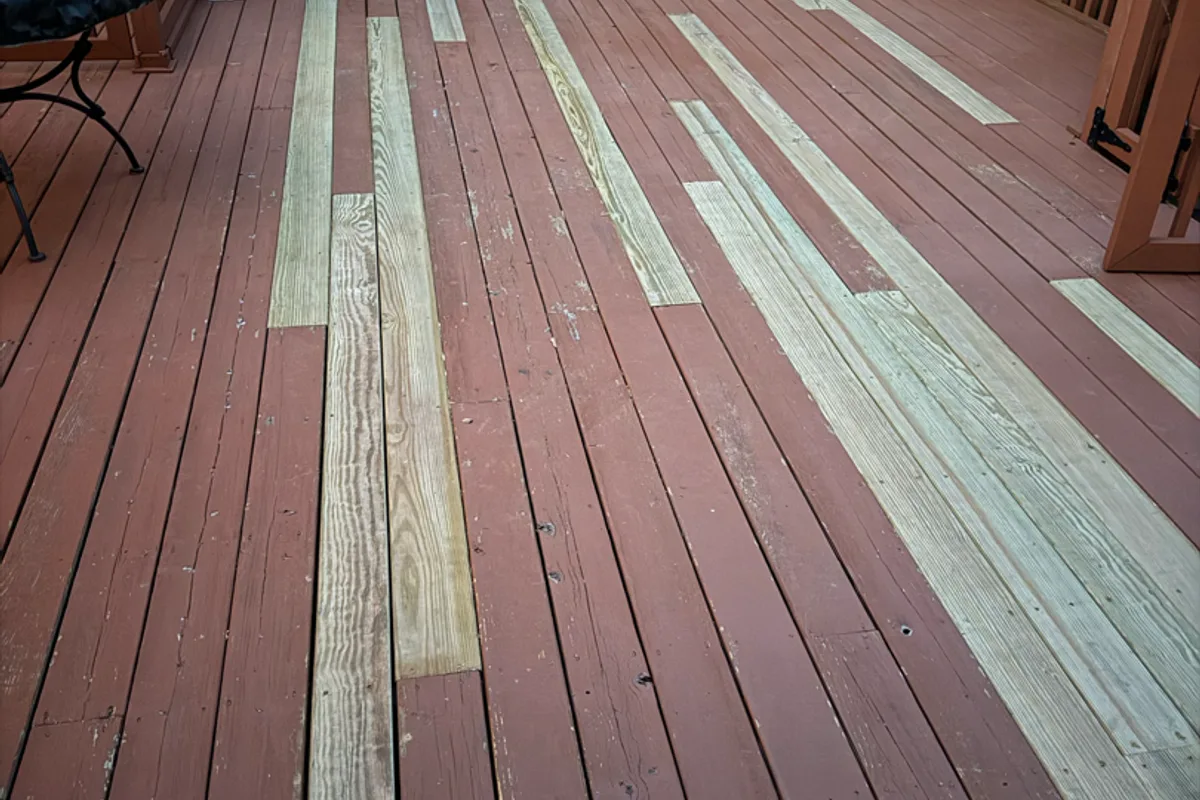
You need a flashlight, a flat screwdriver or awl, and half an hour. Walk the top first, then get underneath.
On top
- Boards: probe the ends and any dark or damp-looking board with the screwdriver. Soft wood is rot. Count the boards that are rotted, split through, or cupped enough to trip on.
- Railings: push on every section. Any movement means loose or rusted hardware, or a rotted post.
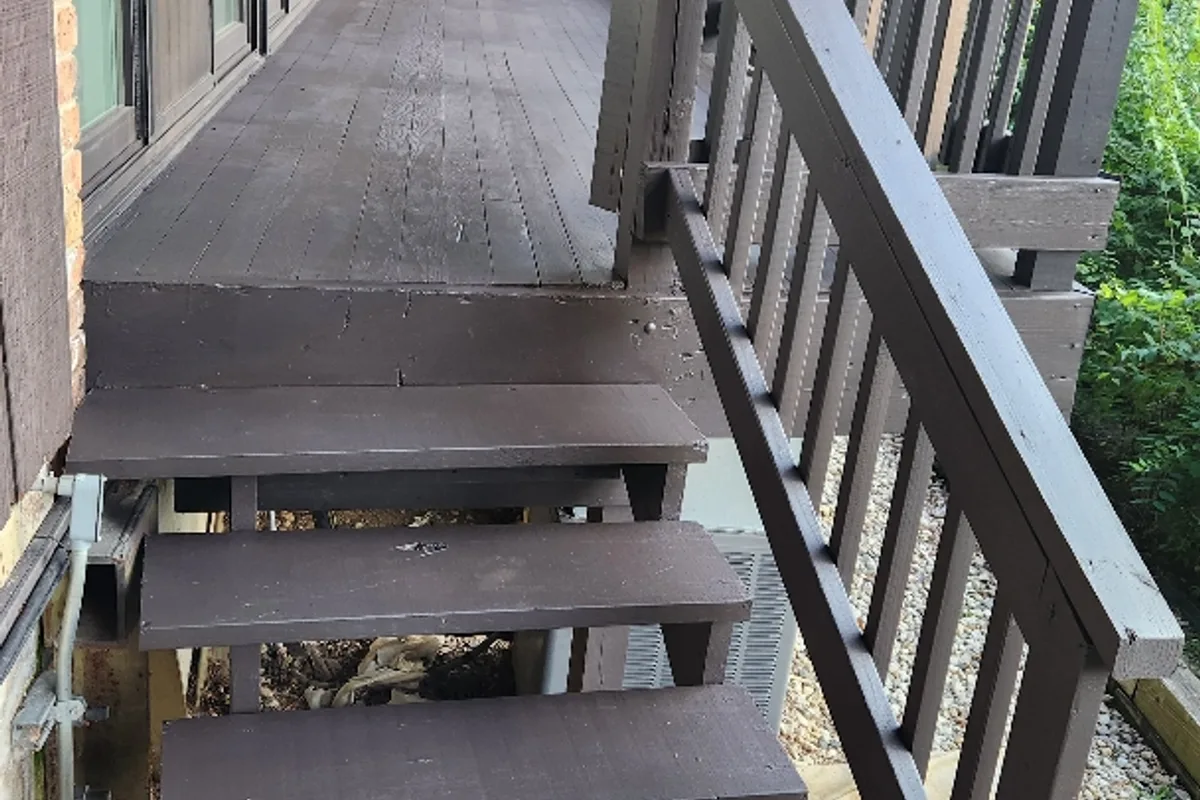
- Stairs: bounce on the treads and check the stringers where they meet the ground.
- The finish: sprinkle water. If it soaks in, the wood has been unprotected for a while, which is why you found the rest.
Underneath
- Ledger board and flashing: the board bolted to the house. Look for gaps, rust streaks, missing flashing and soft wood around the bolts.
- Joists and hangers: probe the top edges under the boards and the ends at the ledger. Check hangers for rust and backed-out nails.
- Beams and posts: probe where the beam sits on the posts and the posts at ground level. Posts in soil rather than on concrete are a finding on their own.
- Footings: cracked, sunken or heaved footings show up as a deck that is out of level.
Our post on deck dry rot covers the screwdriver test in detail, and five signs your deck needs repair lists the symptoms that should not wait.
The Rule of Thumb
Once you have the list, the decision usually makes itself:
- Sound framing, fewer than about a quarter of the boards bad: repair and restore. Replace the bad boards, refasten what is loose, then clean, brighten and stain the whole deck. This is most decks we see.
- Sound framing, half the boards bad: re-deck. New boards and railings on the existing frame, which is a middle option many homeowners do not know exists.
- Rotted ledger, beams or posts, or footings that have moved: replace. New boards on a failing frame is money spent on a deck that still has to come down.
- Undersized or improperly built framing: replace, even if the wood is sound. A deck that was never built to carry a crowd is a safety issue, not a cosmetic one.
Five Questions Before You Decide
1. Is it safe?
Any repair has to leave the deck safe to load with people. If the answer depends on the ledger, the posts or the stairs, safety decides the question before cost does.
2. How old is it, and what is it made of?
A pressure-treated deck built in the last fifteen years with a sound frame has decades left in it. Cedar and redwood need more upkeep but restore beautifully. Older decks built before modern hardware and flashing practices often have hidden framing problems that tip the decision toward replacement.
3. What do you want from the space?
If the layout works and the deck is the right size, restoration keeps what you like. If you want a bigger deck, a second level, different stairs or composite decking, you are in replacement territory anyway, and repairs are a delay.
4. What is your timeline?
Restoration is measured in days and can be scheduled inside a single weather window. A rebuild involves drawings, a permit, materials and inspections, which in the city can take weeks before the first board comes off. Hosting in a month means repair now, rebuild later.
5. How many more years do you need?
If repairs will give the deck another five or more good years, repair is the better value. If they buy one season before the same conversation, put the money toward the rebuild.
What Drives the Cost of Each Option
We do not publish price bands here because the range on either option is wide, and a number without an inspection behind it is a guess. What we can tell you is what moves the price.
Repair and restoration is priced by the extent of the damage and the size of the surface: the number of boards and structural members replaced, whether the old finish has to be stripped, the square footage to clean and stain, and access. The finish work is the same work whether five boards or fifty were replaced, which is why restoring a deck with a sound frame costs a fraction of building one.
Replacement is priced by size, height, material, railings and stairs, the permit and drawings, and demolition and disposal of the old deck. Composite boards raise the material cost and lower the maintenance; wood does the reverse. The number that surprises people is demolition and disposal, which is part of every rebuild and none of a restoration.
A free on-site estimate puts real numbers on both for your deck, and we will tell you plainly when a repair is the right answer.
Permits in Chicago and the Suburbs
In the City of Chicago, decks and porches are regulated by the Department of Buildings, and rebuilding a deck or replacing structural members such as the ledger, beams, posts or stair stringers generally requires a permit and inspection. Replacing deck boards in kind, refastening and refinishing usually do not. Most suburbs run a similar system with their own thresholds, so check with your municipality before structural work starts. On permitted rebuilds and structural repairs we provide the drawings and handle the inspections as part of the job.
Professional vs. DIY
Replacing a few boards, refastening loose ones and cleaning and staining the surface are within reach of a careful homeowner with a weekend and the right products. The jobs to hand off are the ones that involve the structure: ledger, beams, posts, footings and stairs. They need the deck temporarily supported, the right hardware, and in most towns a permit, and they are the repairs where a mistake is dangerous rather than ugly.
A professional crew also brings the part homeowners most often skip: the inspection of everything else while the deck is open. Finding the second rotted joist before the new boards go down is the difference between one repair and two.
When to Call a Professional
- The screwdriver sinks into anything structural: ledger, joist, beam, post or stringer.
- The deck moves, bounces, or has a gap opening at the house.
- Railings or stairs are loose and tightening the hardware does not fix them.
- More than a handful of boards need replacing, and you want the new ones to match.
- You are deciding between restoration and replacement and want the frame assessed before you spend on either.
Deck Doc has restored, repaired and rebuilt decks across Chicagoland since 2015. Our deck restoration and structural repair work is covered by the Deck Doc warranty, and when a rebuild is the right answer, our deck building team handles it from drawings to final inspection. Request a free on-site estimate and we will tell you which one your deck needs.