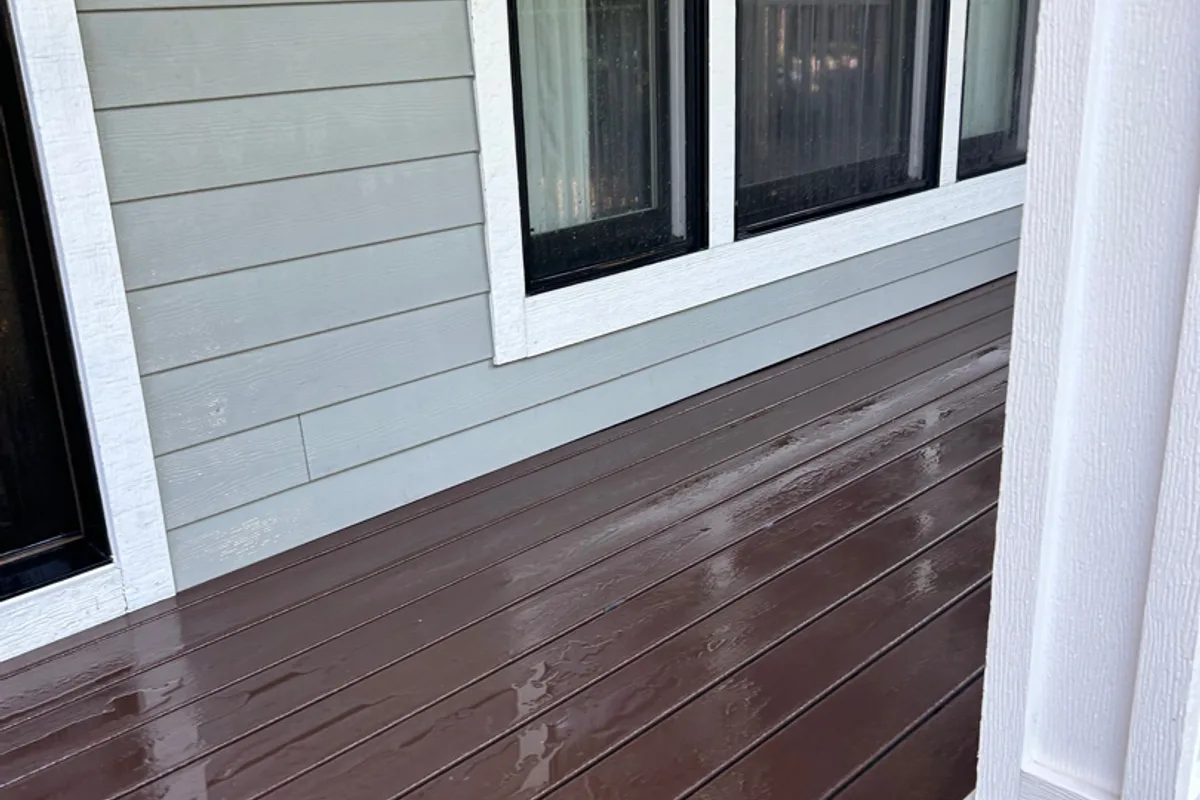
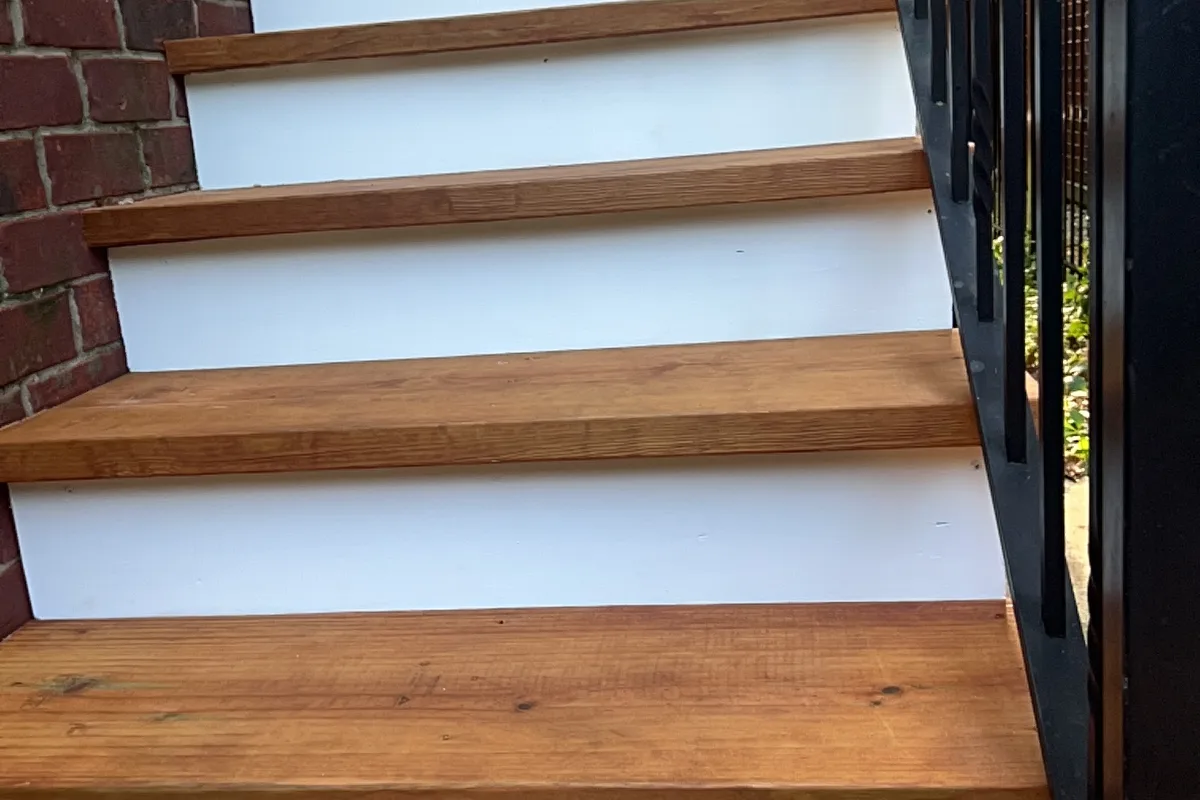
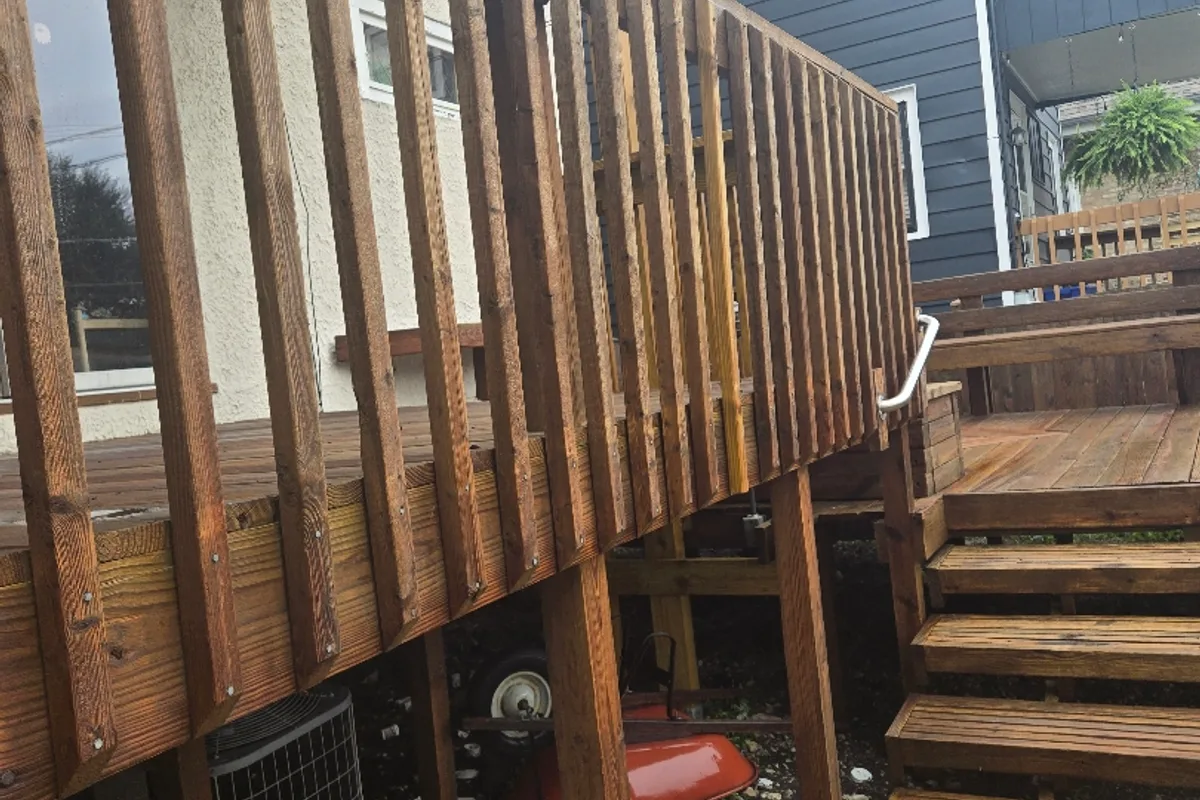
Every wood deck ages the same way: the color fades, the finish wears through, boards loosen, and somewhere a corner stays wet long enough to rot. The good news is that the seven problems below account for nearly every deck we are called to look at in Chicagoland, and each has a known fix. This guide shows what each one looks like on a real deck, why it happens here, what the repair is, and which ones are safe to handle yourself.
Key Takeaways
- Gray, black and peeling surfaces are finish problems. They are fixed with cleaning, brightening, stripping and a new penetrating stain.
- Soft wood is rot, and rot is structural until proven otherwise. Probe it with a screwdriver and get anything spongy replaced.
- Warped, cracked or gapping boards get replaced, not repaired, and the new boards get finished with the rest of the deck.
- Loose railings, bouncy stairs and movement at the house are the problems to call a professional about first.
- Water is the cause behind almost all of them. A finish that beads water, clear gaps between boards and good drainage prevent most of this list.
1. The Deck Has Turned Gray
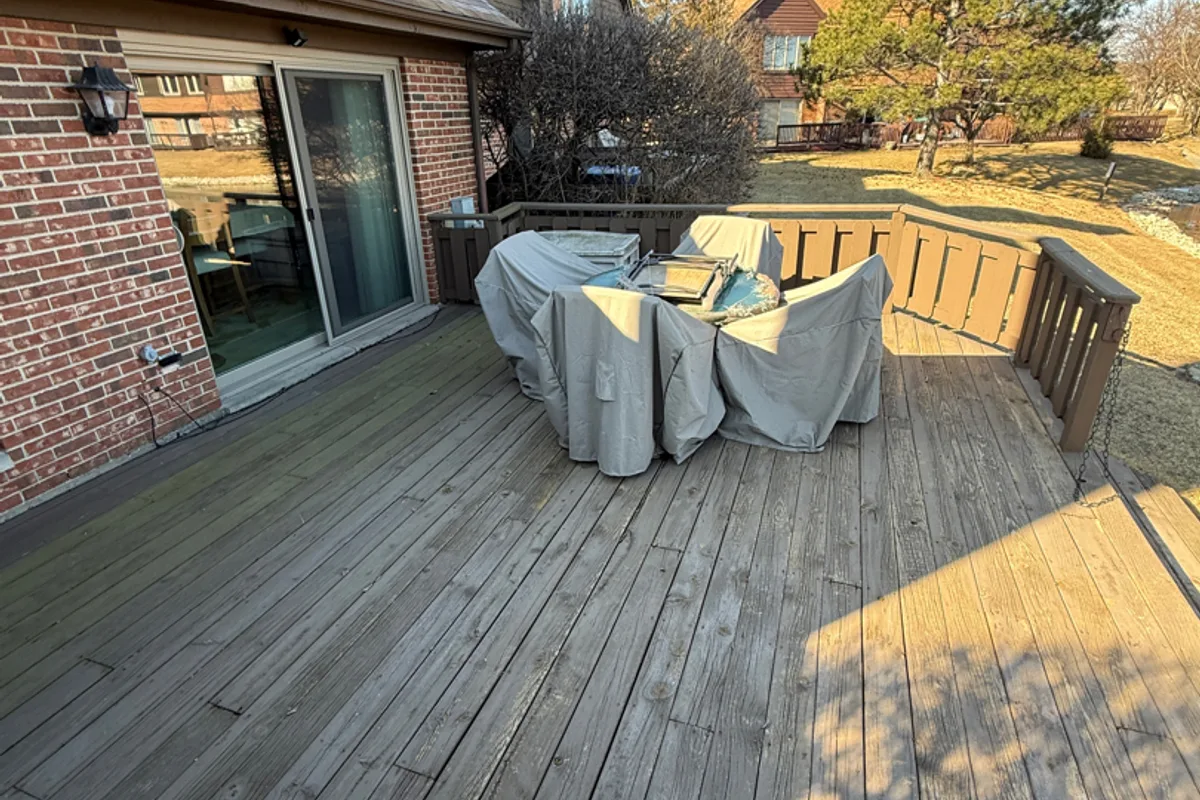
What it looks like: the boards have faded from brown or honey to silver-gray, with the color gone entirely from the sunniest sections.
Why it happens: ultraviolet light breaks down the surface fibers of unprotected wood. A clear sealer does not stop it, because only pigment blocks the sun, so a deck that was sealed but never stained grays just as fast as bare wood.
The fix: a deck cleaner lifts the dead gray fibers and the dirt, a wood brightener restores the color underneath, and a pigmented penetrating stain keeps it. Graying is cosmetic, not structural, and it is a reasonable weekend project on a sound deck. Our deck cleaning guide covers the products and the order.
2. Black Spots and Mildew
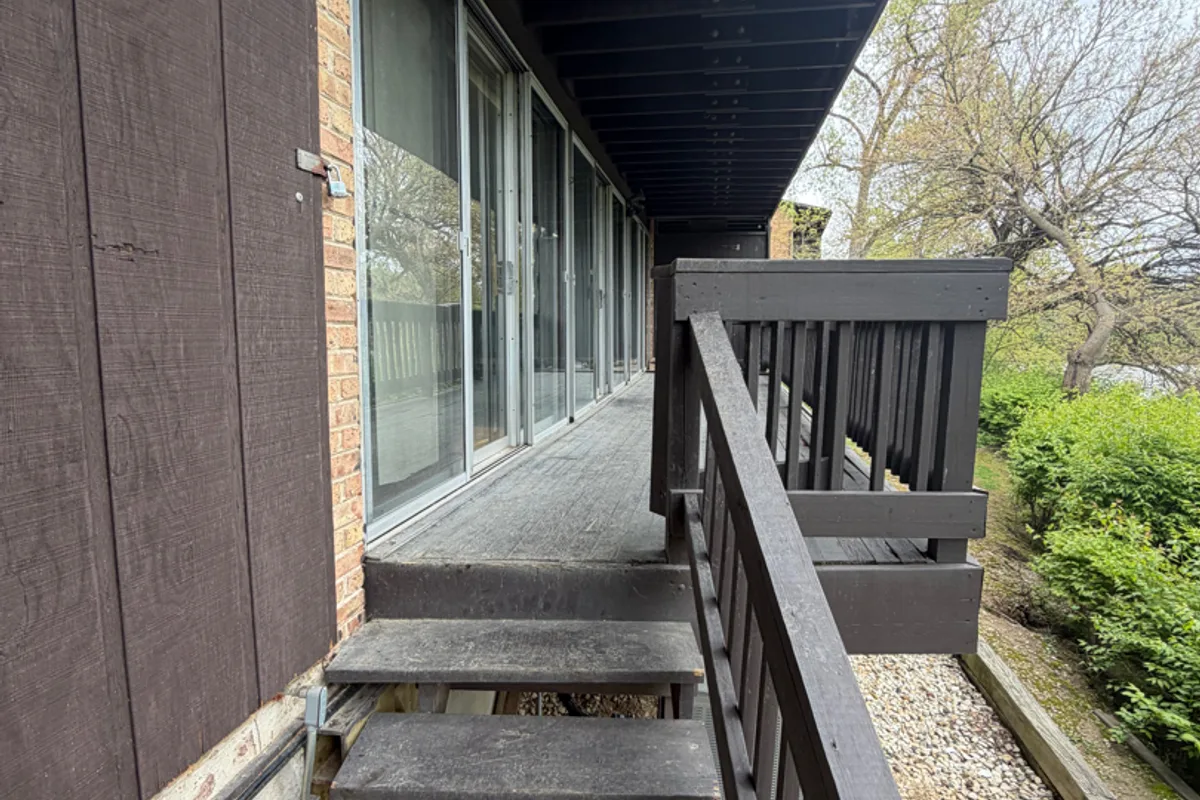
What it looks like: black or dark gray patches, often in the shade, under planters and furniture, and along the north side of the house. Sometimes it is a uniform darkening rather than spots.
Why it happens: black on a deck is one of four things: mildew, iron staining around fasteners, tannin bleed, or the start of decay. Each needs a different treatment, and scrubbing harder at the wrong one does nothing. Our post on why decks turn black has the two-minute tests that tell them apart.
The fix: an oxygen bleach cleaner and a stiff brush handle mildew; a brightener with oxalic acid lifts iron and tannin stains. If the black wood is also soft, it is rot, and you are in problem number four.
3. The Finish Is Peeling or Flaking
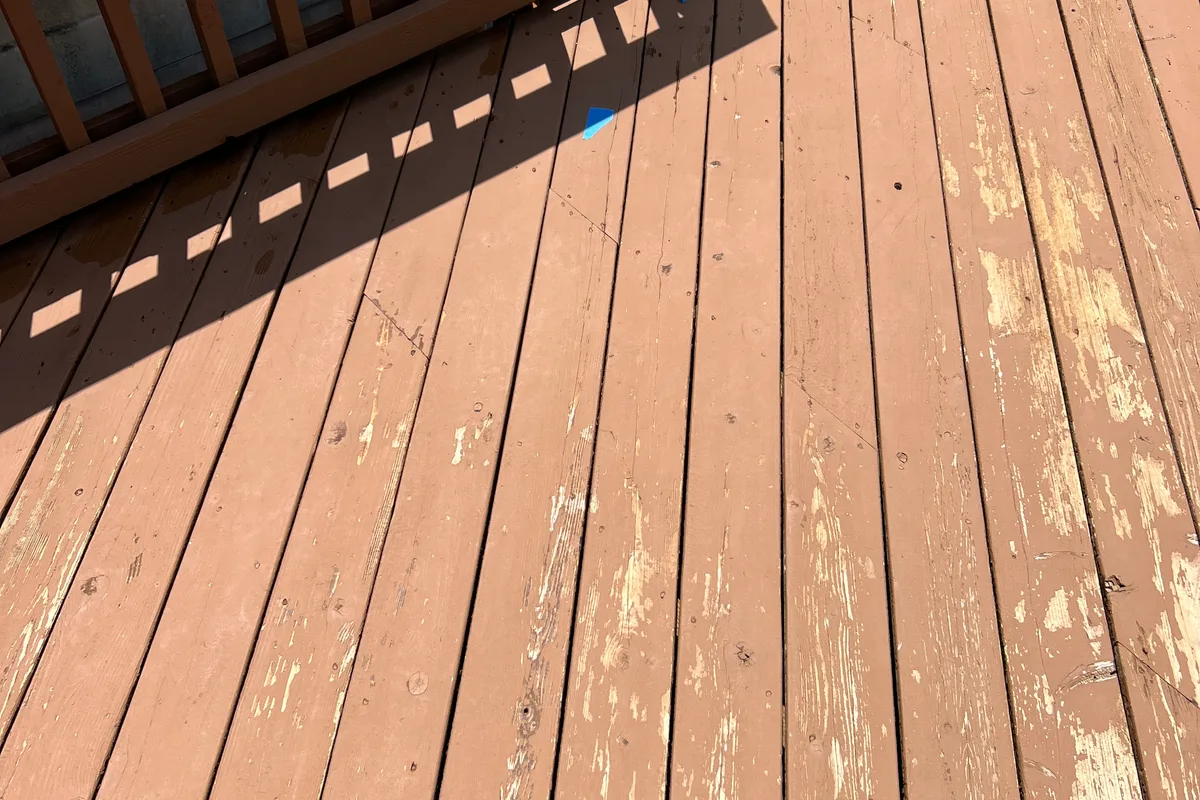
What it looks like: the finish lifts in flakes or sheets, usually in traffic lanes and on the sunniest boards first, with bare wood showing through.
Why it happens: film-forming finishes, meaning paint, most solid stains and any coating applied too thick, sit on top of the wood. Moisture gets underneath through checks and end grain, the board moves through a freeze-thaw winter, and the film lets go. Stain applied over a dirty or wet deck peels the same way.
The fix: strip it. There is no coating that sticks to a peeling one. A chemical stripper and, for stubborn film, sanding take the deck back to bare wood, then a brightener and a penetrating stain that wears instead of peeling. Our post on why decks peel goes through the causes and the stripping process.
4. Wood Rot
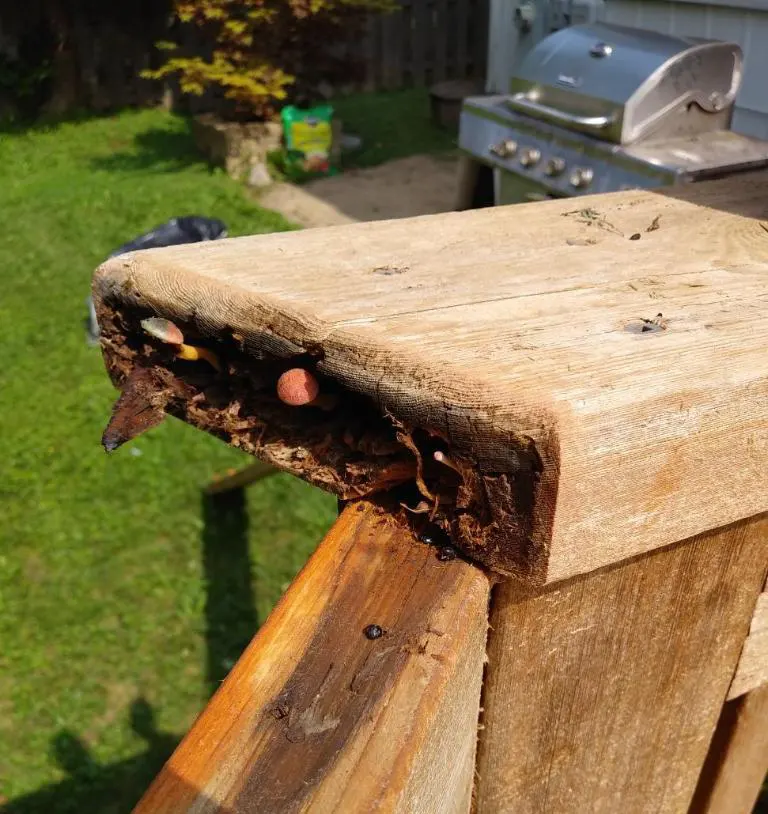
What it looks like: wood that feels soft or spongy underfoot, boards that are darker and damp long after rain, crumbling ends, or a finish that bubbles over a hidden wet spot.
Why it happens: fungi digest wood that stays wet. On a Chicago deck that means the places water sits: board ends, stair stringers, the base of posts, the ledger where the deck meets the house, and anything under a planter.
The fix: probe suspect wood with a screwdriver. If the tip sinks in easily, the wood is rotted and gets replaced. Rot in deck boards is a straightforward replacement; rot in a joist, beam, post or ledger is a structural repair, and it is the one problem on this list where we tell homeowners not to guess. Our post on deck dry rot covers the probe test and where to look, and our structural deck repair page covers the fix.
5. Warped, Cracked or Gapping Boards
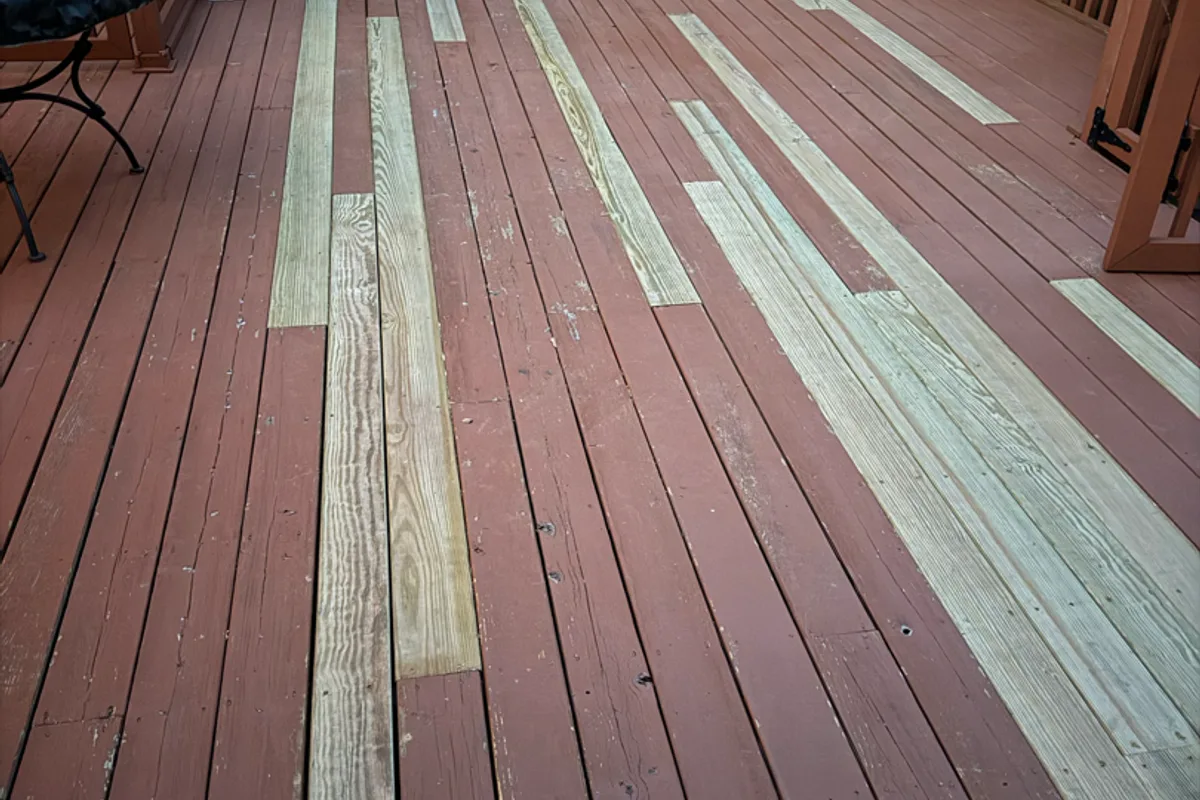
What it looks like: boards that cup, twist or lift at the ends, splits running with the grain, and gaps between boards that have opened well past the original spacing.
Why it happens: wood swells when wet and shrinks when dry, and Chicago gives it both every year. Boards installed wet shrink and gap; boards without a finish take on water and cup. Some checking is normal. Splits at the midpoint of a span, or a board that flexes, are not.
The fix: there is no repair for a warped board; it gets replaced, and the whole deck gets cleaned and finished afterward so the new wood matches. If more than a few boards need replacing, or the framing underneath is soft, the question becomes bigger. Our post on repairing vs. replacing an old deck walks through that decision.
6. Loose Railings, Bouncy Stairs and Movement
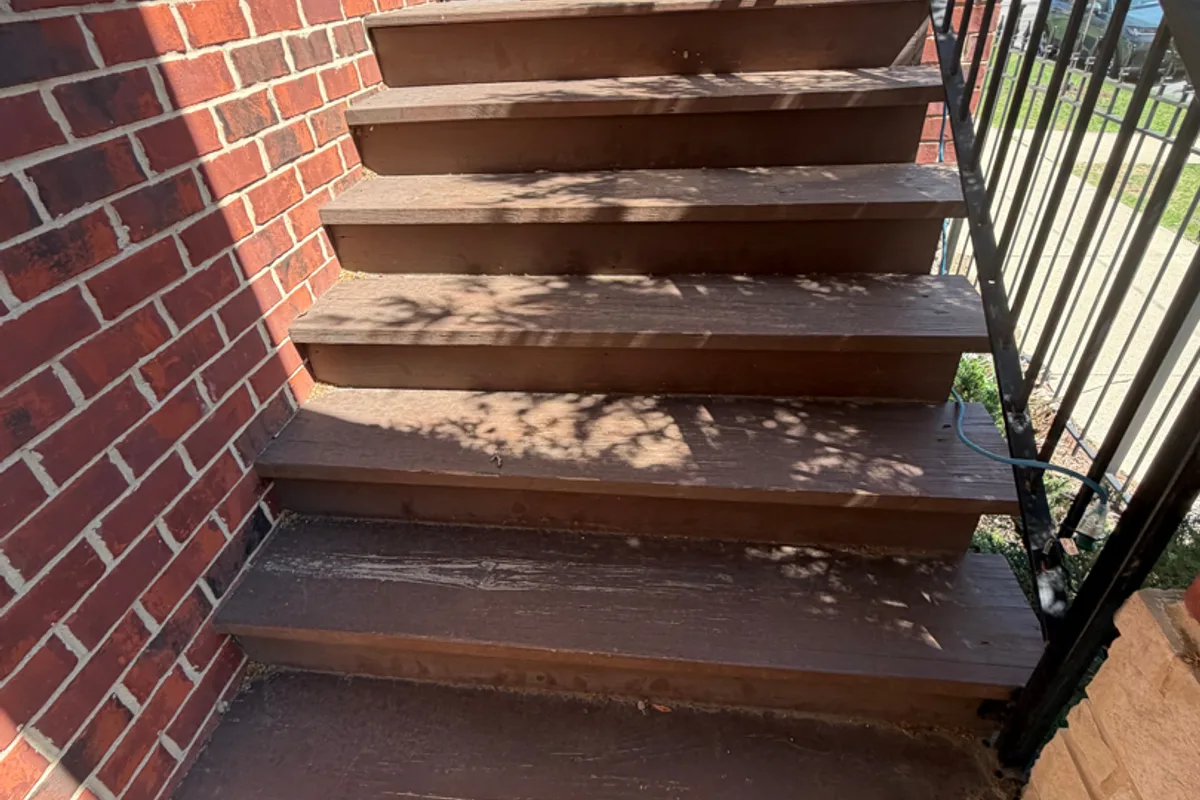
What it looks like: a railing that moves when pushed, stairs that bounce or shift, a deck that gives underfoot, or a gap opening where the deck meets the house.
Why it happens: fasteners loosen as the wood moves, hardware rusts, especially where rock salt was used, post bases rot, and ledger connections fail when water gets behind the flashing. Frost heave can move footings.
The fix: this is the category to call a professional about first, because these are the failures that hurt people. The inspection covers the ledger board and flashing, posts and footings, beams, joists and hangers, stair stringers, and every railing connection. Loose hardware is refastened or replaced; rotted structural members are replaced. Our five signs your deck needs repair post lists what to check yourself before calling.
7. The Deck Is Slippery
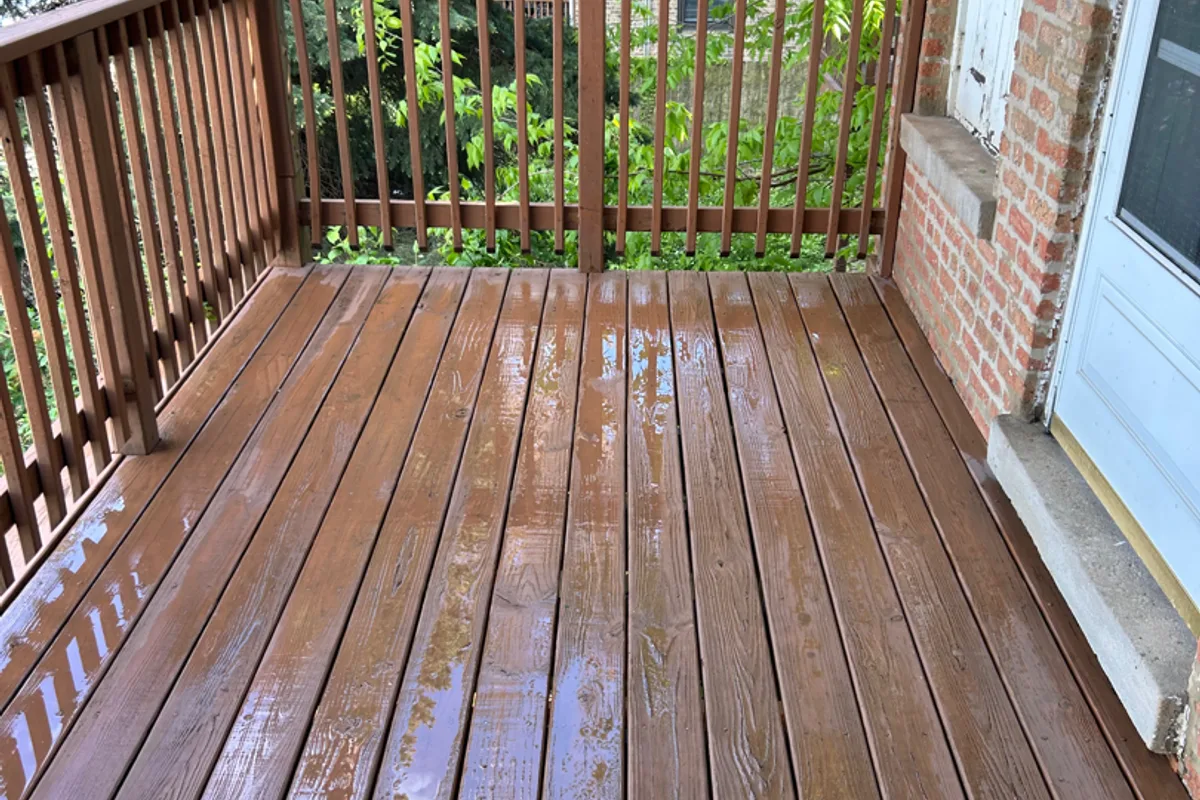
What it looks like: a green or dark film that gets dangerous when wet, usually in shade or where water pools.
Why it happens: algae and mildew grow on damp wood, and leaves and debris hold the moisture that feeds them. A deck that stays wet because the finish has worn off gets slippery faster.
The fix: keep it clean and keep it sealed. A cleaner and a stiff brush or low-pressure wash removes the growth; a penetrating finish that beads water keeps it from coming back. Our post on pressure washing mistakes covers how to wash a deck without damaging it. On a persistently shaded deck, anti-slip strips on the stairs are a reasonable extra.
What Most of These Have in Common
Water. Six of the seven problems start with wood that stays wet, and the fixes overlap for the same reason: a finish that beads water, clear gaps between boards, drainage away from posts and the house, and two inspections a year. Our Chicago deck inspection checklist is the twice-a-year version of this list.
About Deck Doc
Deck Doc has cleaned, sealed, stained and repaired decks across Chicagoland since 2015, led by an owner with more than 20 years of finishing experience. Our repairs are backed by the Deck Doc warranty. Call (847) 979-9299 or request a free, no-obligation estimate and we will tell you which of the seven your deck has and what it needs.