Every spring the same question comes in: should the deck be stained or sealed this year? The words get used interchangeably, but they describe different products that do different jobs, and the right answer depends on what winter left behind on your boards. This guide explains what a sealer does, what a stain does, how to tell which one your deck needs after a Chicago winter, and when in the spring to do it.
Key Takeaways
- A clear sealer repels water but has little or no pigment, so it gives almost no UV protection. Clear-sealed wood grays within a season or two.
- A stain carries pigment, which is what blocks UV. Modern penetrating stains are stain and sealer in one, so most decks get both jobs from one product.
- After winter, the test is simple: if water beads on the boards, the finish is still working. If it soaks in, the wood is unprotected and needs a coat.
- Clean and brighten first, replace damaged boards, then wait for dry wood and nights above 50°F. In Chicago that usually means mid-May or later.
- Our staining and sealing work is covered by the Deck Doc warranty, which includes 18 months against peeling.
What a Sealer Does
A deck sealer is a water repellent. It soaks into the wood or forms a thin film on it and keeps rain and snowmelt from soaking into the fibers. That matters, because water is what causes most deck damage: swelling and shrinking that opens cracks, mildew, and eventually rot. A clear sealer keeps the wood looking natural and is the least visible finish you can apply.
What a clear sealer does not do is stop the sun. Ultraviolet light breaks down the surface fibers of bare or clear-sealed wood, which is why a clear-sealed deck goes gray in a season or two even though it still beads water. Some clear products add UV inhibitors, but without pigment the protection is limited and short-lived.
What a Stain Does
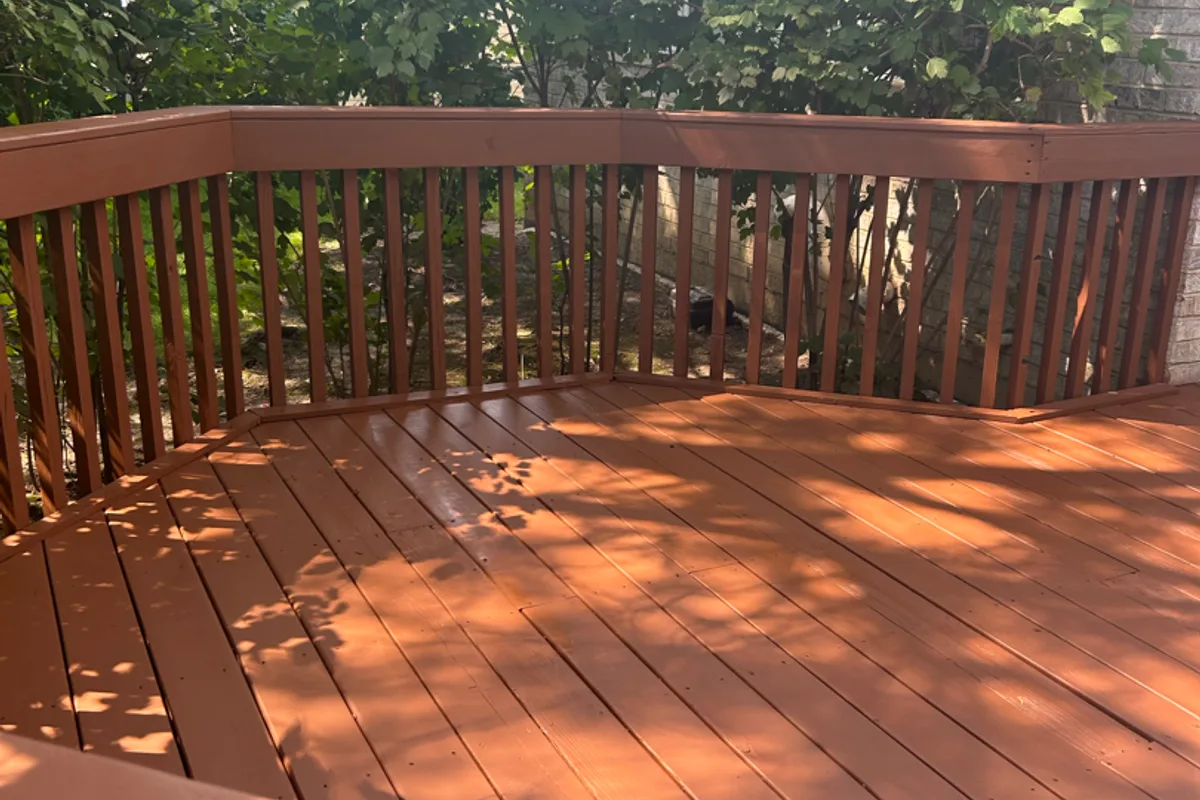
A deck stain adds pigment, and pigment is the sunscreen. Even a light semi-transparent tint blocks far more UV than a clear finish, and the more opaque the stain, the more protection it gives. Most stains today are also sealers: the products we use on Chicagoland decks, such as a penetrating semi-transparent oil, both color the wood and repel water in one coat. You can read about them on our products page.
So the practical difference is this. A sealer alone protects against water. A stain protects against water and sun, and lets you choose the color. That is why our deck staining service is the right answer for most wood decks, and why we reserve clear sealing for specific situations, such as new cedar a homeowner wants to keep natural for a while, or hardwoods that get an oil instead.
Which Does Your Deck Need After Winter?
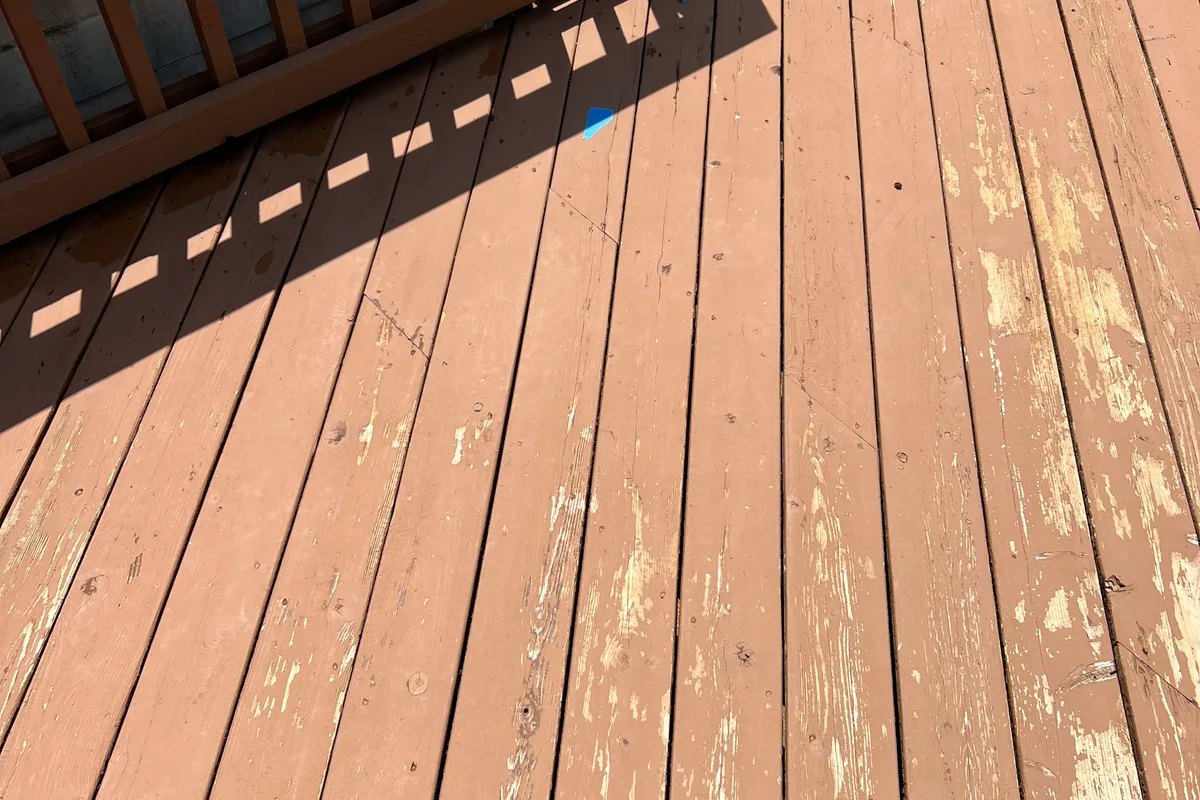
Walk out on the first dry day of spring and look at the boards.
- Water still beads everywhere. The finish survived. Clean the deck and leave it alone this year, or plan a maintenance coat for late summer.
- Water soaks in, color is faded but nothing is peeling. The wood is unprotected. Clean, brighten and apply a penetrating stain. This is the most common spring job.
- The deck is gray with no finish left. Same as above, with more cleaning. Gray wood comes back to life with a cleaner and a brightener before staining.
- The old finish is peeling or flaking. Strip it first. Stain applied over a failing finish peels with it. Our deck preparation guide covers stripping and brightening.
- New pressure-treated deck built last year. If it passes the water test, it is ready for its first stain. See when to stain a new deck.
- Ipe or another hardwood. Neither stain nor clear sealer. Dense hardwoods get a penetrating oil made for them. Our ipe cleaning and oiling page explains why.
What Winter Leaves Behind
Before any finish goes on, the deck needs the winter cleaned off it. The usual damage looks like this.
Debris and trapped moisture
Leaves and branches pile up against railings and under furniture through the winter and hold snowmelt against the wood for weeks. Check under planters and furniture feet for dark, damp patches, and clear the gaps between boards where packed debris keeps them wet.
Snow and ice
A properly built deck carries a lot of snow, but months of it sitting on the boards soaks the wood and feeds mildew. Clearing light snow with a broom and deeper snow with a plastic shovel, never a metal one, keeps the finish from being scraped off.
Salt and ice chippers
Rock salt corrodes the fasteners and brackets that hold the deck together, and ice chippers gouge the finish and splinter the wood. If salt was used on the deck this winter, look for rust on screws, joist hangers and the ledger bolts. Corroded hardware is a safety issue, not a cosmetic one, and our deck repair service replaces it.
Mildew and black spots
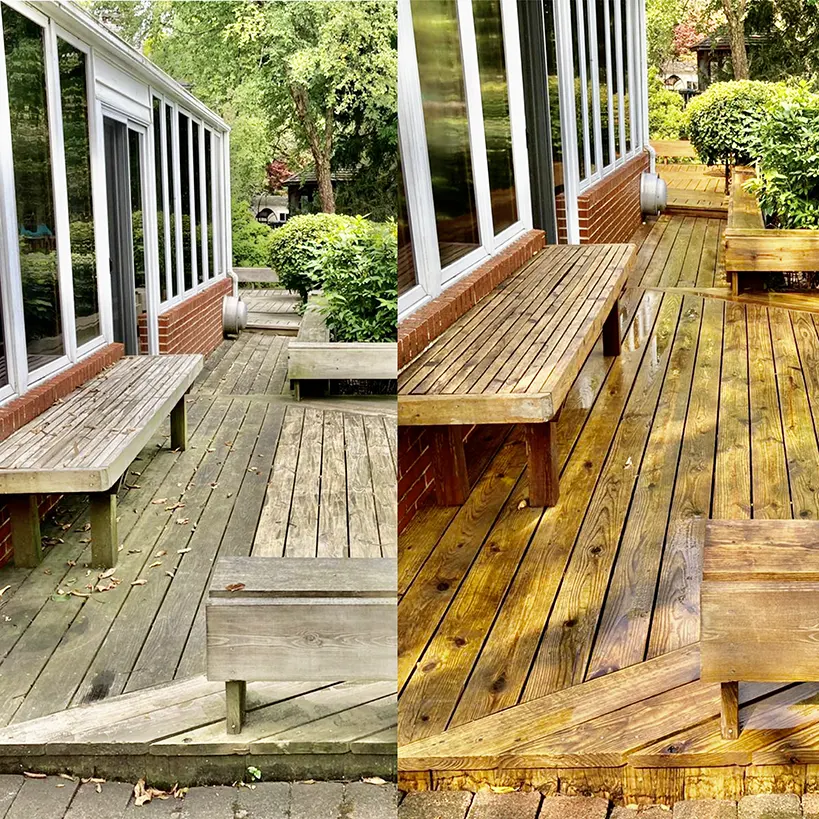
Damp, shaded boards come out of winter with gray or black patches of mildew. An oxygen bleach cleaner and a stiff brush remove it. Where the deck needs more than a scrub, a proper power washing at low pressure along the grain does the rest. Our post on why decks turn black tells the spots apart.
The Spring Sequence
- Clear the deck, sweep, and clean the gaps between boards.
- Inspect for soft boards, loose railings and rusted hardware. Repair first, so new wood gets finished with the rest.
- Clean with a deck cleaner, strip if the old finish is failing, then brighten.
- Wait for at least 48 dry hours, then test: water should soak into the boards, and a moisture meter should read in the low to mid teens.
- Stain or seal in a window with highs between 60°F and 85°F, nights above 50°F and no rain for a day either side.
When in Spring
Later than most people want. After snowmelt the boards hold more water than they look like they do, and stain applied to wet wood beads and peels. In Chicago, nights reliably hold above 50°F from about mid-May, and that is the earliest sensible date for a spring coat. If the spring stays wet, there is no penalty for waiting: late August and September are the most reliable staining weather of the year, and a deck that is cleaned in spring and stained in late summer does fine. We cover the whole calendar in the best time of year to stain a deck in Chicago.
Bottom Line
Seal when you only need to keep water out and want the wood to look untouched, knowing it will gray. Stain when you want the deck protected from sun as well as water, which is nearly always. After a Chicago winter, clean and repair first, wait for dry wood and warm nights, then put a penetrating stain on it.
If you would rather have it looked at than guess, request a free on-site estimate. We will tell you whether your deck needs a wash, a coat or a full restoration, and we back the work with the Deck Doc warranty.