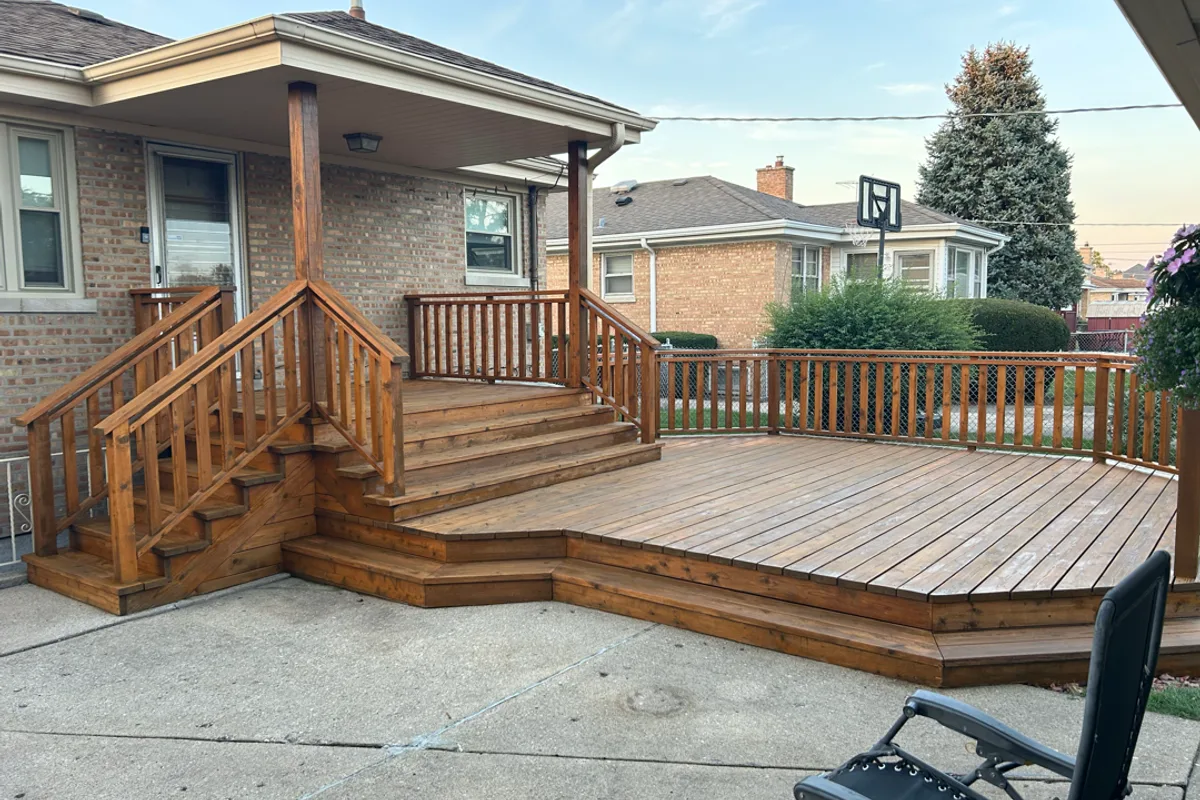
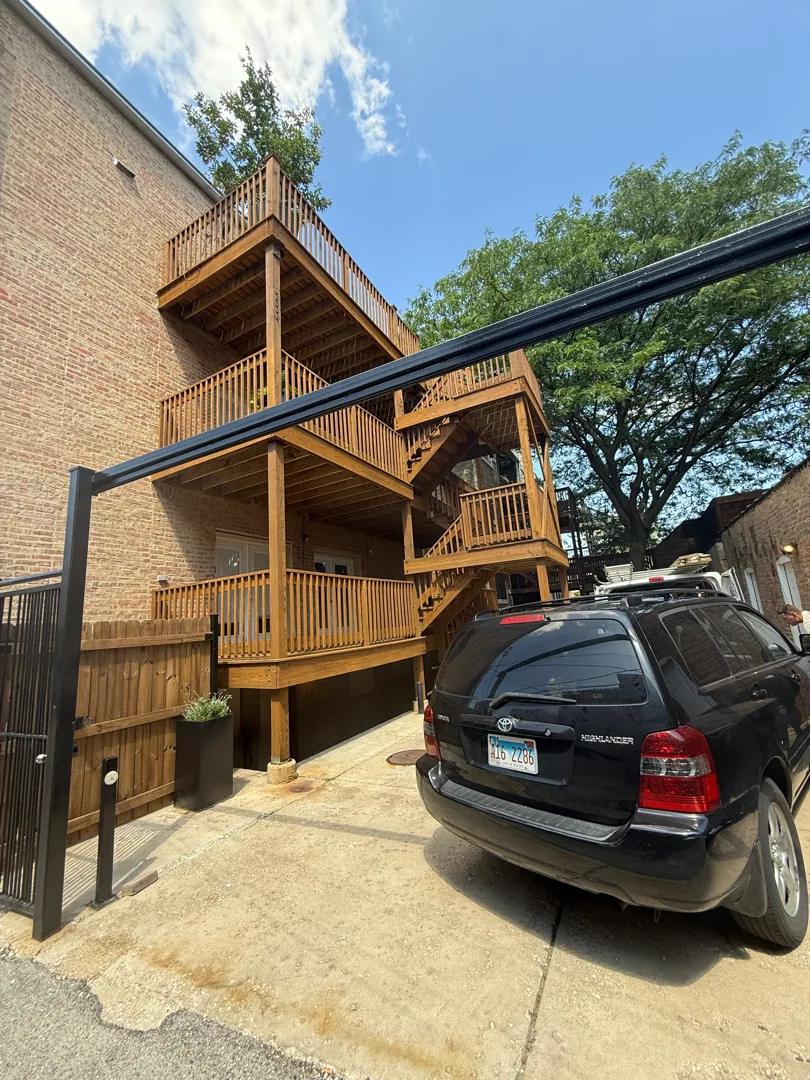
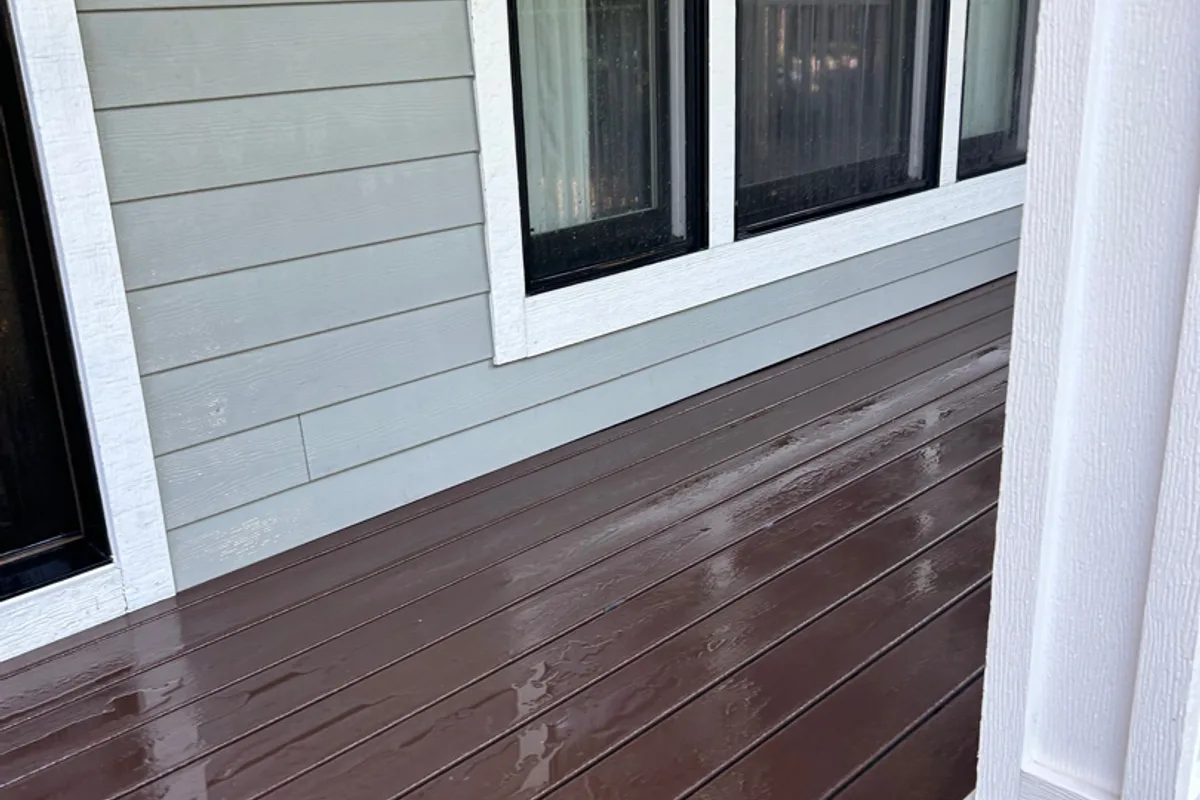
Searching for the best clear sealant for a deck usually turns up a list of box-store products with star ratings. This post is different: it covers what we actually apply on Chicagoland decks when a homeowner wants a clear or natural look, why we steer most softwood decks toward a light tint instead, and how to tell which option fits your wood. No product on this page is here because of a rating. Each one is on our trucks.
Key Takeaways
- A clear sealer keeps water out but carries no pigment, and pigment is what blocks the sun. Clear-sealed pine or cedar grays within a season or two, even though it still beads water.
- Clear is the right call for hardwoods such as ipe, which get a penetrating oil, and for homeowners who want the wood untouched and accept a yearly recoat.
- For pressure-treated and cedar decks we usually recommend the lightest tint in a penetrating oil line. It looks nearly natural and lasts two to three times longer than clear.
- Whatever goes on, the prep is the same: clean, brighten, 48 dry hours, then a thin coat in the right weather window.
- The test that decides when to recoat is water. When it stops beading, the sealer is done.
What a Clear Deck Sealer Can and Cannot Do
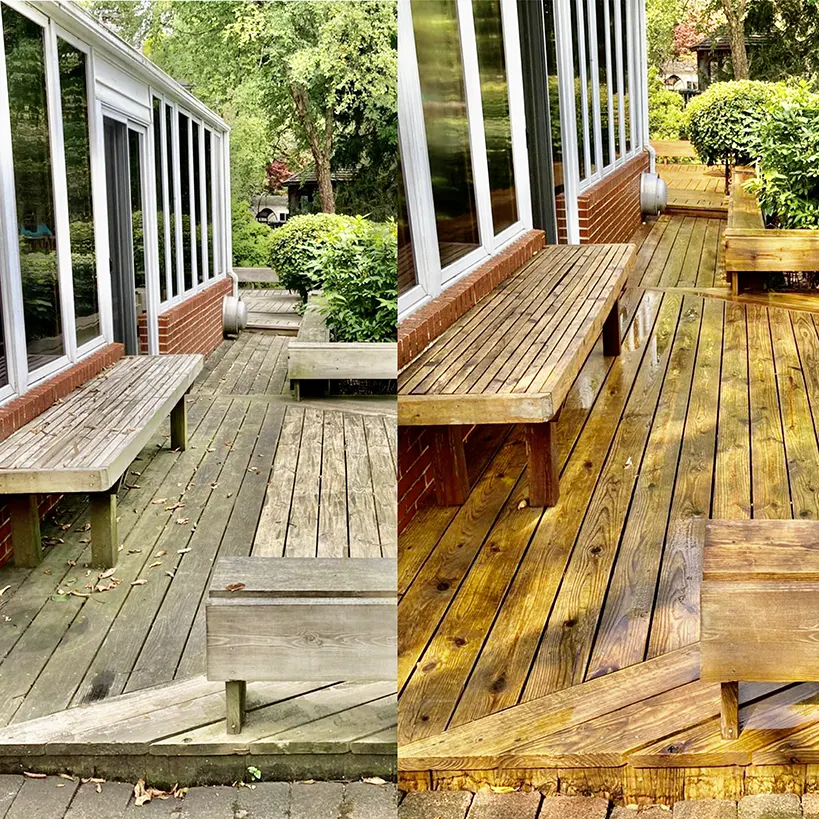
A clear sealer is a water repellent. It soaks into the wood, or forms a thin film on it, and keeps rain and snowmelt out of the fibers. That stops the swelling and shrinking that opens cracks, slows mildew, and delays rot. It also leaves the wood looking exactly like wood, which is the whole appeal.
What it cannot do is stop ultraviolet light. UV breaks down the lignin on the surface of bare wood, and the surface turns gray. Pigment is the sunscreen, and a clear finish has none. Some clear products add UV absorbers, and they help, but without pigment the protection is limited and short. The practical result is that a clear-sealed softwood deck in a Chicago yard looks new for a season and silver-gray by the second summer, while still beading water.
That is why "best clear sealer" is really two questions: what is the best clear product for wood that should stay clear, and when should you not use clear at all.
When Clear Is the Right Choice
- Hardwood decks. Ipe, cumaru, tigerwood and similar dense woods reject ordinary stains. They get a penetrating oil that keeps their natural color, and "clear" is the standard finish.
- New cedar or redwood you want to see. If the point of the wood is its color and grain, a clear penetrating sealer keeps it for a while. Expect to recoat yearly and to move to a light tint once the color starts to fade.
- Vertical surfaces. Fences, privacy screens and pergola posts get less direct sun and no foot traffic, so a clear preservative lasts longer on them than on a deck floor.
- Homeowners who accept the maintenance. A clear finish is a yearly relationship. If that is fine with you, it is a legitimate choice.
When Clear Is the Wrong Choice
A pressure-treated or cedar deck floor in full sun is the wrong place for a clear finish if you want it to last. Horizontal boards take the most UV and the most wear, and a clear coat gives them the least protection. The homeowner who applied a clear sealer in June and wonders why the deck is gray by September is the most common call we get about sealers.
The better answer for most softwood decks is the lightest tint in a penetrating oil line. A natural or honey tone adds a hint of color, keeps the grain fully visible, and carries enough pigment to hold the wood's color for two to four years instead of one. If you have never seen the two side by side, ask for samples at the estimate; the tinted board looks more like new wood than the clear one does after a year.
What We Actually Use
Four finishes cover nearly every clear or near-clear job we do. The full list, and why we chose each one for this climate, is on our products and materials page.
Rymar Xtreme Weather in Clear
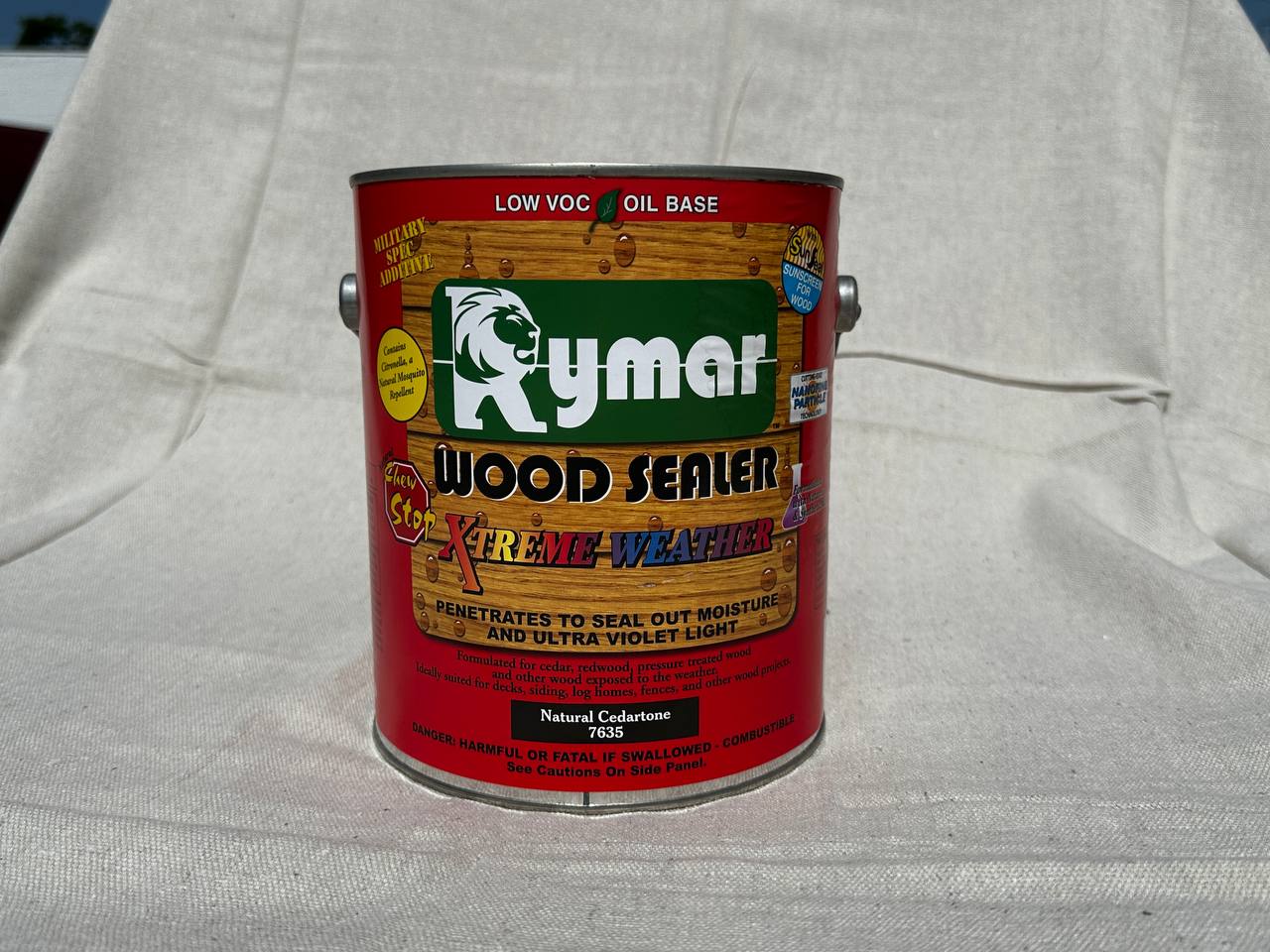
Xtreme Weather is the penetrating oil we put on most softwood decks, and it comes in a Clear alongside its tinted colors. Same low-VOC oil, same water beading, no pigment. It is the right pick when a homeowner wants the deck untouched and understands that the wood will gray sooner than it would under a tint. Because it penetrates rather than forming a film, it does not peel, and the move to a tinted coat later is a clean and recoat rather than a strip.
TWP 1500 Series in Clear or Natural

TWP 1500 is a penetrating oil that is also an EPA-registered wood preservative, and it is our standard for fences. It comes in a Clear and a lightly tinted Natural. On vertical wood that gets partial sun, the Clear holds up well, and the Natural is the version we suggest when the fence faces south or west. It resists the water absorption that warps and splits boards, and a recoat is a wash and a new coat, never a strip.
Benjamin Moore Woodluxe in Translucent

When a homeowner wants a lower-odor, faster-drying finish, or a project has to be done and dry inside a short window, Woodluxe is our water-based pick. Its translucent opacity shows the full grain with a whisper of color, which gives it more sun protection than a true clear while still reading as natural wood. It stains and waterproofs in one coat and cleans up with soap and water.
Penetrating oil for hardwoods
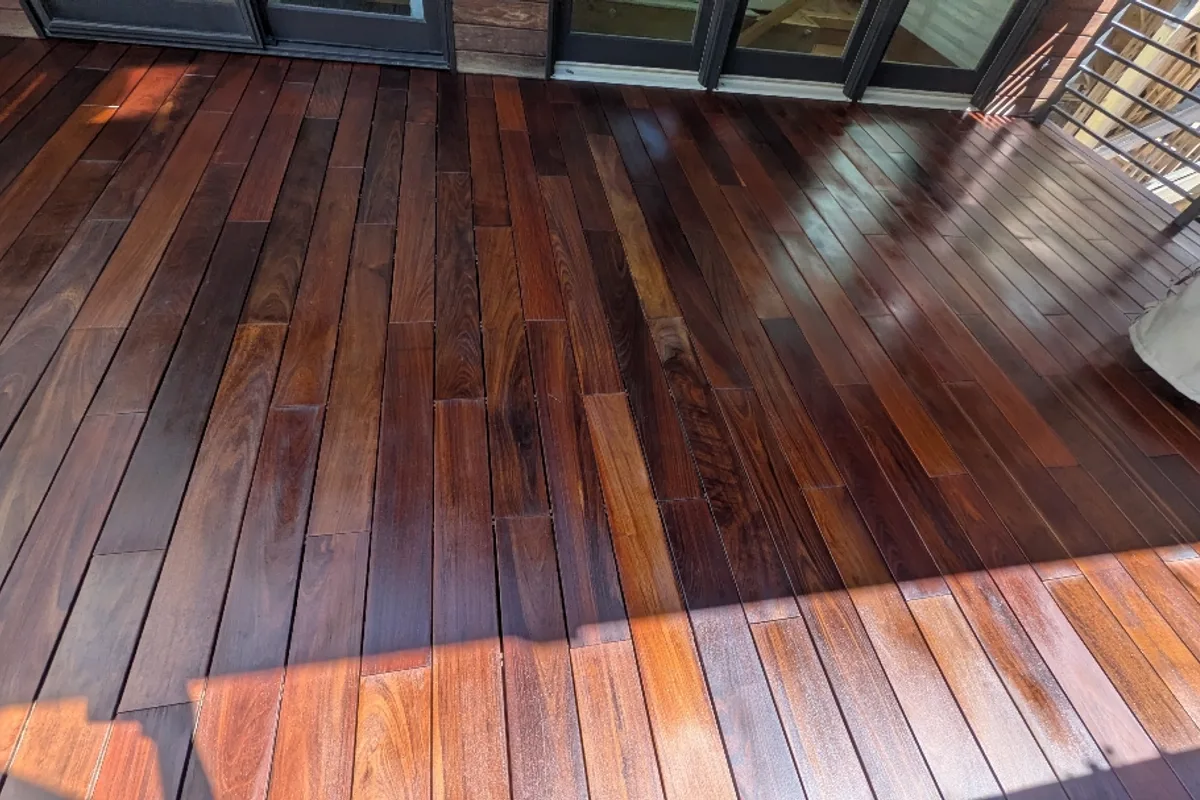
Ipe and other dense hardwoods are so tight and oily that most sealers will not absorb or dry on them. We use DeckWise Ipe Oil and Rymar Exotic Forest, a tung and linseed oil blend, applied thin and wiped back. Both keep the wood's rich natural color and fight the gray-out from UV, and both are reapplied as the color fades, usually every year or two. Our ipe cleaning and oiling page walks through the process.
Products We Do Not Recommend for a Deck Floor
Two kinds of "clear sealer" cause most of the disappointment we see. The first is the inexpensive clear water repellent sold for a season's protection: it beads water well for a few months and then the wood is bare again, and the annual recoat costs more in weekends than a tinted oil costs in years. The second is any film-forming clear coat, from acrylic deck sealers to spar varnish. A film on a horizontal board traps moisture, wears through in traffic lanes and peels in sheets after a freeze-thaw winter, and it has to be stripped before anything else can go on. We explain the same problem with paint in should you paint pressure-treated wood.
How to Apply a Clear Deck Sealer
Preparation
A clear finish shows every flaw in the prep, because there is no pigment to hide dirt, mildew or an old finish underneath. Clear the deck, clean the wood with a deck cleaner, strip any failing finish, and follow with a wood brightener to neutralize the chemicals and open the grain. Sand rough spots and old film with 60 to 80 grit, then remove the dust. Our deck preparation guide covers the full sequence.
Then let the wood dry: at least 48 dry hours after the last rinse, longer in spring or shade. Confirm with the sprinkle test, or a moisture meter reading in the low to mid teens.
Application
Stir the can rather than shaking it, which puts bubbles in a clear finish. Work two or three boards at a time along their full length, keep a wet edge, and apply a thin coat with a brush, pad or roller, back-brushing anything a roller or sprayer lays down. Wipe up whatever has not soaked in after 20 to 30 minutes; sealer left on the surface turns sticky and peels. One coat is right for most penetrating oils. Hardwood oils go on even thinner and are wiped back almost completely.
Weather and drying
Choose a window with highs between 50°F and 90°F, nights above 50°F, no rain for a day before and one to two days after, and no direct hot sun on the boards during application. Keep foot traffic off for 24 to 48 hours and furniture off for about 72. Our post on deck sealing tips has a table of Chicago drying times.
Maintenance: The Water Test
A clear finish does not announce when it is done, so test it. Sprinkle water on the deck a few times each season. While it beads, the sealer is working. When it soaks in, the wood is unprotected and it is time to clean and recoat. For a clear finish on a softwood deck that is usually every year; for a light tint, every two to four years; for hardwood oils, as the color fades. Cleaning between coats is a mild deck cleaner and low pressure, which keeps dirt and mildew from working into the surface.
Clear vs. Semi-Transparent: The Short Comparison
| Property | Clear sealer | Light tint or semi-transparent |
|---|---|---|
| Look | Untouched wood | Wood with a hint of color; grain fully visible |
| Water protection | Good | Good |
| Sun protection | Limited; wood grays in one to two seasons | Good; color holds two to four years |
| Recoat interval on a deck floor | About yearly | Every two to four years |
| Best for | Hardwoods with oil, new cedar you want to see, fences | Most pressure-treated and cedar decks |
| Failure mode | Fades to gray; penetrating types do not peel | Fades evenly; penetrating types do not peel |
Summary
The best clear deck sealer is a penetrating one, chosen for the wood: a clear or natural penetrating oil for softwood you want to keep bare, a preservative oil for fences, a translucent water-based finish when odor and dry time matter, and a hardwood oil for ipe. Clear keeps the water out but not the sun, so on a softwood deck floor the lightest tint is the finish that actually keeps the wood looking new. Either way, the prep and the weather window decide how long it lasts.
Unsure which your deck should get? We bring samples of every finish to a free on-site estimate, and our deck sealing service includes the cleaning and brightening a clear finish depends on.
Frequently Asked Questions
What is the main difference between a clear and a semi-transparent deck sealer?
Pigment. Both repel water, but a semi-transparent finish carries pigment that blocks UV, so the wood keeps its color for years instead of months. A clear sealer leaves the wood looking untouched and lets it gray.
How often should a clear deck sealer be reapplied?
On a softwood deck floor, usually every year. On a fence or a shaded deck, longer. The water test tells you: when rain stops beading on the boards, recoat.
What clear sealer do you use on decks?
Rymar Xtreme Weather in Clear on softwood decks, TWP 1500 in Clear or Natural on fences, Woodluxe Translucent when a water-based finish is wanted, and DeckWise Ipe Oil or Rymar Exotic Forest on hardwoods.
Can I apply a clear deck sealer myself?
Yes. It is a manageable project on a sound deck if you do the prep, wait for dry wood, and apply thin in the right weather. The jobs that go wrong are the ones that skip the cleaning and brightening or seal over wet wood.
Will a clear sealer stop my deck from turning gray?
Not for long. Graying is sun damage, and only pigment prevents it. If keeping the color matters, use the lightest tint in a penetrating stain rather than a true clear.