You stained your deck last season and it looked great — until spring arrived and sheets of finish started lifting off the boards. If you're asking why is my deck peeling, you're not alone. Peeling stain is the most common deck complaint we hear across Chicagoland.
Peeling rarely means you bought a bad product. More often, moisture, skipped prep, or the wrong coating for our climate caused the failure. Chicago's freeze-thaw cycles, lake-effect humidity, and summer UV expose every shortcut in staining.
This guide explains what's going wrong, how to tell cosmetic peeling from a failing deck, and the fix that stops the cycle.
Key Takeaways
- Peeling deck stain is usually caused by damp wood, poor surface prep, wrong product choice, or over-thick application — not just "bad luck."
- Chicago's freeze-thaw cycles and humidity accelerate finish failure faster than milder climates.
- Peeling stain and a structurally failing deck are different problems — know which one you have before you start.
- Fixing peeling requires stripping failed finish, proper drying, board repair if needed, and recoating with a penetrating stain in thin coats.
- When rot, wobbly railings, or soft boards appear underneath the peeling finish, call a professional for deck repair.
Why Is My Deck Peeling? The Most Common Causes
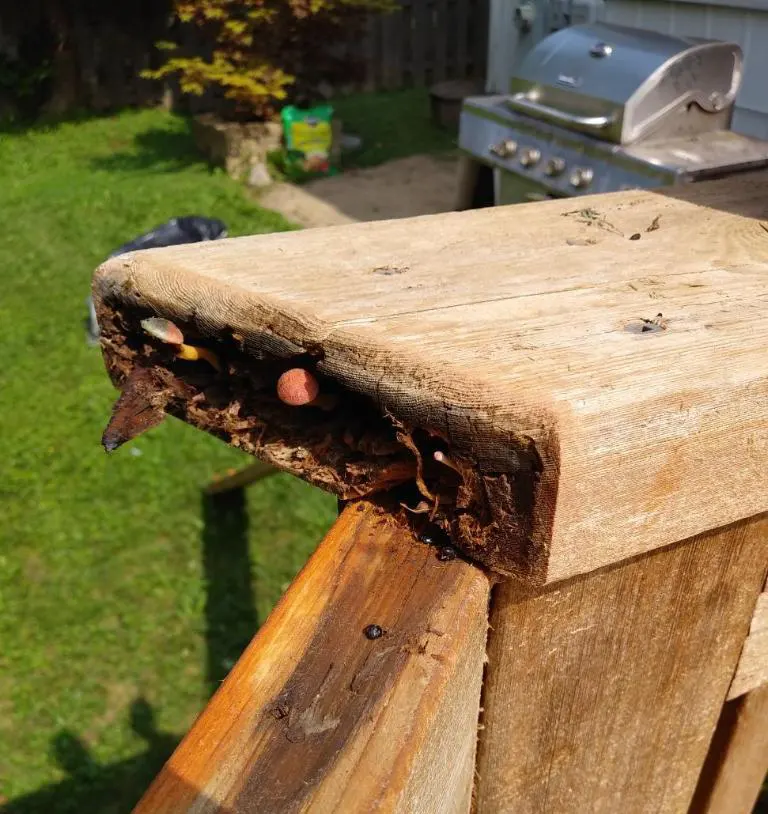
Before you buy another gallon of stain, identify the root cause. Treating symptoms without fixing the source means you'll be back on your knees scraping boards again next year.
Moisture trapped in the wood. Staining over damp boards is the #1 reason deck stain peels within months. Wood needs to read below 15% moisture content before any coating goes down. After power washing, that means two to five dry days in Chicago — longer after heavy rain or during humid stretches.
Skipped or rushed prep. Dirt, mildew, mill glaze, and old finish residue block stain from penetrating. A quick rinse isn't enough. Proper prep means cleaning with a deck-specific solution, brightening gray wood, and light sanding to open the pores.
Wrong product for the job. Solid paint and thick film-forming stains sit on top of the wood instead of soaking in. When boards expand and contract through our winters, that surface film cracks and peels. Penetrating oil-based stains move with the wood and hold up far better in the Midwest.
Over-application. More stain is not better protection. Thick, glossy coats never fully cure, trap moisture underneath, and peel in large sheets. Two thin coats beat one heavy coat every time.
UV and weather exposure. Horizontal surfaces take the worst beating from sun, snow, and standing water. Research from the USDA Forest Products Lab confirms UV and moisture cycling are the primary drivers of exterior wood finish failure.
Freeze-thaw damage. Water enters cracks, freezes overnight, and pushes finish away from the wood. By spring, a solid-looking coat has lifted in patches.
Peeling Stain vs. a Failing Deck — Know the Difference
Not every peeling deck is in crisis — but some are. Understanding the distinction saves you money and keeps your family safe.
Cosmetic peeling means the finish failed but the wood underneath is still solid. Boards feel firm underfoot, fasteners are tight, and railings don't wobble. The fix is refinishing: strip, prep, and recoat. This is exactly what deck restoration addresses.
Structural failure means the wood itself is compromised. Peeling may have exposed soft, spongy boards, dark rot spots, or rusted fasteners pulling through weakened joists. No amount of new stain will fix that — you need board replacement and possibly framing repair before any finish goes back on.
Press a screwdriver into suspect boards near posts and the ledger. Solid wood resists; rotted wood gives way easily.
Signs Your Deck Is Failing Structurally
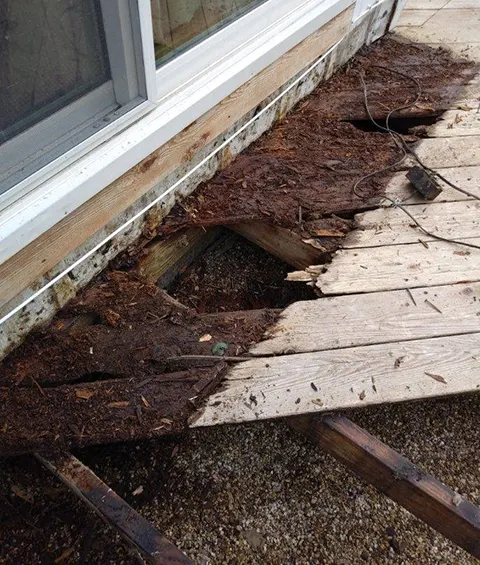
Peeling stain can be a warning sign that moisture has been attacking the wood for years. Watch for these red flags:
- Soft or spongy boards — especially near stairs, posts, and the ledger board where water collects.
- Splintering and cupping — boards that curl, crack, or splinter under bare feet indicate deep moisture damage.
- Wobbly railings or stairs — loose connections often mean rotted posts or corroded fasteners below the surface.
- Dark stains or green/black patches — mildew on the surface is cosmetic; dark discoloration at board ends or joist connections may signal dry rot underneath.
- Popped nails and screws — fasteners working loose as wood swells, shrinks, and deteriorates.
- Visible sagging — any dip in the deck surface or bounce when you walk suggests joist or beam failure.
Our guide on preventing rot, warping, and splinters covers early maintenance steps that stop small problems from becoming structural ones.
How to Fix a Peeling Deck (Step by Step)

Fixing a peeling deck is labor-intensive but straightforward if you follow the right sequence. Rushing any step sends you back to square one.
Step 1: Strip and scrape. Remove all loose, peeling, and flaking finish with a sharp paint scraper and, if needed, a chemical stripper designed for deck coatings. Work in manageable sections and dispose of waste properly.
Step 2: Sand feathered edges. Where old stain meets bare wood, sand the transition so there's no ridge. Use 60–80 grit on an orbital sander for flat areas; hand-sand railings and tight spots.
Step 3: Clean and brighten. Wash the entire deck with a deck cleaner to remove mildew, tannins, and stripper residue. Follow with a wood brightener (oxalic acid) to restore pH and even out color before staining.
Step 4: Dry completely. In Chicago, plan on three to five dry days after washing. Use the water-drop test: if water beads up, wait longer.
Step 5: Repair damaged boards. Replace any rotted, cracked, or severely cupped boards before recoating. Match wood species and let new boards weather briefly if they're pressure-treated.
Step 6: Apply penetrating stain in thin coats. Choose an oil-based penetrating stain suited for Midwest weather. Apply one thin coat with a brush or pad, maintain a wet edge, and avoid over-application. A second light coat is fine within the manufacturer's recoat window.
If the peeling covers more than 30% of the deck or structural issues appear during prep, professional deck staining and restoration saves time and produces a finish that actually lasts through our winters.
How to Prevent Your Deck From Peeling Again
Once your deck is restored, a simple maintenance routine keeps the finish intact for years instead of months.
- Choose the right product. Penetrating oil-based stains outperform film-forming coatings in Chicago. Avoid painting decks — paint traps moisture and peels in sheets.
- Stain at the right time. Late spring and early fall offer the best temperature and humidity windows. Avoid staining in direct midday sun or before forecasted rain.
- Apply thin coats only. If the surface looks glossy after application, you went too heavy. Wipe excess immediately.
- Annual inspection. Each spring, check for peeling corners, gray patches, and water absorption. Catching early wear means a light recoat — not a full strip-and-redo.
- Supplement with sealing. After staining cures, periodic deck sealing adds an extra moisture barrier on horizontal surfaces that see the most weather.
Most well-maintained decks in our climate need restaining every two to three years. Decks with solid stain or heavy sun exposure may need attention sooner.
When to Call a Chicago Deck Pro
Some peeling decks are weekend DIY projects. Others need professional equipment, product knowledge, and structural expertise you can't replicate with a hardware-store scraper.
Call a pro when:
- Peeling covers most of the deck and involves multiple old coating layers.
- You find rot, soft boards, or wobbly railings during prep.
- The deck hasn't been properly maintained in five or more years.
- You want the job done once — correctly — before summer entertaining season.
Deck Doc has restored hundreds of peeling decks across Chicagoland for over 20 years. We'll assess whether you need refinishing, board replacement, or full restoration.
Searching for deck repair near me in Chicago? Read local reviews, visit our Northbrook office, or request a free estimate and we'll walk your deck with you.
Frequently Asked Questions
Why is my deck stain peeling after only one year?
Peeling within a year usually means the wood was damp when stained, prep was skipped, or the wrong product was used — such as paint or a thick film-forming coating over old finish. Chicago's freeze-thaw cycles make these mistakes show up fast. Strip failed areas, let the deck dry fully, and recoat with a penetrating stain in thin coats.
Can I stain over peeling deck stain?
No. Staining over peeling finish traps loose material under a new coat and the problem returns within months. Scrape or strip all failing stain, sand feathered edges, clean and brighten the wood, then allow two to five dry days before applying fresh penetrating stain.
Is a peeling deck dangerous?
Peeling stain alone is mainly a cosmetic and moisture-protection issue. It becomes dangerous when peeling reveals soft, spongy boards, wobbly railings, or rotted joists underneath. If boards flex underfoot or fasteners pull loose, schedule a professional inspection before using the deck.
How much does deck repair cost in Chicago when stain is peeling?
Cosmetic refinishing — strip, prep, and restain — typically runs $1.75 to $5 per square foot in Chicagoland. If peeling exposed rot or structural damage, board replacement and joist repair can push costs higher depending on scope. A site visit gives the most accurate number for your deck.