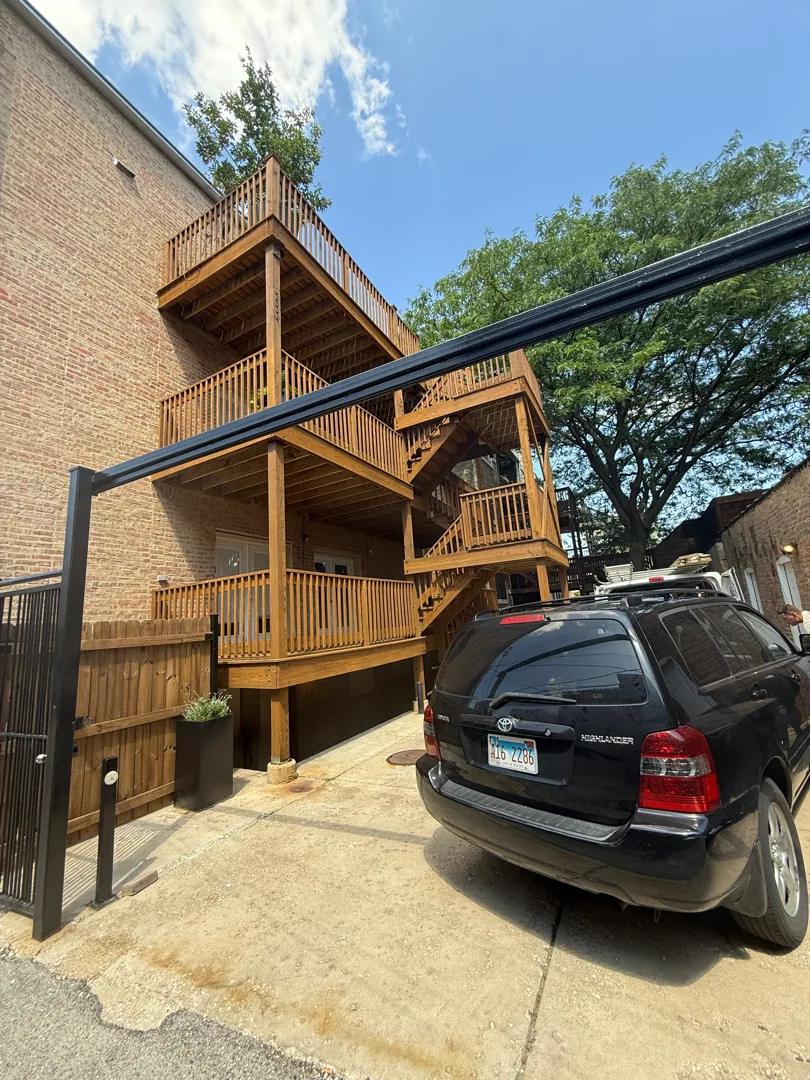
A Chicago back porch on a three-flat is not a backyard deck. It is three levels of stairs and landings that six or more households use every day, it is inspected by the city, and getting it stained means getting a board to say yes, residents to move their grills, and a crew to work around the people who live there. This guide covers how association and multi-unit porch projects actually run: what a board needs to approve the work, how access and scheduling are handled, why stairs and landings get a different treatment from a floor, and where the city's porch rules come in.
Key Takeaways
- Boards approve paperwork before they approve a price. A certificate of insurance, product data sheets and a written scope are the three documents that move a decision.
- Multi-unit porches are staged by level and by stair run so that every unit keeps a way in and out during the job.
- Stairs and landings take the most traffic and water. They get the most preparation and the thinnest, most even coats, and they are the first thing to recoat.
- Penetrating stains are the right finish for shared porches: no peeling, low odor, and maintenance coats instead of stripping.
- Chicago inspects multi-unit porches. A maintenance record with photos is the cheapest protection an association can have at a hearing.
Why Shared Porches Are a Different Job
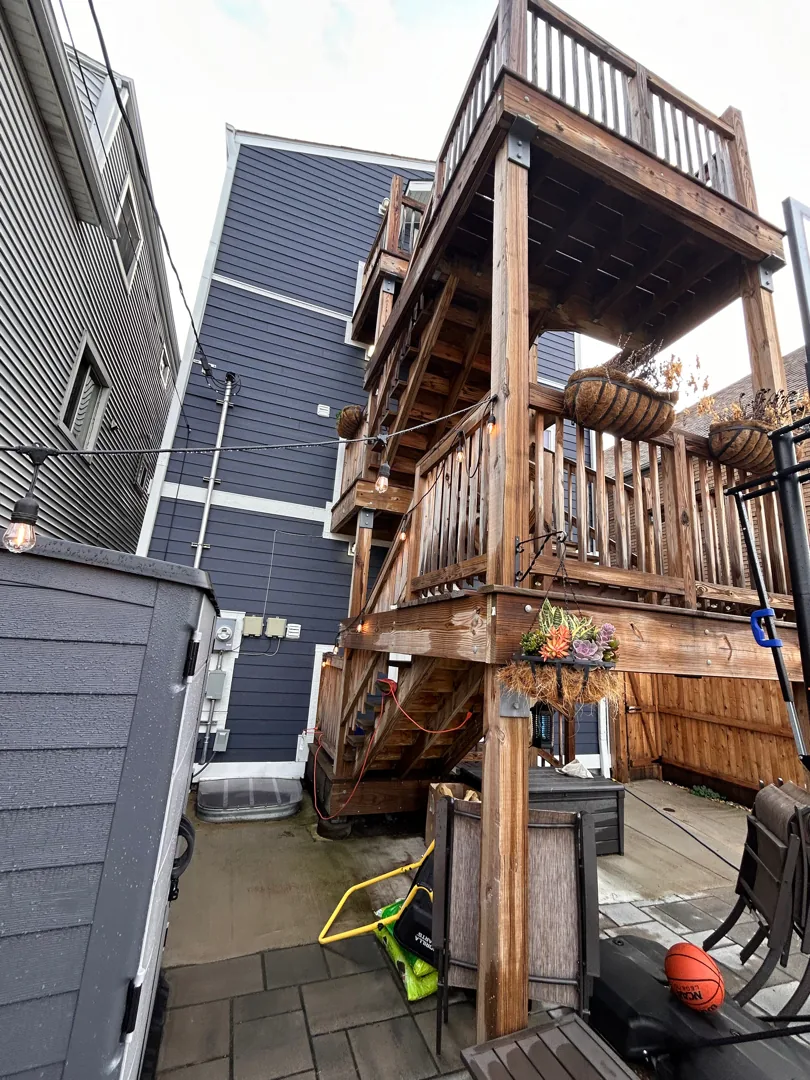
On a single-family deck the owner decides, the family stays off it for two days, and the work happens in one visit. On a condo or multi-unit porch, three things change. The decision belongs to a board or a management company, and it is made on paper. Access is shared, so the work has to be sequenced so nobody is cut off from a door. And the structure is a stair system as much as a deck, which means more vertical wood, more end grain, and more places water sits.
It also sits inside a regulatory frame. Chicago's Department of Buildings treats porches as structural elements of the building, inspects them, and requires permits for structural repairs. Our post on the Chicago porch and deck code covers the rules; this one covers the work.
What a Board Needs to Say Yes
Most association decisions stall on missing documents, not on price. We send three things with every proposal for a shared porch:
- A certificate of insurance naming the association, so the board and the management company have the coverage on file before anyone sets foot on the property.
- Product data sheets for the finish we propose, which answer the questions boards ask most: what is in it, how strong is the odor, how long until it can be walked on, and what maintenance it needs.
- A written scope by level: what gets cleaned, what gets repaired, what gets stained, which stairs are closed when, and how residents are notified.
Where the porch has been cited or inspected, the scope also lists which items are maintenance and which are structural, because the second kind needs a permit and drawings, and a board should not be surprised by that after voting.
Scheduling Around the People Who Live There
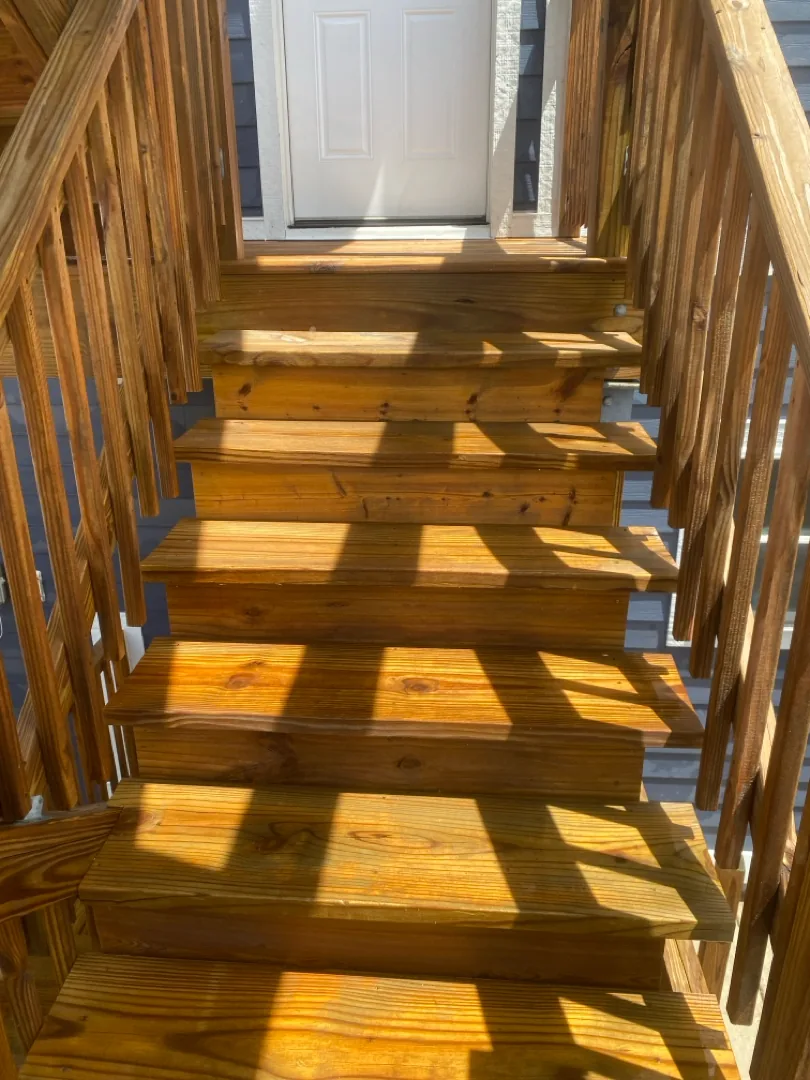
A shared porch is worked in sections rather than all at once. A typical sequence on a three-story porch:
- Notice. Residents get dates in writing a week ahead, with what to move off the porch (grills, planters, mats, furniture) and which days the stairs are closed.
- Repairs first. Loose treads, popped fasteners and soft boards are fixed before any water touches the porch, so the new wood is finished with the rest.
- Cleaning and brightening. The whole structure is cleaned, then brightened, working top down so dirty water does not run over finished sections.
- Drying. Two dry days minimum, longer for shaded gangway porches that never see sun.
- Staining by section. Landings and stair runs are finished so that one route stays open, usually by alternating runs or finishing half the width of a stair at a time on porches with wide stairs.
- Curing. Foot traffic in socks or clean shoes after 24 to 48 hours; grills and furniture back after about 72.
Access details matter more than they sound: gate codes, where the crew parks, whether water is available on the property, and which neighbor's yard the gangway opens onto. We collect those before the first day, not during it.
Stairs and Landings Get Extra Attention
On a shared porch the stairs carry more traffic than any single-family deck floor, and they are where water collects: stringer ends on concrete, tread ends, and the landing outside each door. Three things follow.
- More preparation. Treads are the first boards to be replaced when soft, and the first to be sanded when rough, because splinters on a shared stair are a liability.
- Thin, even coats. A stair tread that is slick from excess stain is dangerous. Penetrating stain is applied thin and wiped back on treads so the wood, not a film, is what people walk on.
- A shorter recoat cycle. Landings and stairs are due before the rest of the porch. Planning a maintenance coat on the stairs every other year keeps the whole structure on a longer cycle.
Which Finish for a Shared Porch
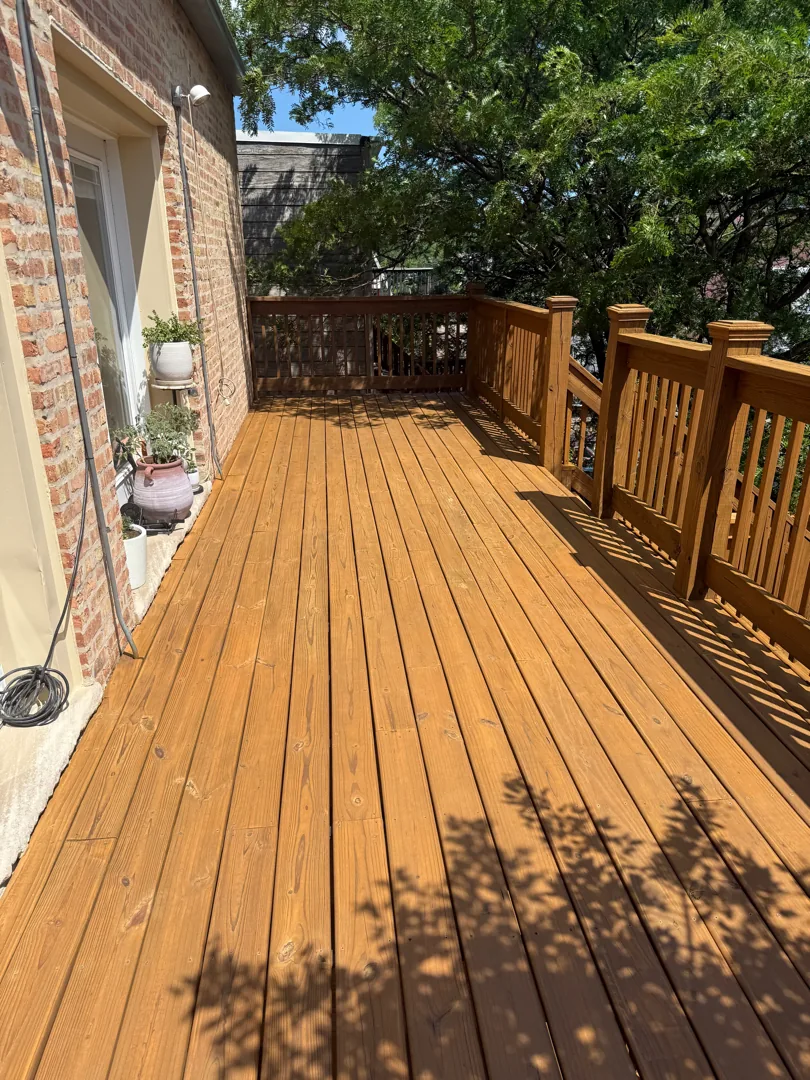
We recommend a penetrating semi-transparent stain on shared porches for practical reasons rather than looks. It soaks into the wood instead of forming a film, so it wears rather than peels, and it never needs stripping, which is the one job that is nearly impossible to schedule on a porch people use every day. The products we apply are low-VOC and low-odor, which matters when the porch is a few feet from open windows. And a maintenance coat is a one-day job per level, which keeps association budgets predictable. Our products page lists the specific finishes and their data sheets.
Paint and solid film finishes are the ones we are most often asked to strip from porches, usually because the previous contractor's coat let go on the stair treads after two winters. If a board wants an opaque color, a solid stain is the compromise, with the understanding that treads will need attention sooner.
The City Inspection Angle
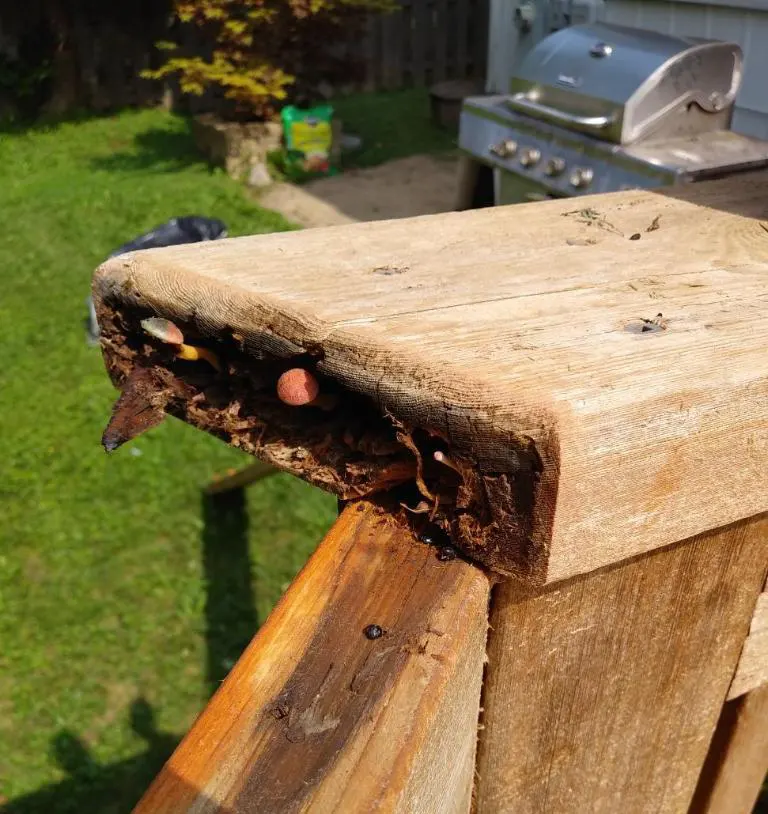
Chicago inspects porches on multi-unit buildings, and a violation notice for a porch is a board's problem, not a tenant's. Two habits keep an association out of that cycle. First, keep the wood finished: rot in stringers, ledgers and treads is what inspectors cite, and rot starts in wood that has been unprotected for a season. Second, keep a record. A dated maintenance log with before-and-after photos of each level is the proof of compliance the city asks for at a hearing, and it costs nothing to keep. Our post on the porch code explains what the check sheet covers.
Rooftop Decks and Common Areas
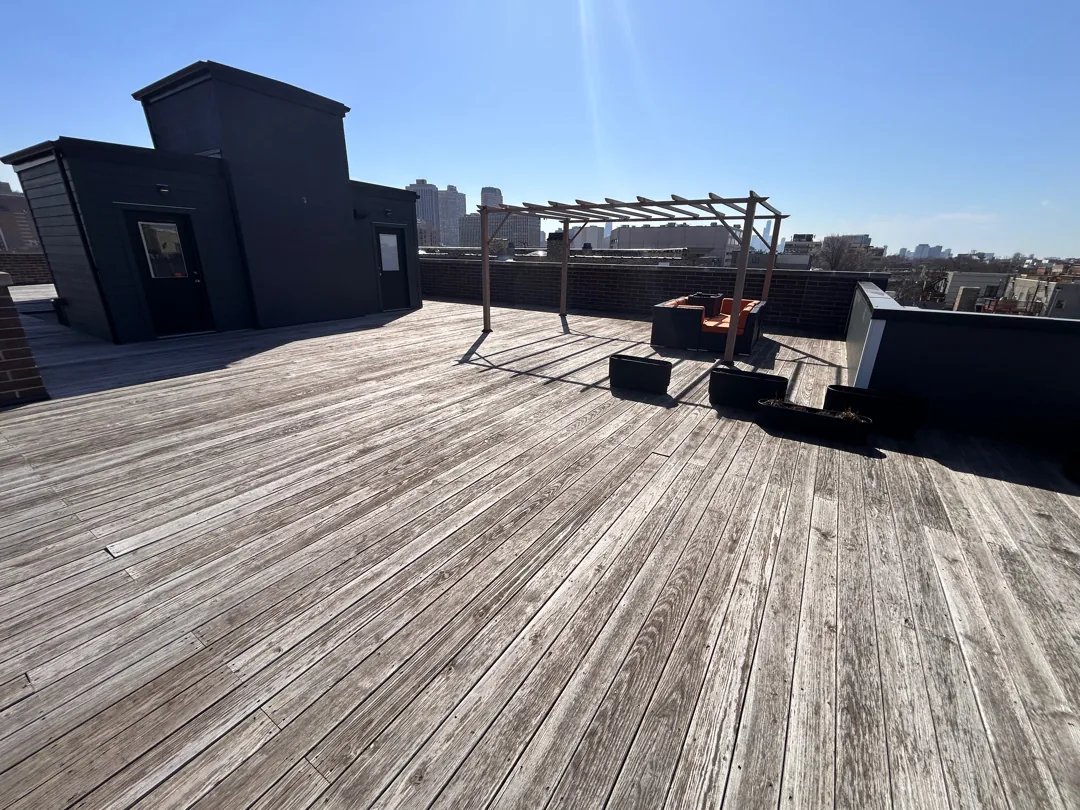
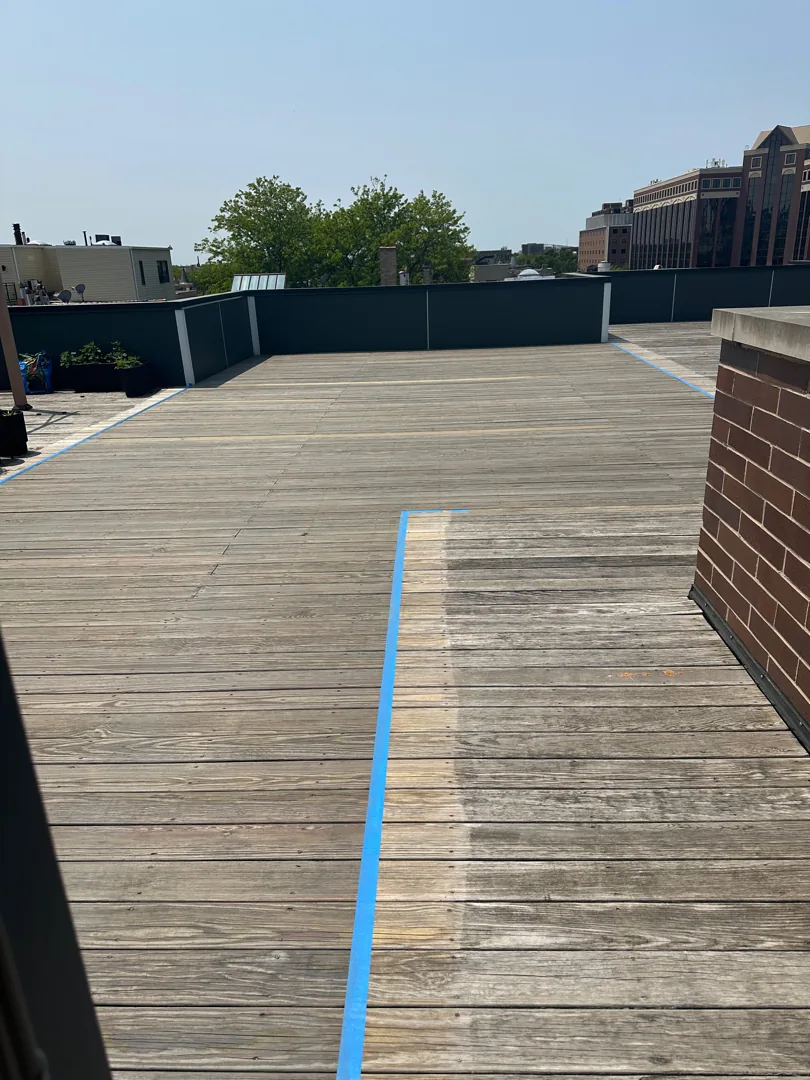
Association rooftop decks are the hardest-working wood in Chicago: full sun all day, wind, no shade, and heavy use in summer. They gray fast and need a finish with pigment to hold color. Access is by elevator or a single stair, so materials and water have to be planned, and neighbors below need notice about noise and odor. Ipe rooftop decks are common downtown and get a hardwood oil rather than a stain; see ipe cleaning and oiling.
What We Provide to Associations
- A written scope by level, with repair items separated from finishing items and permit items flagged.
- Certificate of insurance and product data sheets with the proposal.
- Resident notices with dates and what to move, and a sequence that keeps a route open to every unit.
- Before-and-after photos of each level for the association's records.
- Structural repairs and rebuilds handled with the permit drawings and inspections the city requires. See structural deck repairs.
- Work covered by the Deck Doc warranty.
We work from offices in Downtown Chicago and on the North Side, and from five suburban offices for associations outside the city. Request a walkthrough and a written proposal and we will put together what your board needs to vote.
Frequently Asked Questions
Do residents have to stay off the porch during the work?
Off the sections being worked on, yes, usually for two days per section. The job is sequenced so that a stair route to every unit stays open throughout.
How much notice do residents get?
A week in writing, with dates, what to move, and which stairs are closed when. Weather can shift the dates, and we tell the management company as soon as it does.
Does a porch staining project need a permit?
No. Cleaning, staining and replacing boards or pickets in kind are maintenance under the city's rules. Replacing stringers, joists, beams or posts is structural and needs a permit with drawings.
Can the stairs be done without closing them?
Usually. Alternate stair runs are finished on different days, or wide stairs are done half a width at a time, so one path stays open.
What does the association get for its records?
The scope, the insurance certificate, the product data sheets, and dated before-and-after photos of each level.