The price of a deck is one number on one day. What it costs to keep is a number every year after, and the three woods that make up most Chicagoland decks differ far more in upkeep than in looks. We maintain all of them, plus composite, so this comparison is built from our own prices: what each deck needs, how often, and what that comes to per year on a typical 300 square foot deck with a railing.
Key Takeaways
- Pressure-treated and cedar decks cost the same to finish. With a penetrating stain redone every two to four years, plan on $450 to $1,000 a year, and about $600 to $700 for most homeowners on a three-year cycle.
- Ipe costs the most to keep brown: about $1,500 a year if it is cleaned and oiled every year, half that on a two-year cycle. Let it silver and it is the cheapest wood deck to own, at $200 to $300 a year for a wash.
- Composite needs a wash and nothing else, about $300 to $600 a year depending on how often you have it done.
- Repairs favor pressure-treated: a board is about $115 installed against $140 to $180 for cedar, and ipe boards are special-order.
- Over ten years the gap is real: roughly $5,600 to $6,900 for pressure-treated or cedar, $7,500 for ipe kept oiled, $2,400 for ipe left to silver, and $3,600 for composite.
The Three Woods, Briefly
Pressure-treated pine is southern yellow pine forced full of preservative. It is the cheapest deck lumber and the most common, it resists rot and insects, and it moves: boards check, cup and twist as they dry, and the surface needs a pigmented finish to hold up to sun and water. Cedar is naturally rot-resistant, lighter, more stable and softer, which is why it takes a penetrating stain beautifully and dents under a dragged chair. Ipe is a Brazilian hardwood so dense it barely absorbs anything, which makes it last for decades and makes ordinary stain fail on it; it takes a thin hardwood oil instead, or no finish at all.
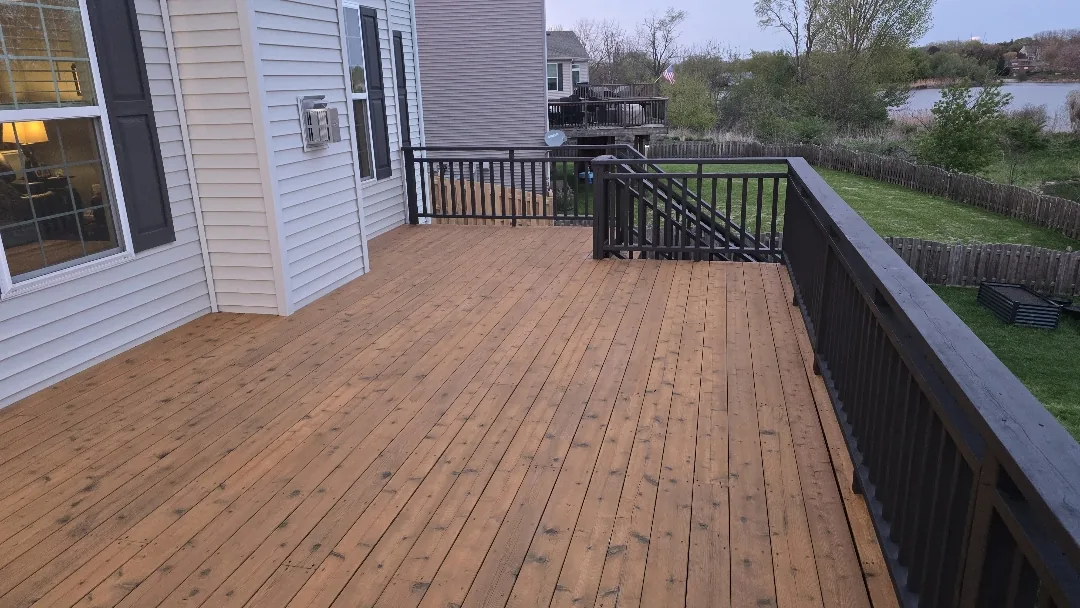
What Each Deck Costs Per Year
The table uses our own prices for a 300 square foot deck with a railing, one story up, in the suburbs. Intervals are what we see on real Chicagoland decks; sun, traffic and drainage move any deck toward the short end.
| Deck | Routine | Cost each time | How often | Per year |
|---|---|---|---|---|
| Pressure-treated | Wash, brighten, penetrating stain | $1,700 to $2,100 | Every 2 to 4 years | $450 to $1,000 |
| Cedar | Wash, brighten, penetrating stain | $1,700 to $2,100 | Every 2 to 4 years | $450 to $1,000 |
| Ipe, kept brown | Wash, brighten, hardwood oil | About $1,500 | Every 1 to 2 years | $750 to $1,500 |
| Ipe, left to silver | Wash | About $600 | Every 2 to 3 years | $200 to $300 |
| Composite | Wash | About $600 | Every 1 to 2 years | $300 to $600 |
Two things stand out. First, pressure-treated and cedar are identical on this table, because the finish does not care what wood it is on: the wash, the brightener and the stain are priced by the size of the deck. Cedar earns its premium elsewhere, in how it looks and how long it lasts. Second, ipe's reputation as low-maintenance is only true if you let it go gray. Kept brown, it is the most expensive deck to own, because hardwood oil is thin and a Chicago summer takes it off in a year or two. Our post on how often to restain a deck in Chicago covers the intervals in detail, and the deck staining cost guide has the full price tables behind the stain line.
Where the Ipe Number Comes From
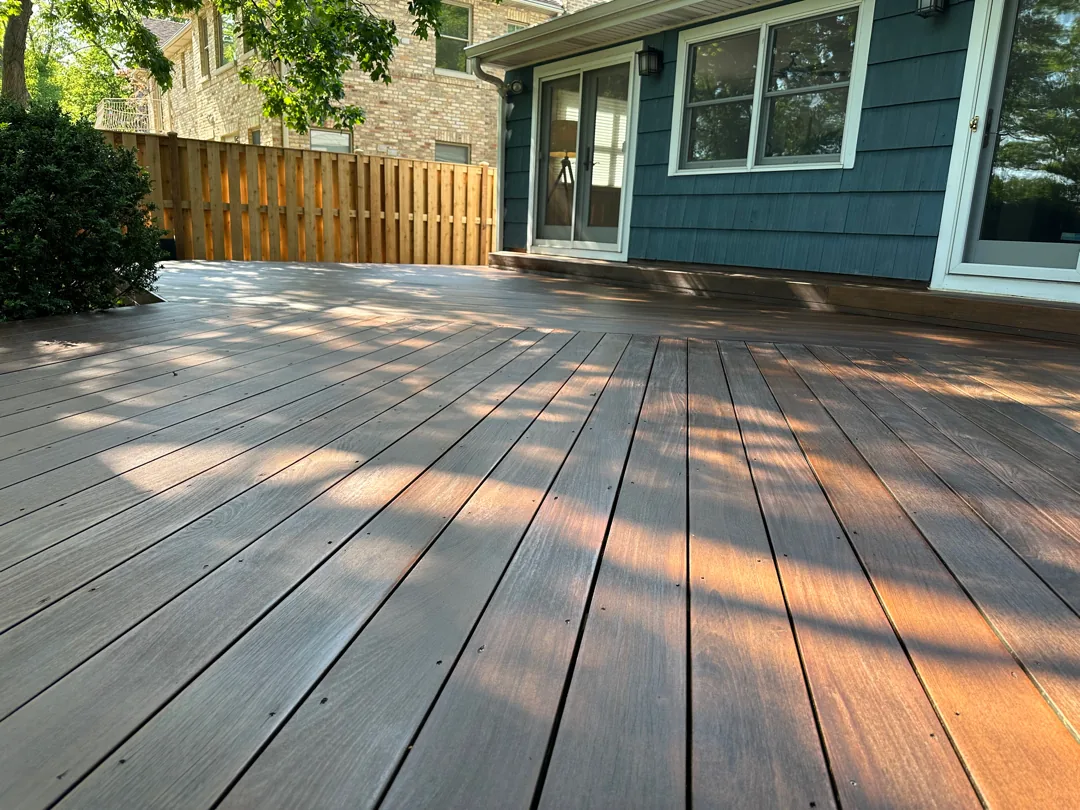
An ipe visit is a wash and brightener at the standard cleaning price, then a hardwood oil at about $100 a gallon, covering roughly 300 square feet, with the labor to apply it thin and wipe it back. On a 300 square foot deck that is about $1,500; a 150 square foot balcony is about $1,200 and a 500 square foot deck about $1,850. There is no stripping and no sanding in that routine, ever, because the oil does not film and cannot peel. That is also why an ipe deck that has been ignored for five years costs the same to bring back as one that was oiled last year: it is a cleaning job, not a restoration. Our ipe cleaning and oiling page describes the process.
Repairs: Where Pressure-Treated Wins
Finishing is the same for the two softwoods, but repairs are not. A pressure-treated board is about $115 installed on a ground-level deck; a cedar board is $140 to $180, because the lumber costs nearly twice as much. Ipe boards are special-order, heavy and fastened with hidden clips, so a board swap on an ipe deck is quoted per job and is the most expensive of the three. Composite boards are replaced only when a matching color is still made, which is the main reason to keep a few spare boards from the original order.
The repair budget also depends on how each wood fails. Pressure-treated decks lose boards to checking and cupping from about year ten and stair stringers to ground contact. Cedar dents and wears in traffic lanes but rots slowly. Ipe barely fails at all; the repairs we do on ipe are almost always fastener and railing work. Per-piece prices for all of it are in our deck repair cost guide.
The Ten-Year View
| Deck, 300 sq ft with railing | Ten years of upkeep | What that assumes |
|---|---|---|
| Pressure-treated | $5,600 to $6,800 | Three refinishes and a few replaced boards |
| Cedar | $5,700 to $6,900 | Three refinishes and a few replaced boards at cedar prices |
| Ipe, kept brown | About $7,500 | Cleaned and oiled every two years |
| Ipe, left to silver | About $2,400 | Washed every two to three years |
| Composite | About $3,600 | Washed every year or two |
The ten-year numbers are for a deck kept on schedule. A pressure-treated or cedar deck that skips a cycle and lets the finish fail adds a stripping job at about $4 a square foot, which is where the "cheap" deck stops being cheap. The one wood with no penalty for neglect is ipe.
Lifespan
Kept up, a pressure-treated deck in Chicago lasts about 15 to 20 years before the framing and stairs start to need more than board swaps. Cedar goes 20 to 25 years with the same care, longer where it stays dry. Ipe boards outlast the treated framing under them; 40 years is a reasonable expectation for the decking, which is why ipe decks are usually reframed rather than replaced. Composite boards carry 25-year to lifetime warranties from the manufacturers, though the pressure-treated frame underneath them ages like any other. The deck's lifespan is usually decided by its ledger, posts and footings rather than its boards, and our post on repairing or replacing an old deck covers how to judge them.
Upfront Cost, Briefly
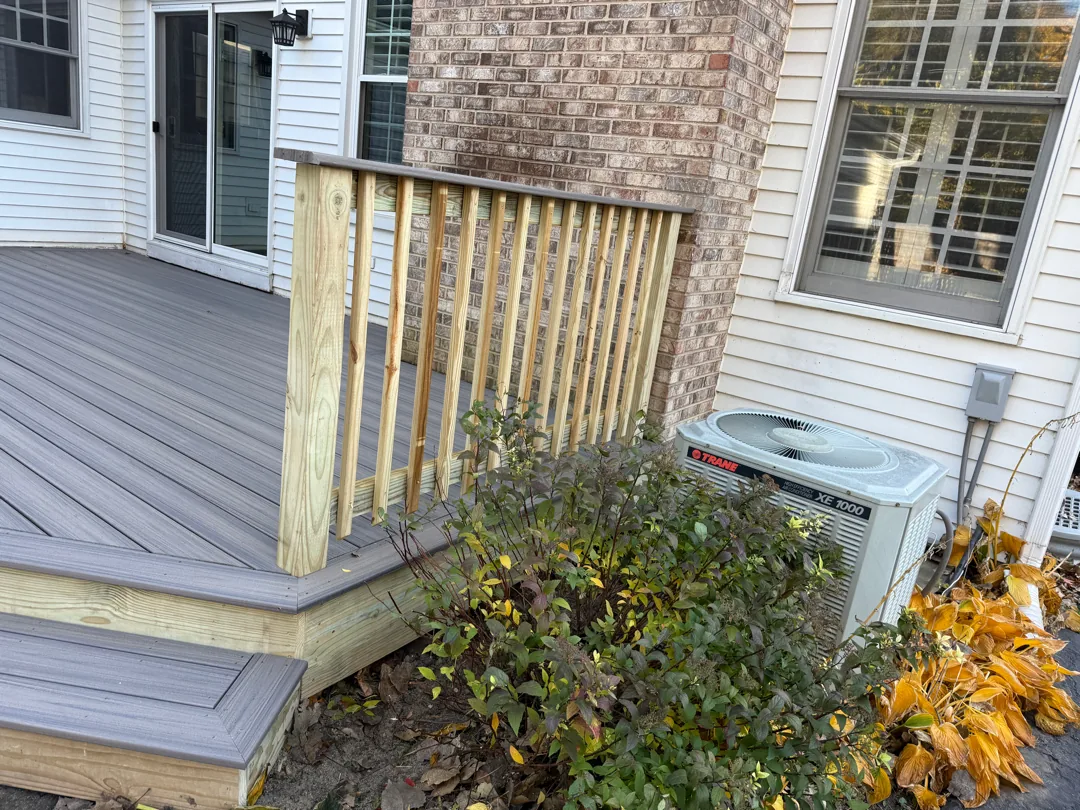
We build all three woods and composite, and we do not publish a per-square-foot build price because the number depends on height, framing, stairs and access far more than on the boards. The material gap is easy to see from replacement prices, though: a 16-foot pressure-treated board costs about $35 and the same board in cedar about $60, and ipe runs several times the treated price. Composite sits near ipe on material but is faster to install. Our deck building page covers how a build is quoted.
Which One We Would Choose
- On a budget, ground level, backyard: pressure-treated with a penetrating oil, recoated on the water test. It is the cheapest to build and the cheapest to repair, and kept on schedule it costs no more per year than cedar.
- For the look, with some care: cedar. It takes a natural-tone stain like nothing else, stays cooler underfoot and lasts longer. Keep chairs on glides.
- Rooftop or downtown, in full sun and wind: ipe or composite. Ipe if you like the idea of a deck that silvers gracefully and never peels; composite if you want one wash a year and no decisions.
- For the least upkeep of any kind: composite, and then ipe left to silver. Both are a wash and nothing else.
Frequently Asked Questions
Is cedar worth the extra cost over pressure-treated?
For upkeep, no; the two cost the same to finish and cedar boards cost more to replace. For looks, stability and lifespan, often yes. Cedar is the better wood; pressure-treated is the better budget.
Does an ipe deck really need oil every year?
Only if you want it to stay brown. In Chicago sun the color fades toward silver in one to two years. Leave it, and the wood is unharmed; it simply turns an even gray and needs a wash now and then.
What is the cheapest deck to maintain?
Composite, at a wash every year or two, and ipe left to silver, which is the same routine on a wood deck. Among stained decks, pressure-treated and cedar cost the same per year.
What does it cost to maintain a deck per year in Chicago?
About $450 to $1,000 a year for a stained pressure-treated or cedar deck of average size, $750 to $1,500 for ipe kept oiled, and $300 to $600 for composite.
Does composite need sealing?
No. Composite cannot take a finish and does not need one. It needs a wash to keep mildew and pollen off, and the manufacturer's cleaning rules followed so the warranty holds.
If you are choosing between woods for a new deck, or deciding what an old one is worth keeping, request a free estimate. We will price the upkeep for the deck you have, or the one you are planning, in writing.