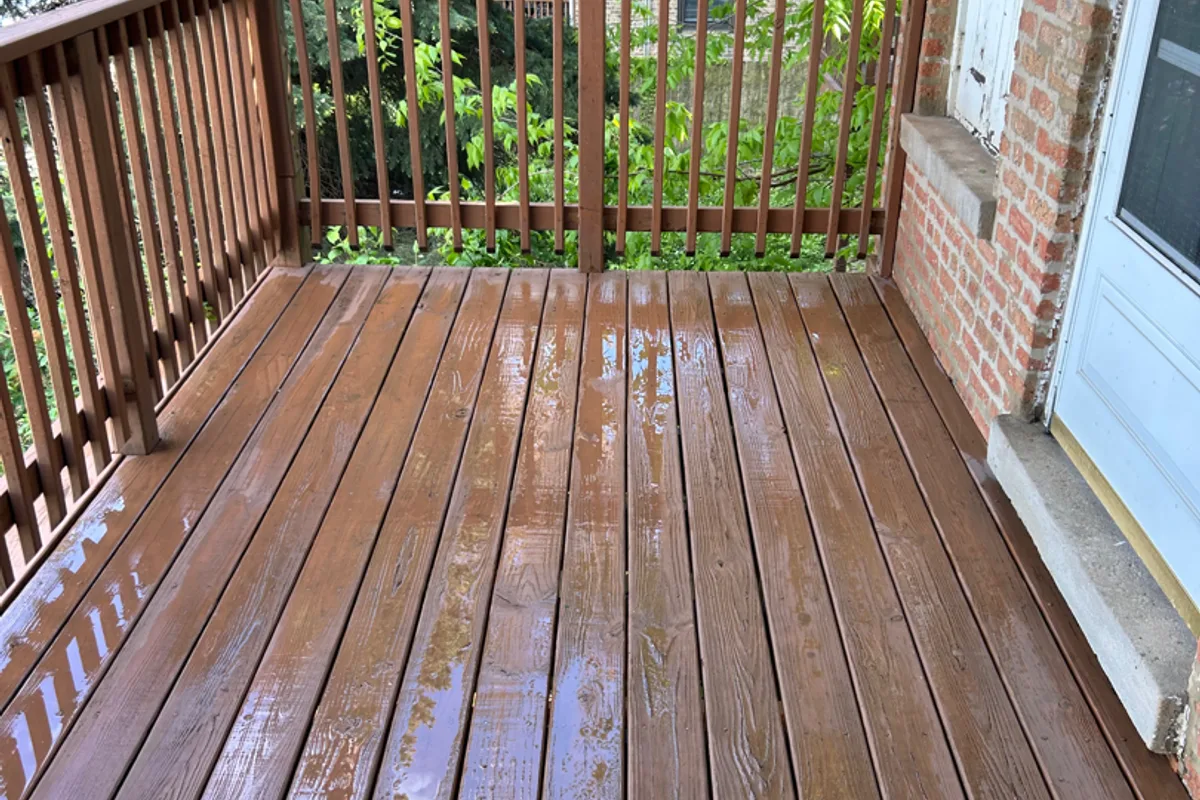
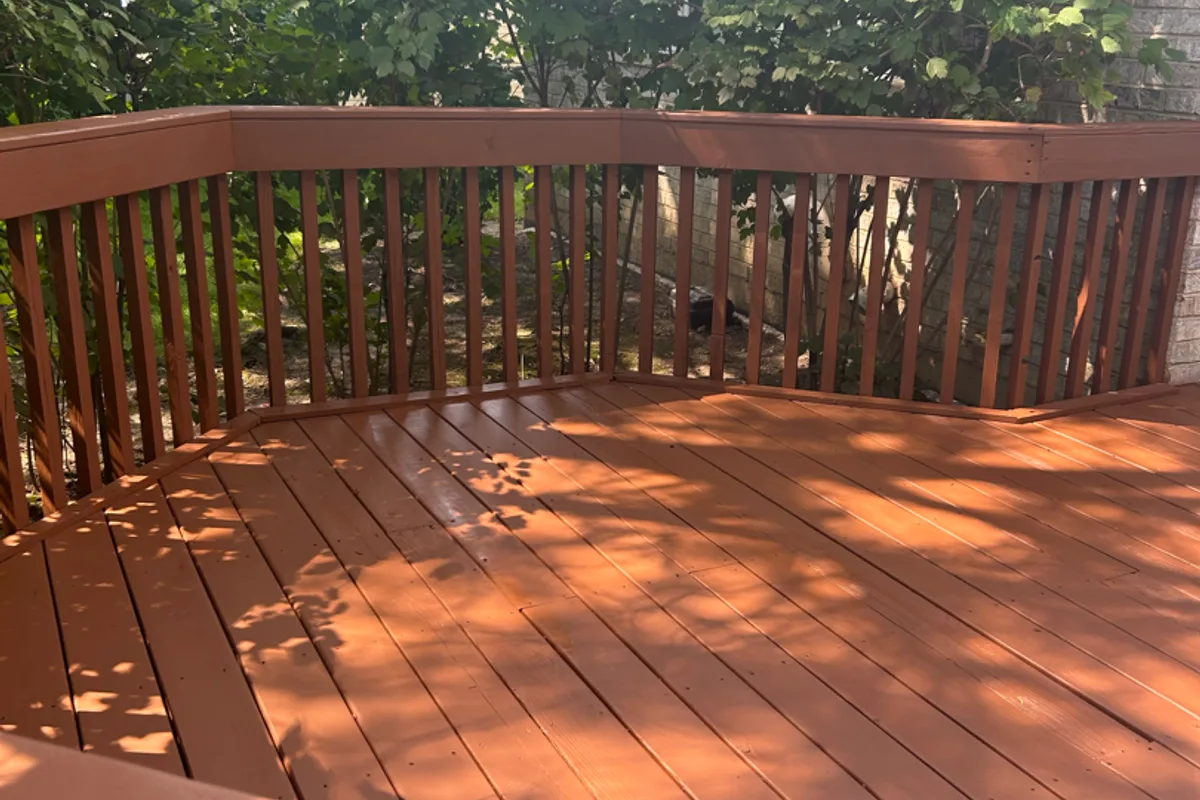
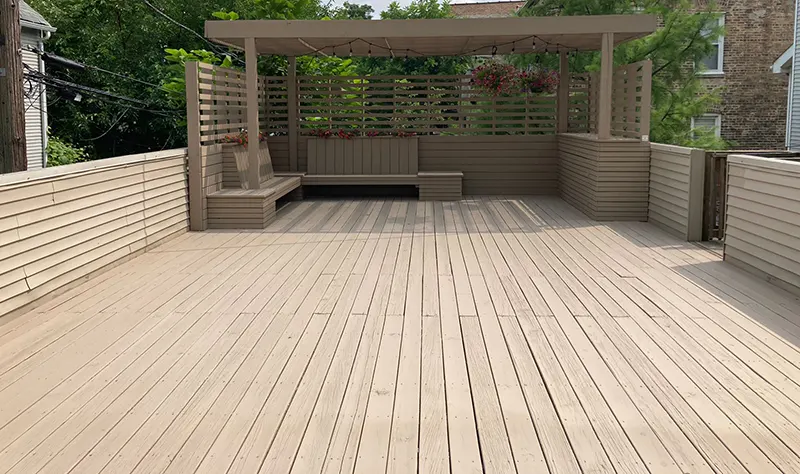
Homeowners ask us two questions about products more than any others: which stain do you use, and why that one. The short answer is that four finishes cover almost every deck, fence and hardwood surface we work on in Chicagoland, and each one was chosen for a specific job rather than a brand loyalty. The longer answer is below, with before, washed and after photos from our own projects so you can see what each finish does on real wood in this climate.
Key Takeaways
- Rymar Xtreme Weather is our go-to for wood decks: a penetrating semi-transparent oil that beads water, blocks UV with pigment, and wears instead of peeling.
- TWP 1500 is our fence finish: an EPA-registered penetrating preservative that resists the water absorption that warps and splits pickets.
- Benjamin Moore Woodluxe is the water-based option for lower odor, faster drying and a wide range of opacities and colors.
- Ipe and other dense hardwoods get a penetrating oil, DeckWise Ipe Oil or Rymar Exotic Forest, never a stain.
- Every one of them penetrates rather than filming, which is why maintenance is a clean-and-recoat rather than a strip. That single property matters more in a freeze-thaw climate than any color chart.
What We Look for in a Finish
Chicago decks go through months under snow, freeze-thaw cycles that open the grain, wet springs and humid summers with hard sun. A finish here has to do four things: keep water out, block ultraviolet light, tolerate the wood moving, and be maintainable without stripping. Film-forming products fail the third test. They look good for a season and then let go in sheets, and the next job is a strip. Penetrating finishes soak into the wood, so there is nothing on the surface to peel, and when they wear, the deck is cleaned and recoated. That is the property every product below shares. The rest is about matching the product to the wood and the look.
Rymar Xtreme Weather: Our Deck Standard
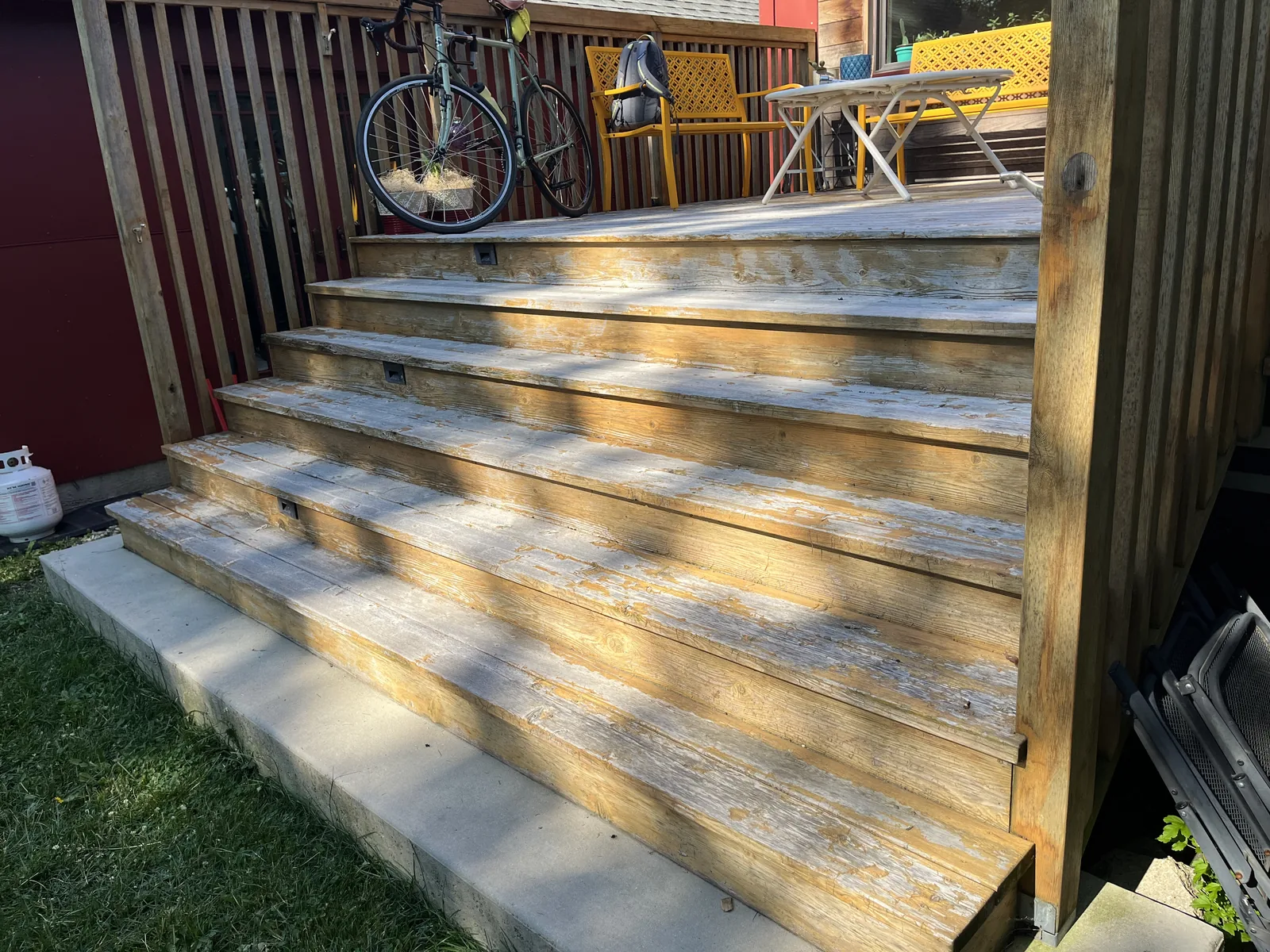
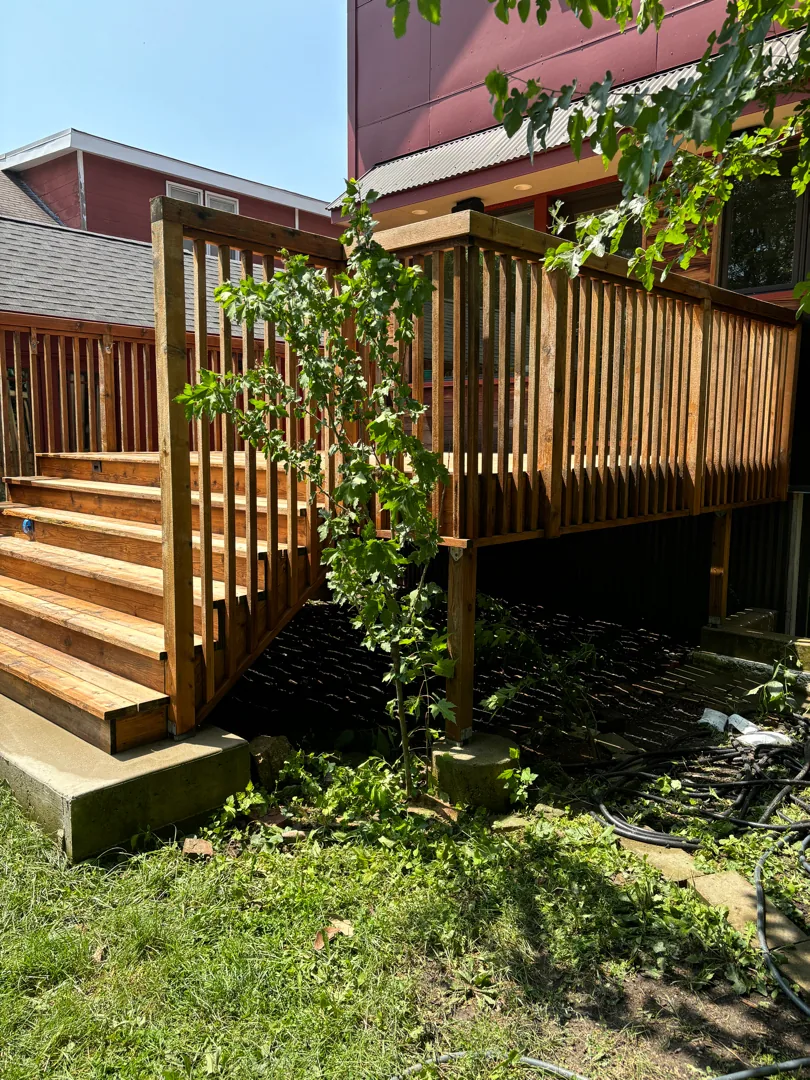
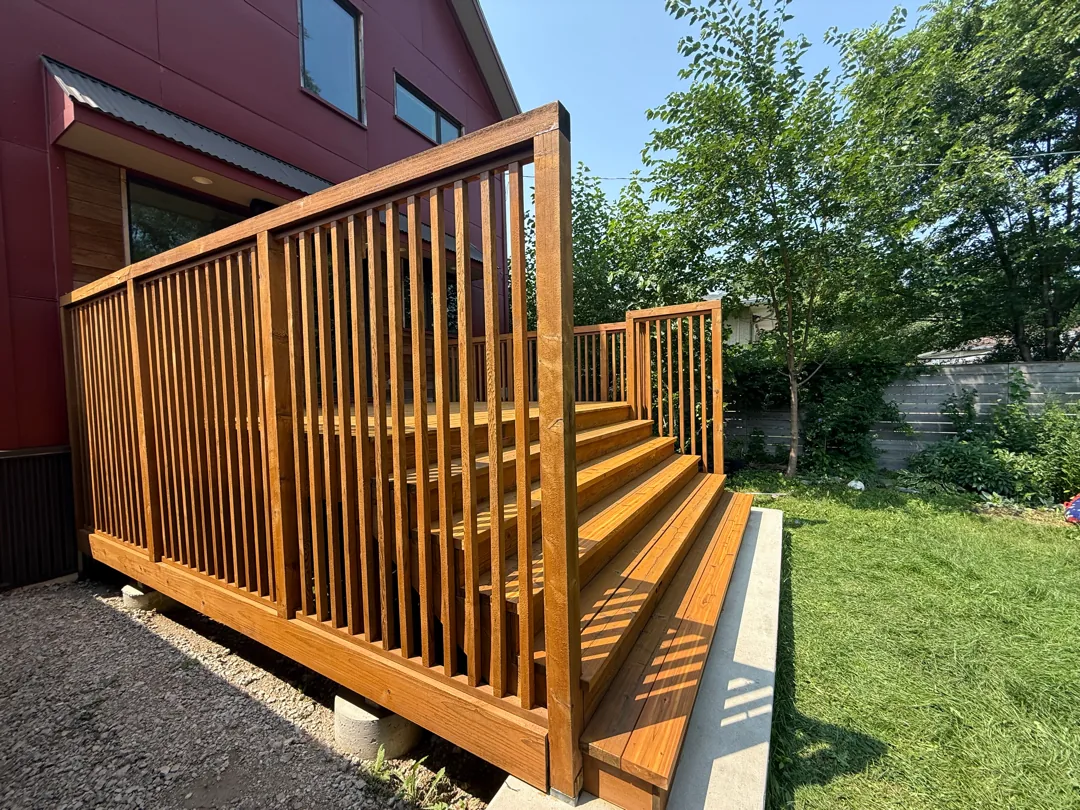
Xtreme Weather is a low-VOC penetrating oil stain and sealer in one. It soaks into pressure-treated pine, cedar and fir and leaves a flat, semi-transparent finish that lets the grain show while shedding water. Blended natural oils and PTFE give it strong water beading; UV absorbers and pigment block the sun that grays a deck. We apply it thin, back-brush it in, and wipe up anything left on the surface after twenty minutes.
It comes in a Clear and eleven tints. Honey Brown and Hickory Bark are the two we apply most, followed by Natural Cedartone and Nectar. In two to four years, depending on sun and traffic, it fades evenly and takes a maintenance coat after a wash. It has never given us a peeling call-back on a deck that was prepared properly, which is the reason it is our standard.
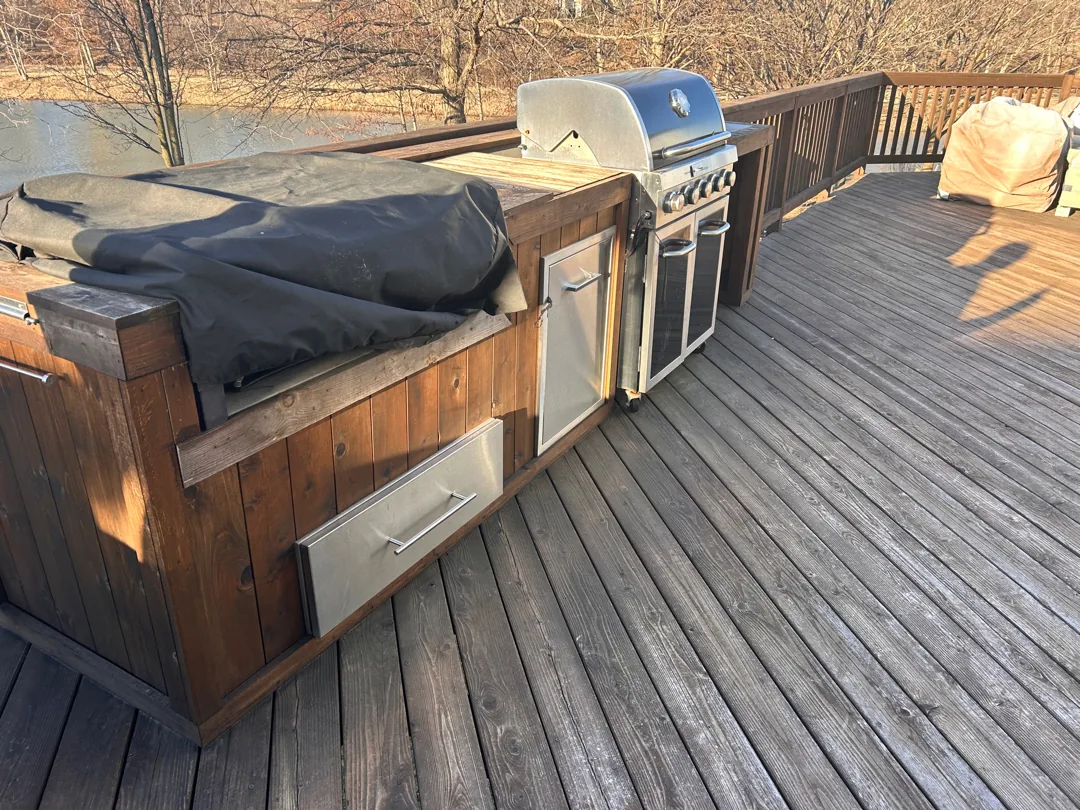
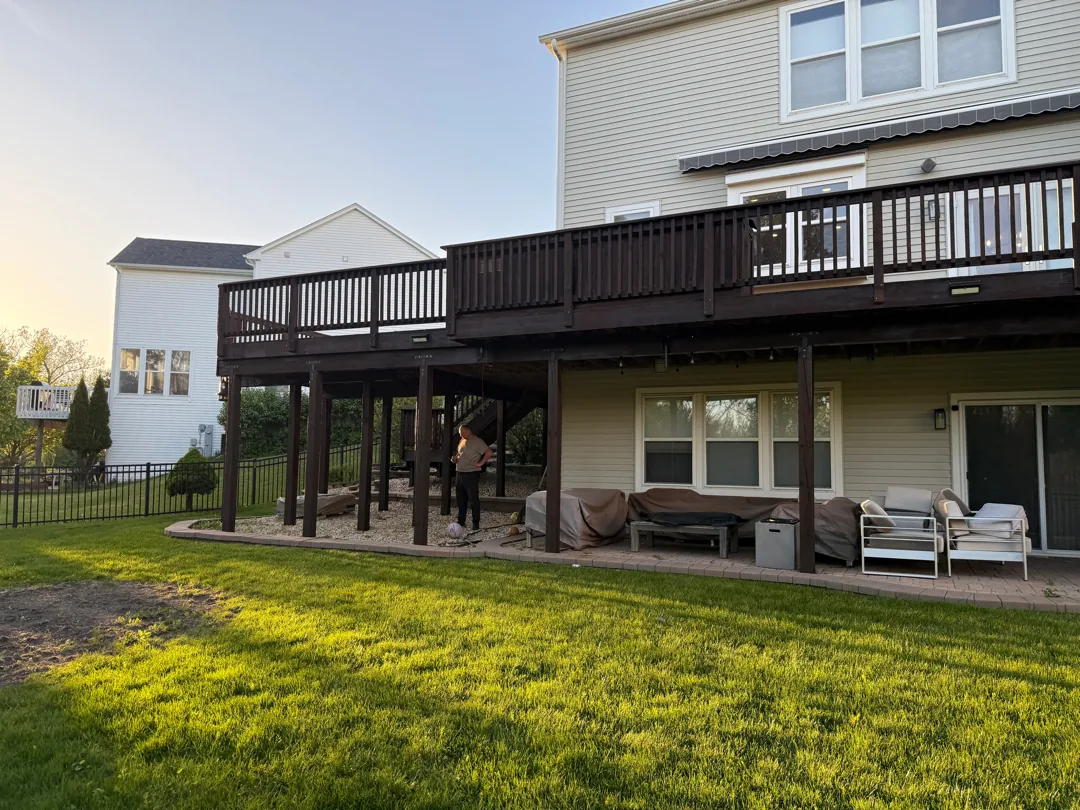
Where Clear fits
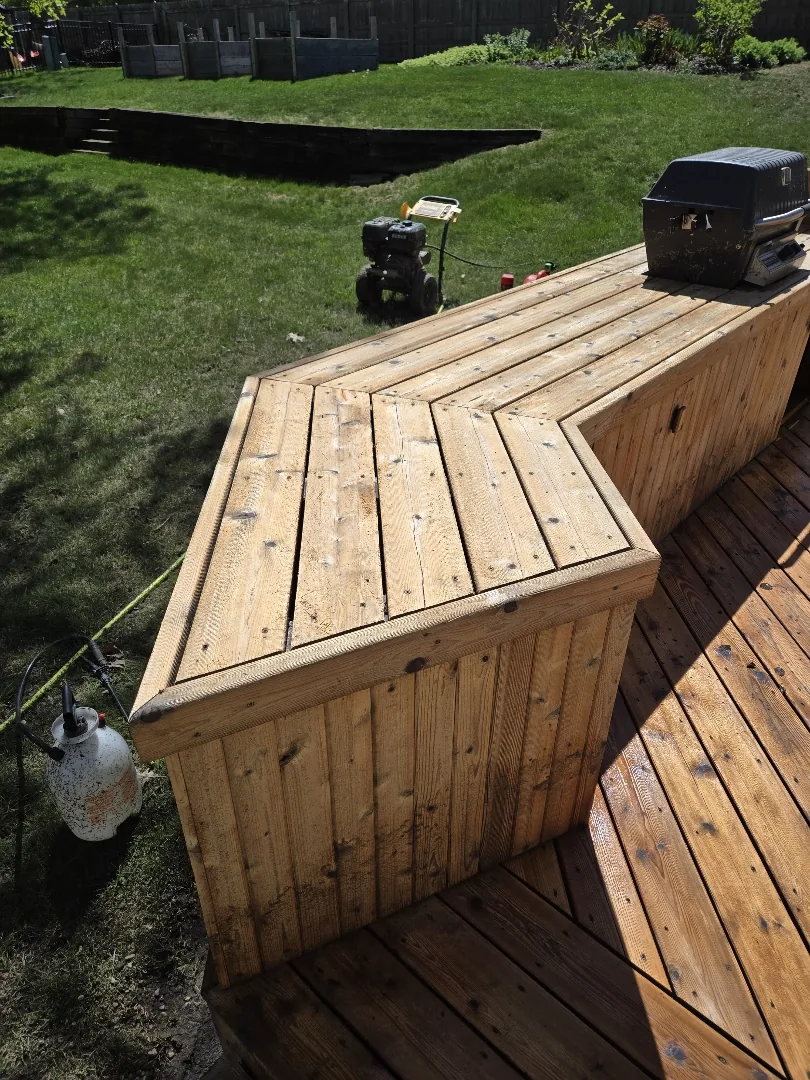
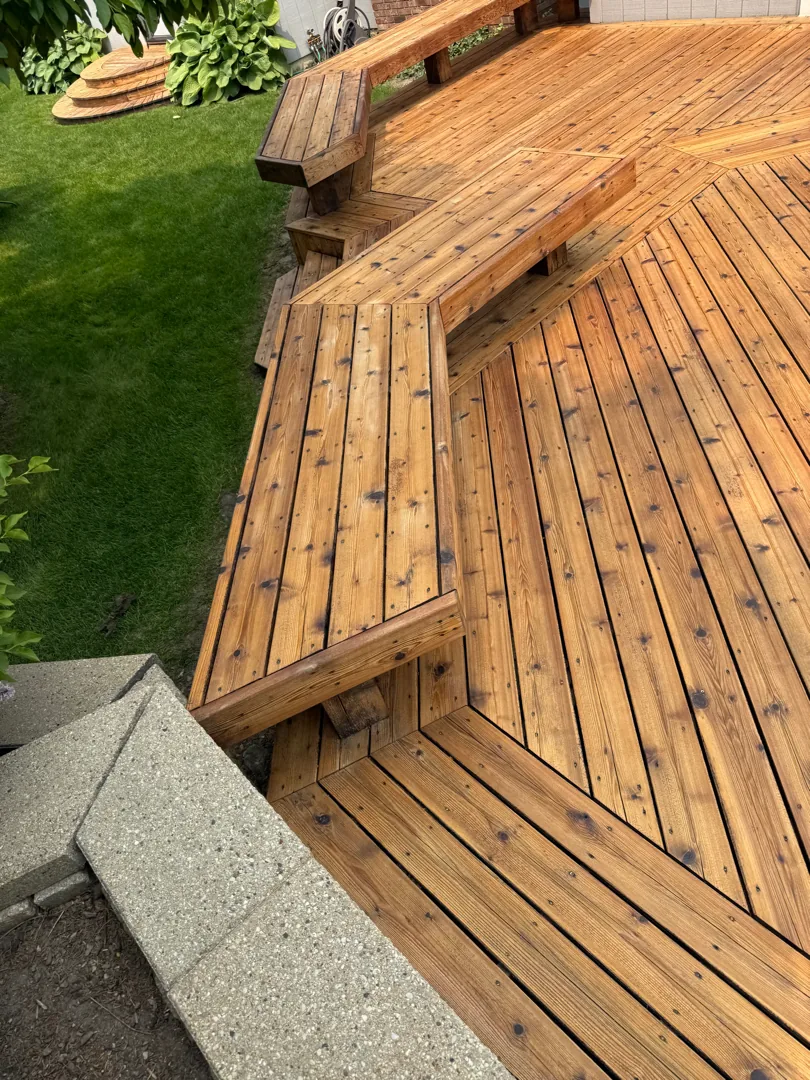
The Clear is the same oil without pigment. It is the right choice when the homeowner wants the wood untouched, and the honest trade-off is that without pigment the color fades sooner and the deck is recoated about yearly. We explain the choice in our post on clear deck sealers.
TWP 1500 Series: Built for Fences
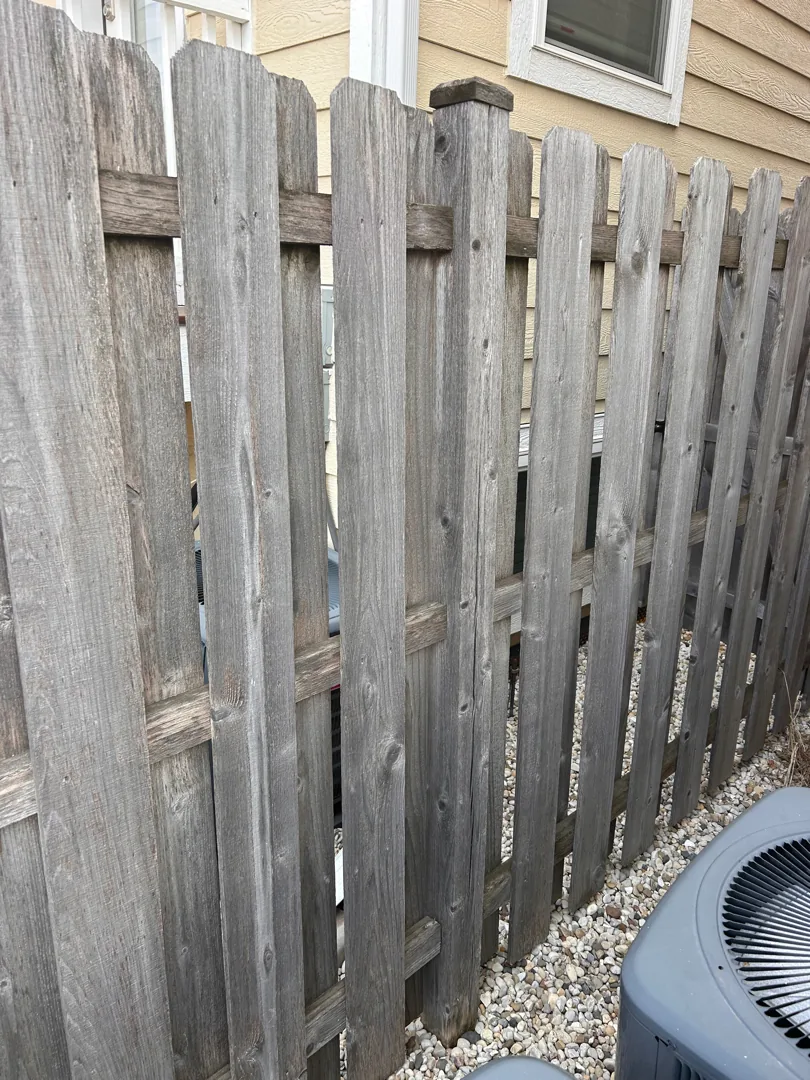
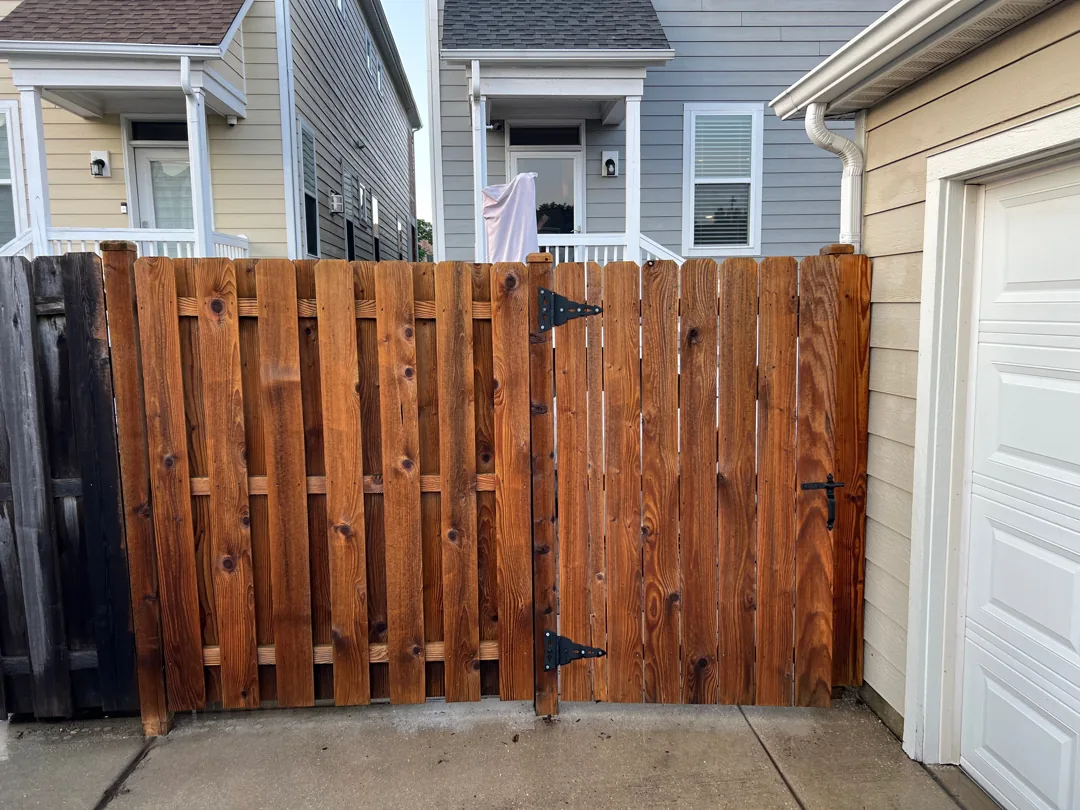
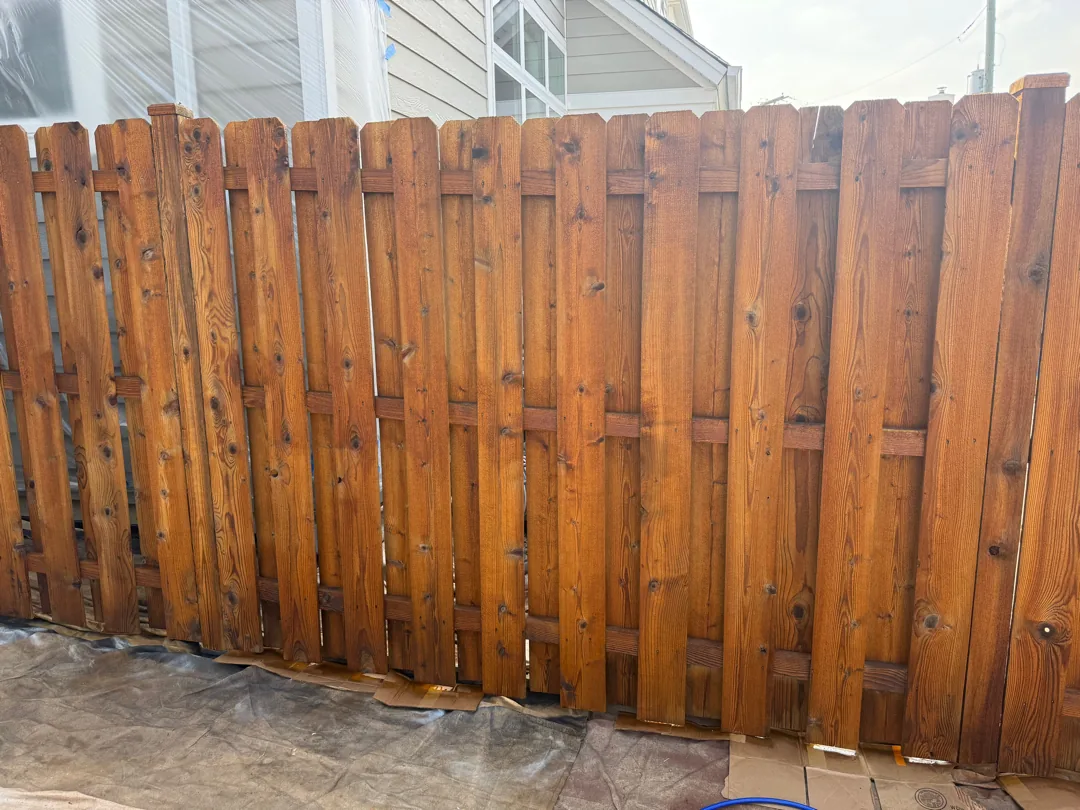
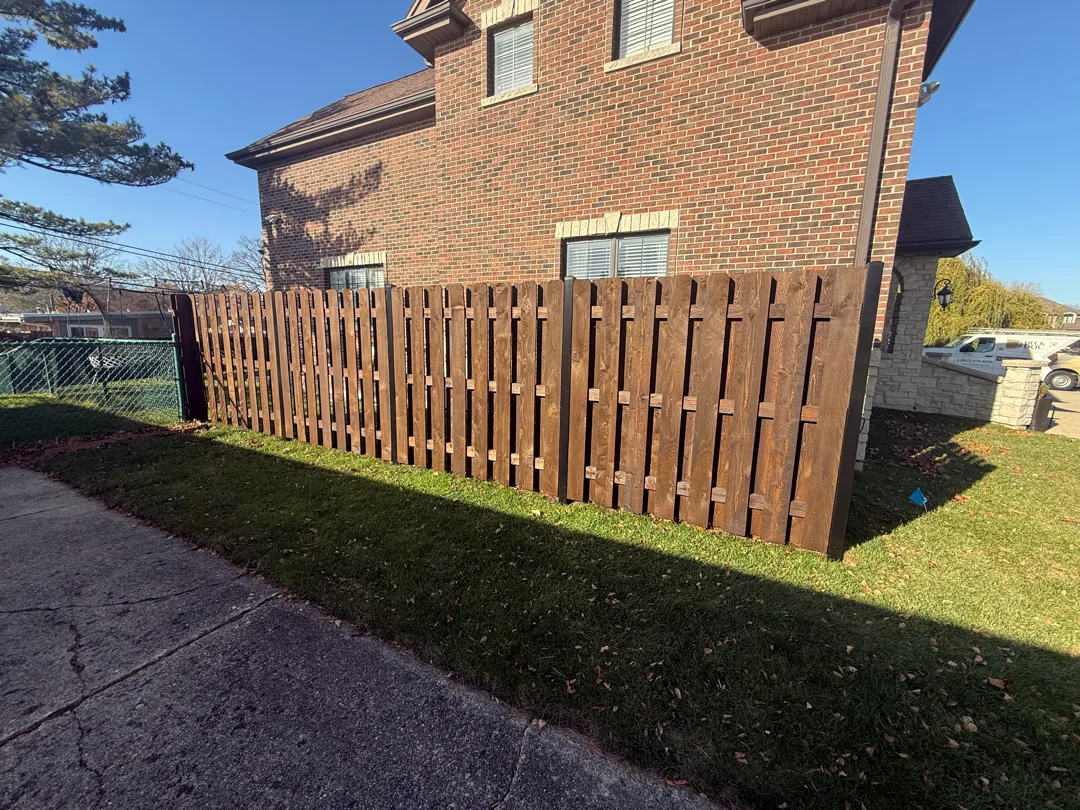
Fences take a beating and rarely get the attention a deck does, so the finish has to last with almost no help. TWP 1500 is a semi-transparent penetrating oil that is also an EPA-registered wood preservative. It resists the water absorption that warps and splits pickets, its pigments block UV, and because it penetrates it never peels; a fence coated with it is simply washed and recoated years later. Cedartone and Natural are the usual choices, and Black Walnut for homeowners who want a dark fence behind a green yard.
Benjamin Moore Woodluxe: The Water-Based Option
Some projects call for a water-based finish: a homeowner sensitive to odor, a job that has to be done and dry inside a short window, or a color the oil lines do not offer. Woodluxe is Benjamin Moore's exterior stain-and-sealer line. It stains and waterproofs in one coat, cleans up with soap and water, and comes in opacities from translucent to solid, which lets us dial in exactly how much grain shows against how much sun protection the homeowner wants. When someone wants the look of a painted deck without the peeling, a Woodluxe solid is the answer we give.
Hardwood Oils for Ipe and Exotic Decks
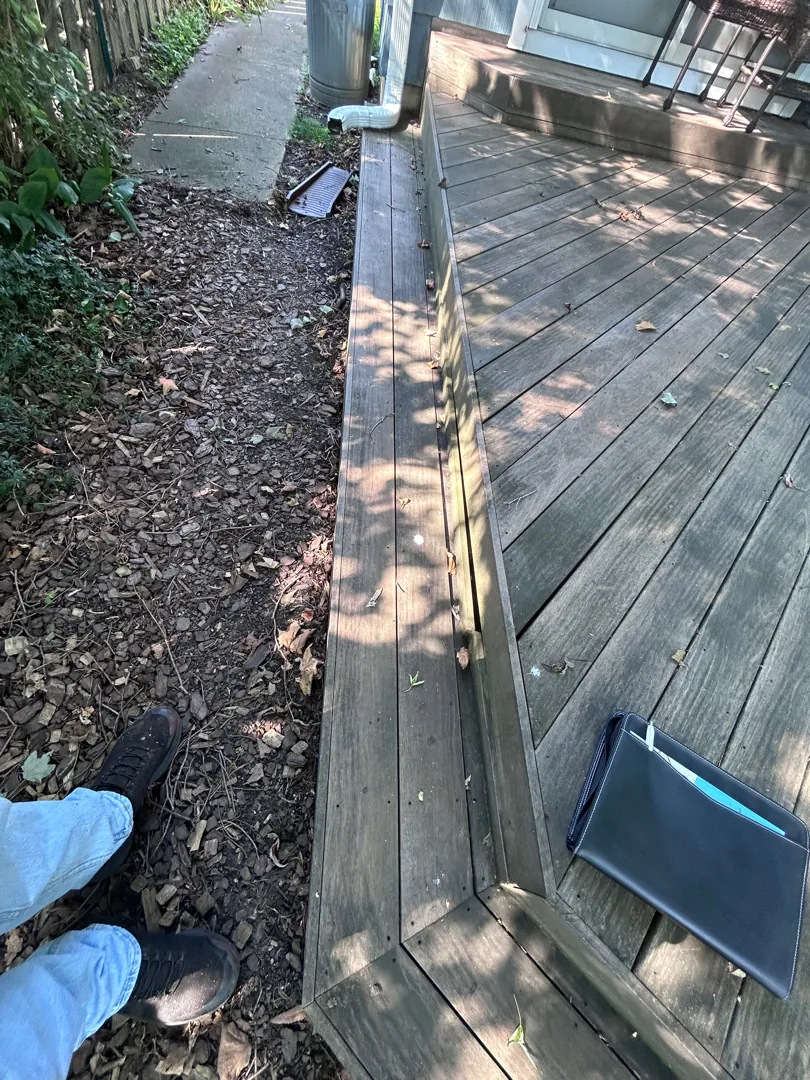
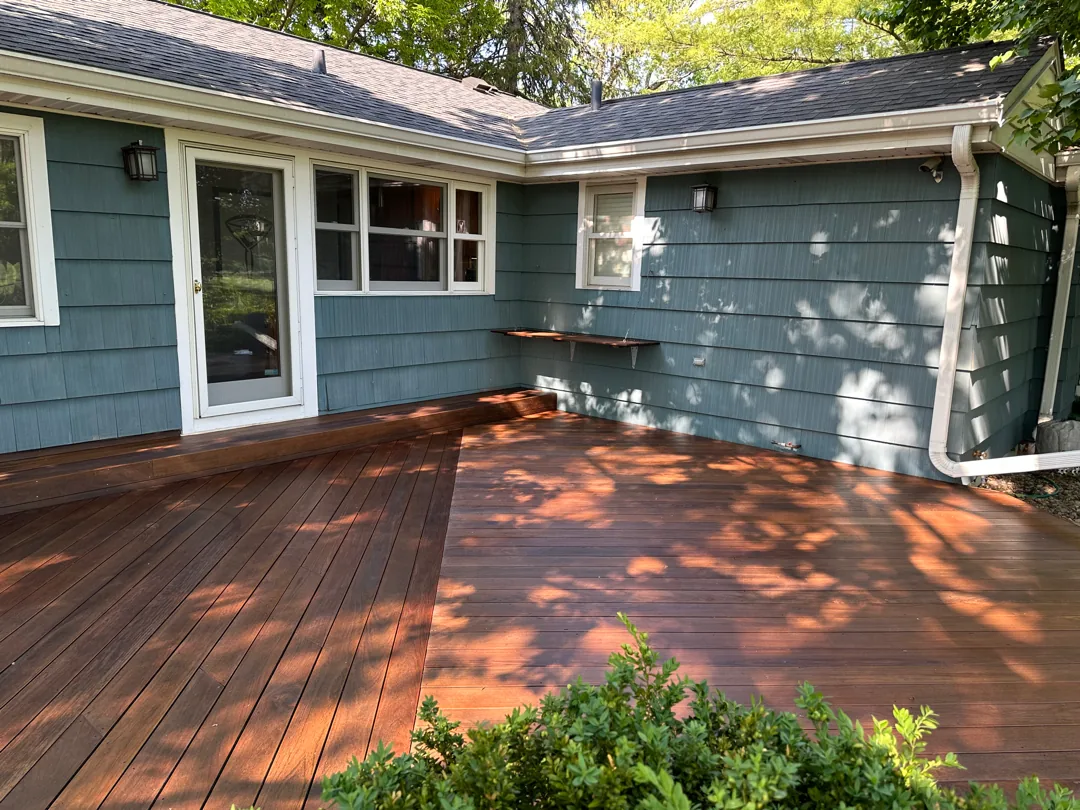
Ipe, cumaru and the other dense tropical hardwoods reject ordinary stains. They get a penetrating oil, applied thin and wiped back. We use DeckWise Ipe Oil as our default and Rymar Exotic Forest, a tung and linseed oil blend, when a warmer tone is wanted. Both keep the wood's natural color and slow the graying, and both are reapplied every year or two. Our ipe cleaning and oiling page goes into the why.
What About the Other Colors and Products in Our Photos?
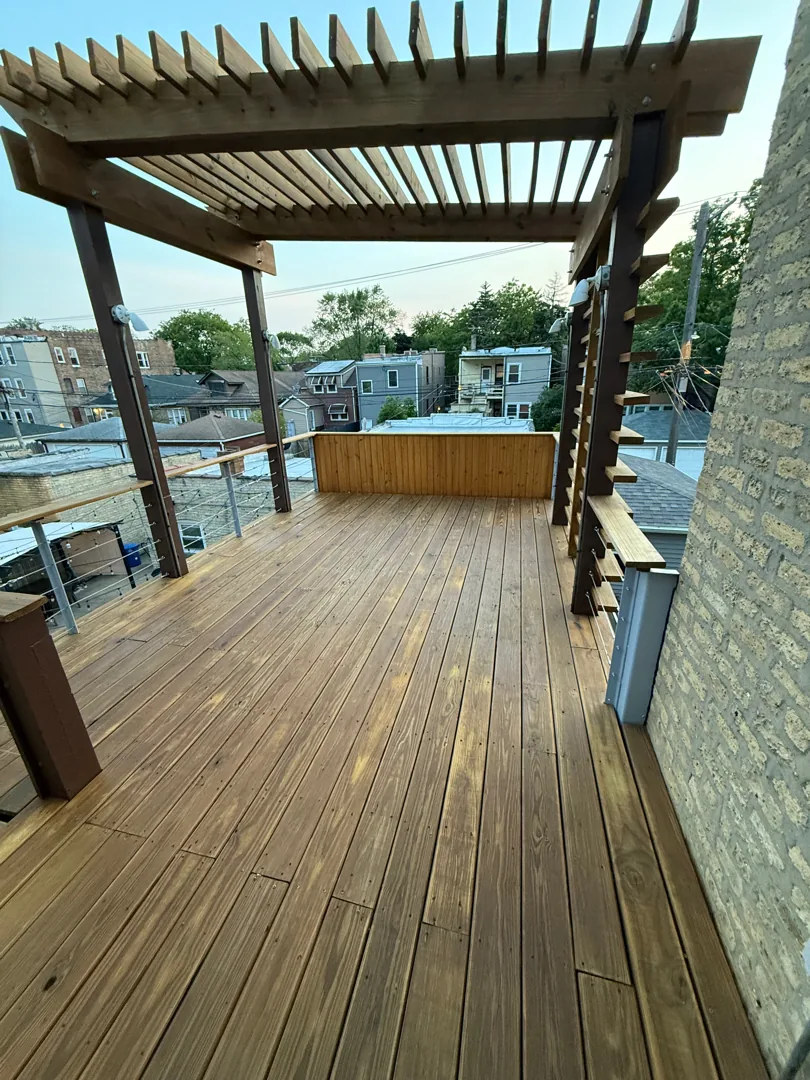
Over the years we have applied a lot of solid colors, mostly Benjamin Moore's solid exterior stains, on decks whose owners wanted an opaque color or needed to hide older boards. Those photos are on our gallery and project pages. We still do solid finishes when they are the right answer, and the water-based Woodluxe line is where we do them now. Ready Seal, which shows up in some older project photos, is a product we no longer stock; Xtreme Weather replaced it as our penetrating oil.
How We Match the Finish to the Job
| Surface | Finish | Why | Recoat |
|---|---|---|---|
| Pressure-treated, cedar or fir deck | Rymar Xtreme Weather, semi-transparent | Water beading, UV pigment, wears instead of peeling | 2 to 4 years |
| Deck the owner wants untouched | Rymar Xtreme Weather Clear | Same oil, no pigment | About yearly |
| Wood fence | TWP 1500 (Cedartone, Natural, Black Walnut) | Preservative, resists warping and splitting, minimal upkeep | 3 to 5 years |
| Opaque color, low odor, fast turnaround | Benjamin Moore Woodluxe | Water-based, full opacity range, soap-and-water cleanup | 3 to 5 years |
| Ipe and exotic hardwoods | DeckWise Ipe Oil or Rymar Exotic Forest | Penetrates dense wood, wiped thin, no film | 1 to 2 years |
The full product descriptions, colors and data sheets are on our products and materials page. We bring samples of each finish to every estimate, and the color choice is easier on your own boards than on a chart; our guide to choosing a deck stain color covers how to test.
Frequently Asked Questions
What is the best deck stain for Chicago?
For a wood deck, a penetrating semi-transparent oil stain with UV pigment. We use Rymar Xtreme Weather because it beads water, holds color for two to four years, and wears instead of peeling through freeze-thaw winters.
Can I request a different brand?
Yes. If you have a product or color you already love, we will confirm at the estimate whether it suits the wood and the exposure, and use it if it does.
Why don't you use paint or solid film finishes on deck floors?
Films trap moisture and peel under foot traffic and freeze-thaw. Every finish we use penetrates the wood, so maintenance is a clean-and-recoat instead of a strip. See should you paint pressure-treated wood.
Are these products low-VOC?
Yes. Rymar Xtreme Weather and Exotic Forest, TWP 1500 and Woodluxe are all low-VOC formulas, and Woodluxe is water-based for the lowest odor.
How do I know which one my deck should get?
Wood species, sun exposure, the current finish and the look you want decide it. A free on-site estimate includes a look at all four and a recommendation, and every job is backed by the Deck Doc warranty.