You checked the forecast, you stained the deck, and then a storm came through anyway. Spring in Chicago does this. Whether the coat survived depends on two things: what kind of stain it was, and how many hours it had before the rain. This guide walks through both, tells you what to look for once the deck dries, and explains which problems fix themselves, which need a light touch-up, and which need the section redone.
Key Takeaways
- Do nothing while the deck is wet. Most rain damage looks worse than it is, and nothing can be judged until the wood has dried for a day or two.
- A penetrating oil stain that had four or more hours to soak in usually survives with minor spotting. Water-based stains are more vulnerable in the first two hours and more forgiving after they have skinned over.
- Rain in the first hour on any product means the stain was diluted or washed off in places. Expect blotches and plan a recoat of those sections.
- White spots on a water-based finish often clear as it cures. Dark spots on an oil finish are usually where rain kept the stain from penetrating evenly, and a thin second coat evens them out.
- Prevention is the 48-hour rule: no rain for a day before and up to two days after, checked on the evening forecast, not the morning one.
First: Wait
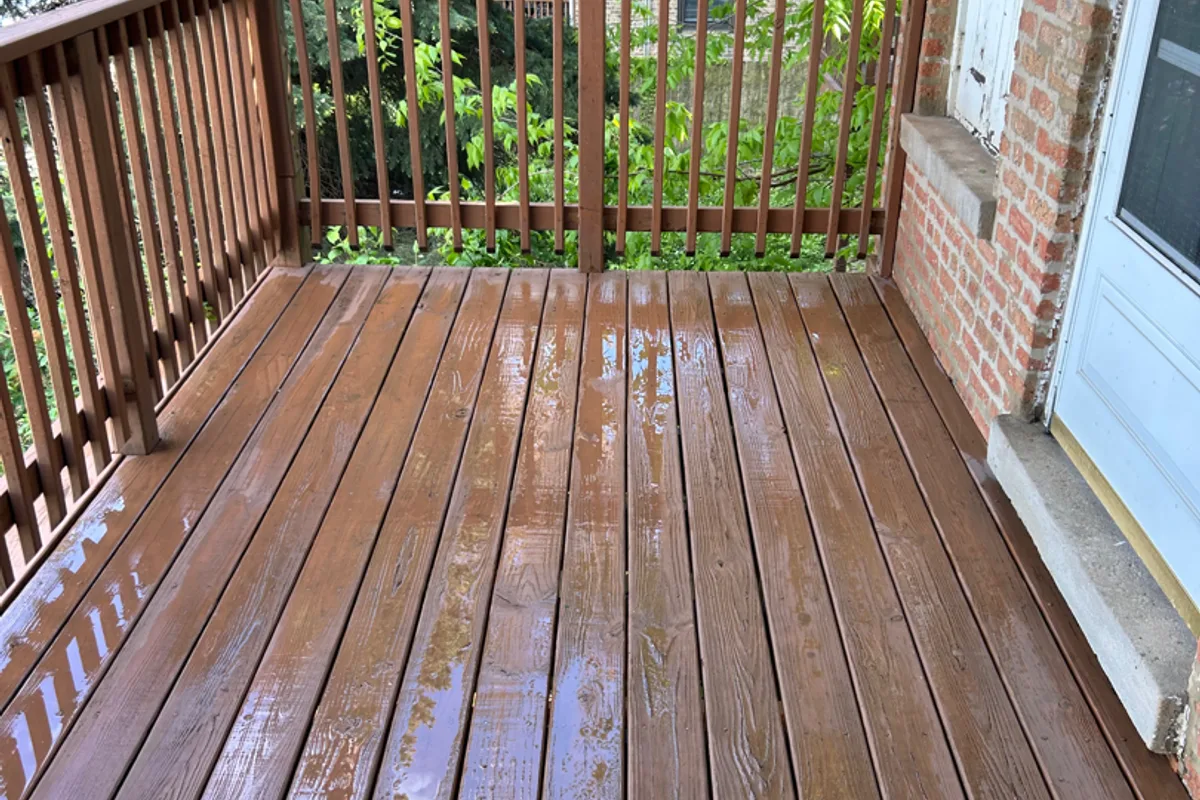
The instinct is to get out there with a brush. Resist it. Stain that is still wet cannot be evaluated, and touching it up while rain is sitting on the boards makes the blotching worse. Let the storm pass, let the deck dry for a full day or two of decent weather, and then look at it in flat light, not glare. Many of the "ruined" decks we get calls about look fine by the time we arrive.
How Much Time the Stain Had
Every label has its own dry times, and humidity and temperature stretch them, but the pattern is consistent.
| Rain arrived | Penetrating oil stain | Water-based stain | Hardwood oil (ipe) |
|---|---|---|---|
| Within the first hour | Stain diluted and washed into puddles; blotchy, light patches likely | Stain washed off in places; milky runs and bare spots likely | Excess oil floats and streaks; wipe and re-oil the area |
| 1 to 4 hours | Stain has soaked in but not cured; light spotting where drops sat | Film has skinned over; water spots and some blushing | Usually fine if it was wiped back properly |
| 4 to 12 hours | Usually fine; faint dark spots at most | Usually fine; minor white spotting that clears as it cures | Fine |
| After 24 hours | Fine | Fine | Fine |
Oil-based penetrating stains, which is what we apply on most Chicagoland decks, are the more forgiving type once they have had a few hours to soak in, because the protection is in the wood rather than on top of it. Water-based stains dry to the touch faster but form a film, and a film that gets rained on before it has hardened can spot, blush or lift.
What You Will See, and What It Means
- Light, blotchy patches. The stain was diluted or washed away before it penetrated. These areas will take another coat once dry.
- Dark spots where drops sat. Common on oil stains rained on early. Water kept the stain from spreading evenly; the spots usually fade as the finish cures and blend under a thin maintenance coat.
- White or milky spots and streaks. Water-based stain that took on water before curing. Often clears on its own within a few dry days; if it does not, it needs a light scrub and recoat.
- Sticky or shiny areas. Stain that was sitting on the surface when the rain came and never soaked in. Wipe it off with a rag once the deck dries; if it has hardened, a light scrub with a deck cleaner takes it down.
- Beads of water on some boards, soaking on others. The finish penetrated unevenly. The boards that soak need another coat.
- Peeling or lifting. Rare with penetrating stains; happens with film-forming products rained on hard in the first hours. The lifted area has to be stripped back to sound finish before recoating.
How to Fix It

- Let it dry completely. At least 48 hours of dry weather, longer in shade. Do the sprinkle test: water should soak in on the affected boards, which tells you they are ready to take more stain.
- Clean the affected area. A mild deck cleaner and a soft brush remove any surface residue, dirt and pollen that the rain deposited. Rinse and let it dry again.
- Recoat thin, board by board. Apply a thin coat of the same product to the affected boards along their full length, from end to end, so there is no lap line mid-board. Back-brush it in and wipe up anything that does not soak in after 20 to 30 minutes.
- Feather, do not patch. If only a section was hit, run the recoat over the whole boards involved rather than the spot. Penetrating stains blend well this way; solid stains and film finishes are harder to blend and may need the whole surface recoated.
- Check the forecast again. This time, give the touch-up its full drying window.
If the whole deck was hit in the first hour, treat it as a fresh job: let it dry, clean, and apply a full thin coat. There is no point spot-fixing a coat that never penetrated. Our step-by-step staining guide covers the full sequence.
How Long Stain Needs Before Rain
The label number is the minimum. In Chicago, humidity, cool nights and heavy dew stretch it, which is why we plan around a longer window than the can suggests.
- Penetrating oil stains: label guidance is often 12 to 24 hours before rain; we plan for 24, and prefer 48 in spring and fall when nights are cool.
- Water-based stains: dry to the touch in an hour or two in warm weather, but need 24 hours before rain to be safe.
- Hardwood oils: wiped back thin, they are the least affected once wiped, but still want a dry night.
- Before staining: the wood itself needs 48 dry hours after washing or a rain. Staining a damp deck fails whether or not it rains afterward.
Reading a Chicago Forecast
The mistake that causes most rained-on decks is trusting the morning forecast for the afternoon. Summer storms here build after 2 p.m. and are often missing from the forecast at 7 a.m. Check the hourly forecast just before you start, look at the radar to the west, and if there is a chance of afternoon storms, stain early and stop by noon so the coat has the afternoon to soak in. In spring, the safer choice is often to wait for a stretch of three settled days rather than gamble on one. Our guide to the best time of year to stain a deck in Chicago explains why late summer is the most reliable window.
Frequently Asked Questions
Is my deck ruined if it rained right after staining?
Almost never. Let it dry for two days, then look for blotches, spots and boards that soak up water. Those areas get cleaned and recoated thin. The rest of the deck is usually fine.
How long does deck stain need to dry before rain?
Plan on 24 hours for most products, and 48 in cool spring or fall weather. Penetrating oils that have had four or more hours usually survive a shower with minor spotting.
Can I stain over the rain spots?
Yes, once the deck is completely dry and clean. Apply a thin coat to the affected boards end to end so the repair blends, and wipe up any excess.
Why did my water-based stain turn white after the rain?
The film took on water before it cured, which is called blushing. It often clears on its own in a few dry days. If it does not, a light clean and recoat fixes it.
Should I cover the deck with a tarp if rain is coming?
Only if the tarp can be kept off the surface. A tarp lying on wet stain traps moisture and sticks; a tarp tented over the deck on furniture or sawhorses can help in a short shower.
Rained on and not sure what you are looking at? Send us a photo or request a free on-site estimate. Most of the time the fix is a thin coat on a few boards, and we will tell you if that is all it needs.