Search "best time to stain a deck in Chicago" and you get two kinds of answers: "spring" from national how-to sites, and "whenever it is dry" from forums. Both miss what actually decides the outcome here: cool nights, morning dew, summer humidity, and how much cure time the finish gets before the first hard freeze. This guide walks the calendar month by month, explains why late August through September is our first choice, and shows you how to judge a specific week from the forecast.
Key Takeaways
- Late August through September is the best window in Chicagoland: warm days, nights that stay above 50°F, lower humidity and longer dry stretches.
- Spring works from about mid-May, once nights hold above 50°F and the wood has dried out after winter, but rain and pollen make it the hardest season to schedule.
- Summer staining is fine in the morning and in shade. Hot boards in direct afternoon sun make oil stains flash-dry and water-based stains show lap marks.
- Two rules beat any month: wood moisture in the low to mid teens, and 48 dry hours both after the wash and after the coat.
- After mid-October the cure window closes fast. See our post on the last safe day to stain a deck in Chicago.
What Stain Needs From the Weather
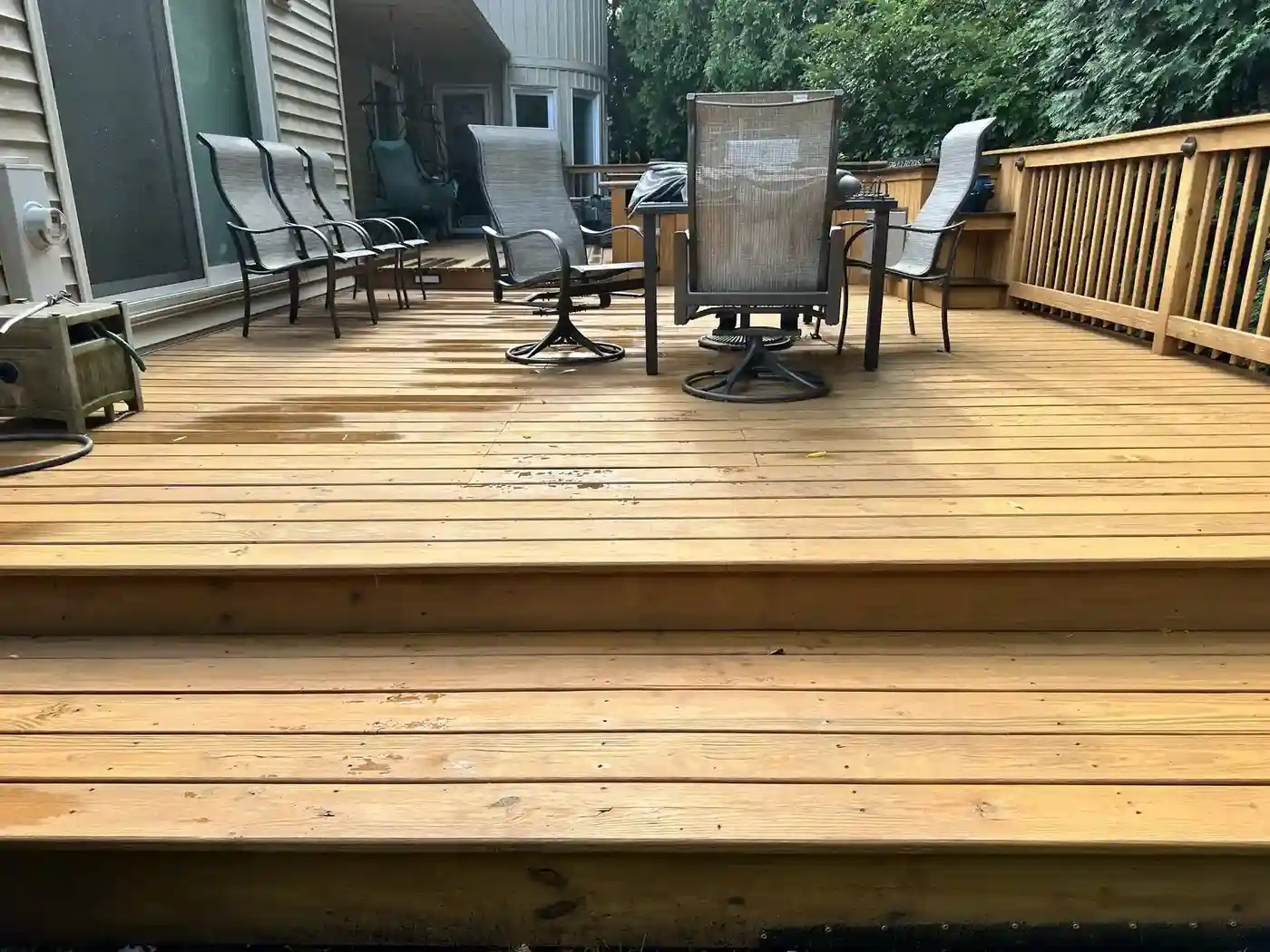
Every deck stain, oil or water-based, has a label that asks for the same things. Air and surface temperatures within a range, usually somewhere between 50°F and 90°F. Dry wood, because stain cannot soak into fibers that are already full of water. No rain for a day before the coat and for one to two days after. And enough time at those temperatures for the finish to cure, not just dry to the touch.
Chicago's weather fights those rules in different ways depending on the month:
- Cold nights. A coat applied at 65°F in the afternoon can be sitting at 40°F by 3 a.m. Oil stains cure slowly in the cold, and water-based stains can fail to form a proper film below about 50°F.
- Dew. Heavy dew settles on a fresh coat overnight through much of the summer. On water-based finishes it can leave white blush marks. On oils it slows the cure.
- Humidity. Sticky July air keeps the deck from drying after a wash and stretches cure times.
- Sun. A dark board in direct July sun can run well above 120°F at the surface. Stain dries on top before it penetrates, which is where streaks, lap marks and early peeling start.
- Rain. Spring and early summer bring the most rain days. A washout a few hours after application means starting over on that section.
Deck Staining in Chicago, Month by Month
| Month | Verdict | Why |
|---|---|---|
| March to April | No | Wood is saturated from snowmelt, nights still drop below freezing, and the deck rarely gets 48 dry hours in a row. |
| May | Possible late in the month | Nights start holding above 50°F. Rain is frequent and tree pollen settles on wet finish. Test the wood moisture before booking. |
| June | Good, with planning | Long days and warm wood. Afternoon storms are the risk, so the wash and the coat need a clear forecast. |
| July | Workable with care | Heat and humidity peak. Stain in the morning, follow the shade, and skip heat-wave weeks. |
| Late August | Best | Heat eases, the air typically dries out, dry stretches get longer, and the wood is at its driest after a full summer. |
| September | Best | Warm days, nights mostly above 50°F, lighter dew and stable forecasts. Our busiest month for good reason. |
| Early October | Last call | Pick warm, dry weeks. Oil stains need extra cure time as nights cool. |
| Mid-October onward | No | Nights near 40°F and morning dew that never burns off. Wait for spring rather than risk a finish that never cures. |
Those verdicts assume a wood deck finished with a penetrating stain, which is what we apply on most Chicagoland decks. Solid stains and hardwood oils have their own limits, and the product label always wins over the calendar.
Why Late August Through September Wins
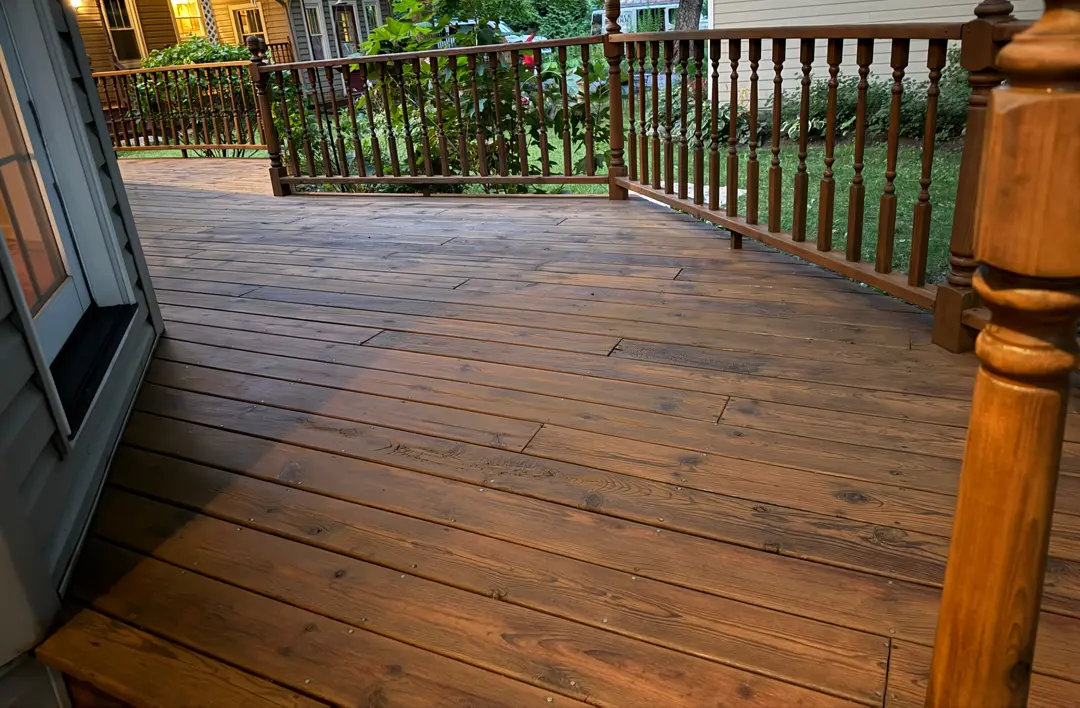
Timing plays a bigger role in how a stain performs than most homeowners expect. Think of it like baking: the recipe only works inside a range of temperatures. Late summer hits that range more days in a row than any other part of the year.
The blazing heat has eased, but the cold, damp days of fall have not arrived. Stain soaks into the wood instead of drying on the surface, which gives a richer color and a finish that stands up to rain and sun. The moderate weather also lets the stain cure slowly and evenly, building a stronger barrier against cracking, fading and moisture.
There is a practical advantage too. By late August the spring and early-summer rush has passed. Scheduling is more flexible and turnaround is faster, so a crew can wash, dry and coat your deck inside one stable weather window instead of squeezing it between storms.
And a deck finished in September heads into winter with a fully cured coat. That matters more than it sounds: the freeze-thaw cycles between November and March are the hardest thing a finish faces all year.
Spring Staining: What to Watch
Spring is when most people think about their deck, and it can work. The catch is water. After months of snow and thaw, the boards hold far more moisture than they look like they do, and a stain applied over wet wood beads, blotches and peels within the season.
Before a spring coat, the deck needs a proper cleaning, a stretch of dry days, and a moisture check. The sprinkle test is the simple version: water that soaks in within a minute means the wood is ready to take stain; water that beads means wait. A moisture meter is better, and we look for readings in the low to mid teens across several boards. Our post on staining or sealing after winter covers the full spring checklist.
Summer Staining: Heat Is the Problem, Not the Month
June and July are not off limits. They just need a different plan. The problem is surface temperature, not air temperature. A deck in full afternoon sun can be too hot to touch, and stain applied to it flash-dries: the solvent leaves before the oil penetrates, and the result is a thin, streaky coat that fails early.
The fix is to work the way a good crew does. Start early, stain the sections that will be in shade first, keep a wet edge along the full length of the boards, and stop when the surface gets hot. On a heat-wave week, reschedule. We go deeper on this in what is safe to do to a deck in summer, and what is not.
How to Judge a Specific Week
Whatever the month, a good staining week looks like this on the forecast:
- At least 48 hours since the last rain, and the deck was washed at least 48 dry hours before the coat goes on.
- No rain forecast for 24 hours after application, ideally 48.
- Daytime highs roughly between 60°F and 85°F.
- Overnight lows above 50°F for the first two nights after the coat.
- Light wind. A strong wind dries the surface too fast and blows debris onto wet stain.
If a week checks every box, the month hardly matters. If it fails the overnight-low test, no amount of afternoon sunshine makes up for it.
Professional Staining vs. DIY
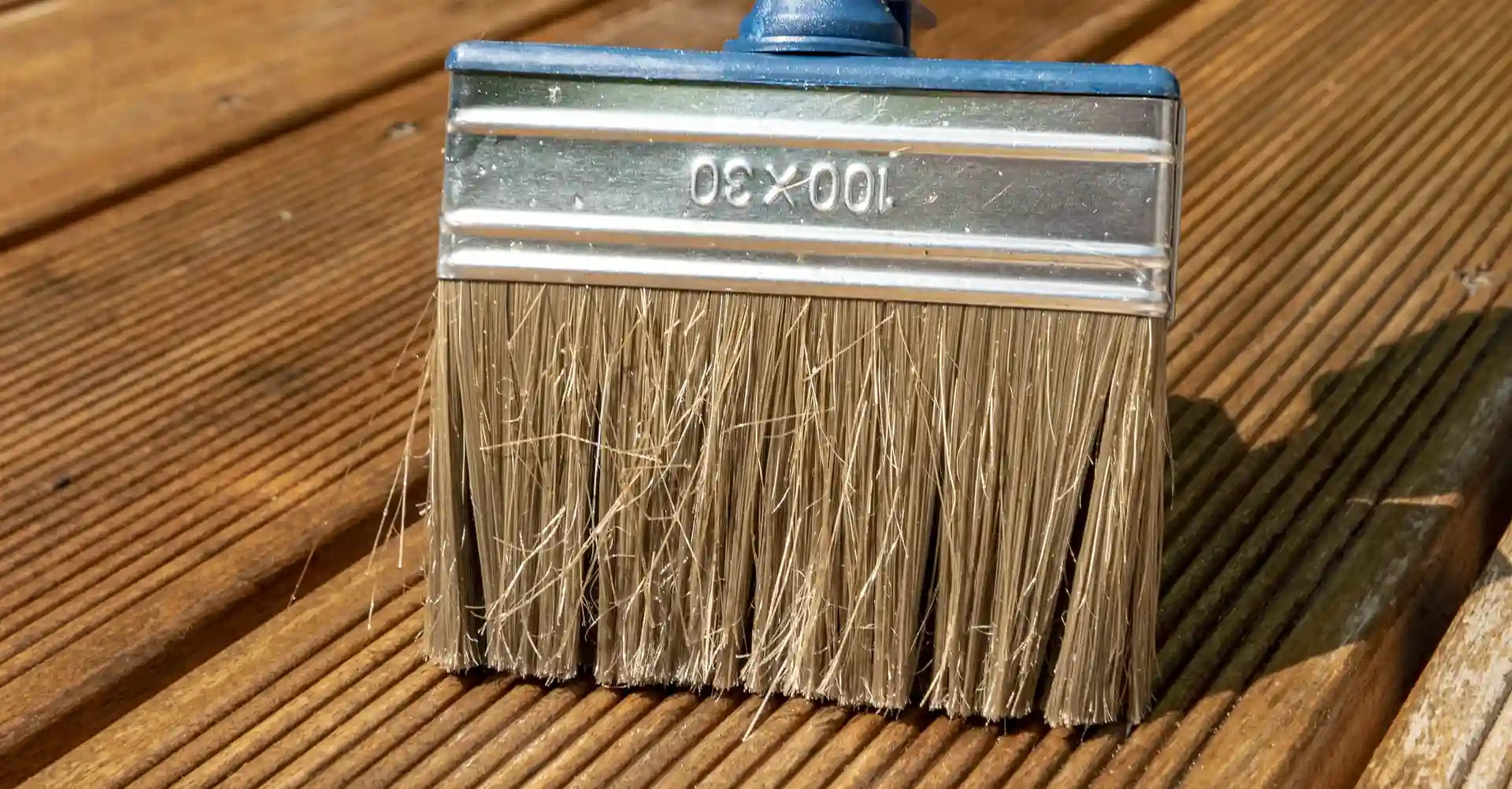
Plenty of homeowners stain their own deck, and with the right prep and a good weather window it can turn out well. Where DIY jobs usually go wrong is before the stain even comes out of the can. A long-lasting finish depends on three things:
Preparation
Cleaning, stripping any failing finish, brightening and sometimes sanding so the stain penetrates evenly. Skip a step and you get streaks, blotches or peeling. We wrote a full guide on how to prepare a deck before staining.
Product choice
The store shelf holds dozens of options: oil and water-based, transparent to solid. Not all of them survive Chicago's mix of humid summers and freeze-thaw winters. We standardize on a short list of contractor-grade finishes that do, and we explain each one on our products page.
Application
Correctly applied stain builds a barrier against fading, cracking and moisture. That means thin, even coats, a wet edge along each board, and the weather window above. Our deck staining service includes the prep, the product and the timing, and our work is backed by the Deck Doc warranty.
How to Choose a Deck Staining Company
The right week matters, and so does the crew that shows up. A fresh coat is only as good as the prep underneath it, and the wrong contractor leaves you with uneven coverage or a finish that peels by the second summer.
Reputation and local experience
Read recent reviews and look for before-and-after photos of real projects. Local experience counts: a crew that stains decks in this climate every week knows how to read a forecast and how much drying time the wood really needs. You can see our recent work on the completed projects pages.
The questions worth asking
What products do you use, and why those? How do you prepare the deck before staining? What happens if it rains? Do you handle repairs, so damaged boards are replaced before the stain goes on? A good contractor welcomes these questions.
Clear communication
Expect a written estimate, an honest timeline and a plain explanation of the process. When a company checks those boxes, the deck usually turns out the way the photos promised.
Book the Window Before It Fills
Timing matters. Late August through September gives the stain the conditions it needs to cure properly, avoids the spring rush, and sends your deck into winter protected. Spring and early summer can work with a careful eye on moisture and heat, and October is a gamble that gets worse by the week.
If your deck is gray, thirsty or peeling, the best time to book is before the good weeks are taken. Request a free on-site estimate and we will tell you exactly what your deck needs and when to do it.