Applying stain to your new deck at the right time is essential for both appearance and longevity. If you're questioning 'when is the right time to stain your new deck,' anticipate a general wait of several weeks to months, varying with wood type and conditions. This guide will help you pinpoint the optimal time frame for your deck, ensuring you achieve a professional-quality finish without premature wear.
Key Takeaways for Staining a New Deck
- The appropriate time to stain a new deck is dependent on the type of wood, with pressure-treated wood usually needing two to four months to dry in Chicago, kiln-dried lumber a few weeks to adjust to the local environment, and green lumber six months to a year.
- Ideal weather conditions for staining a deck include temperatures between 50-90 degrees Fahrenheit, low humidity levels, and an absence of rain both before and after application for optimal stain adhesion and drying.
- Proper deck preparation involves cleaning, sanding, and mildew treatment, while maintenance should include regular restaining every 2-3 years or as indicated by signs of wear, and professional assistance can ensure quality application and longevity.
Understanding Your New Deck's Wood Type
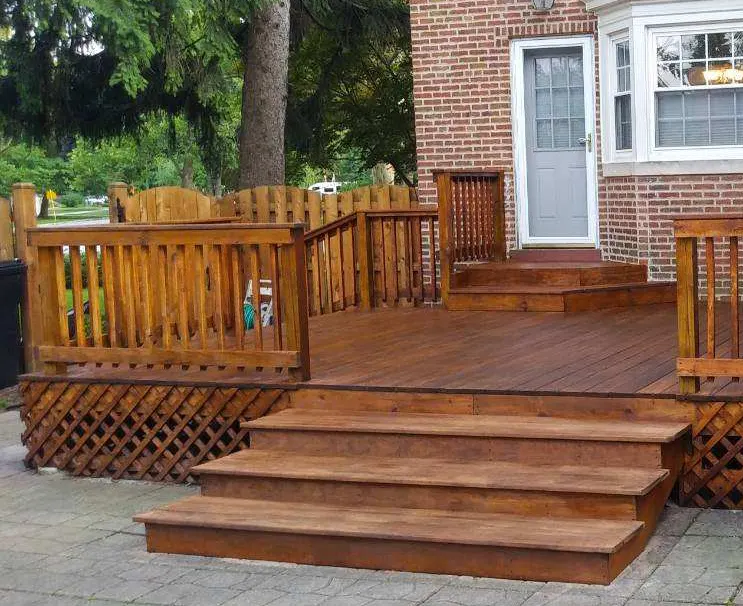
When it comes to staining a new deck, not all wood is created equal. The type of wood your deck is made from significantly influences the timing of the first staining. Whether your deck is built from pressure-treated lumber, kiln-dried lumber, or green lumber, each material comes with its unique properties and drying times.
The first step in determining the right staining time is to understand your new deck's wood type. Depending on the type of wood and its characteristics, the waiting period before staining a new deck runs from a few weeks for kiln-dried lumber to a few months for wet-treated pine. Keep in mind this is a general guideline, and the water test below is what actually tells you the wood is ready.
Pressure-treated wood
Among the different types of wood, pressure-treated lumber is a popular choice due to its durability and resistance to decay and pests. However, this type of wood requires a longer drying period before staining, which can create a problem for those in a hurry to complete their projects.
Pressure-treated wood should be allowed to dry until it passes the water test, which in Chicago usually takes two to four months, and longer for a deck built in a wet spring. During this period, the lumber releases moisture and acclimates to the outdoor environment, thus preparing it for a successful staining process.
Kiln-dried lumber
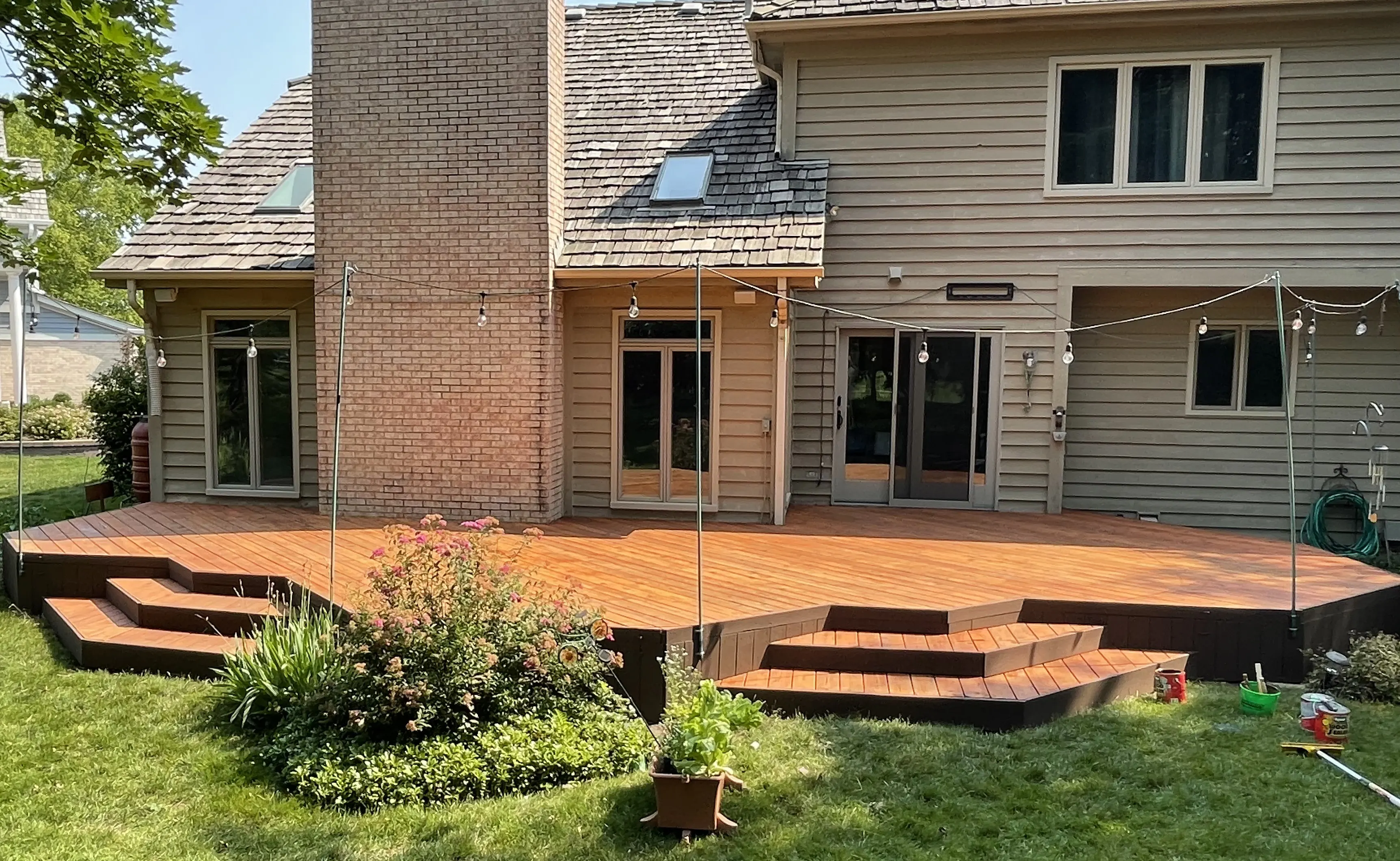
Kiln-dried lumber is another common choice for deck construction. This type of lumber undergoes a process of drying in a kiln, which reduces the moisture content to a target level conducive to staining.
Although kiln-dried lumber may be ready for staining shortly after the drying process, waiting a few weeks to months for the wood to acclimate to the local environment is recommended. This delay helps to ensure a proper adhesion of the stain and its longevity.
Green lumber
Green lumber, often sourced from a lumber yard, is freshly cut new wood with high moisture content. It requires the most time to dry before it is suitable for staining.
Green lumber's drying time can vary, with a general guideline suggesting to wait at least 6 months to a year, contingent on the wood's exposure to sun and wind. Such a long drying period enables the lumber to attain its equilibrium moisture content, crucial for successful staining.
How to Tell a New Deck Is Ready: Two Tests
The calendar is a guideline. The wood tells you the truth, and two quick checks settle it.
- The sprinkle test. Pour a little water on several boards, including one near the house and one in the shade. If it soaks in within a minute, the wood is open enough to take stain. If it beads up and sits, the lumber is still holding treatment moisture or mill glaze, and stain applied now will bead the same way.
- A moisture meter. A pin meter is inexpensive and removes the guesswork. Check several boards on a dry morning, at least two days after the last rain, and look for readings in the low to mid teens. Anything wetter means wait.
Test the shaded and north-facing sections separately. They dry last, and a deck that is ready on the sunny side can still be too wet by the house.
Weather Considerations for Staining
Weather conditions become the next crucial factor once your deck is dry and ready for staining. The ideal staining conditions are between 50-90 degrees Fahrenheit, with dry weather and low-to-average humidity.
Ensure the deck is dry and not exposed to rain for several days before staining, and the forecast predicts at least two more days of dry weather. Conditions such as direct sunlight, high humidity, imminent rain, and strong winds should be avoided. These conditions could cause complications like flash drying, extended stain-dry time, washing away of the stain, and debris sticking to the wet stain.
Preparing Your New Deck for Staining

Your new deck requires a bit of prep work to ensure proper stain adhesion before you can commence staining. The preparation includes sweeping, cleaning, sanding, and treating any mildew on the deck boards. When it comes to new decks, it's essential to follow these steps for the best results, just as you would with an old deck.
Start the preparation by sweeping the surface to get rid of leaves, debris, or loose particles. Subsequently, use a quality deck cleaner or a light pressure washing to eliminate dirt and any stains.
Post-cleaning, sand the deck to eliminate any mill glaze and ascertain proper stain adherence. If the deck has mildew due to high humidity, treat it with a bleach solution or specialized cleaner.
Choosing the Right Deck Stain
To choose the right stain for your deck, you must consider factors like:
- Transparency
- Protection
- Eco-friendliness
- Viscosity
The right stain will not only enhance the appearance of your deck but also prolong its lifespan.
There are three types of stains you can choose from for your deck:
- Transparent stains enhance the natural wood grain and color but provide light water repellency and limited UV protection.
- Semi-transparent stains: Also known as semi-solid stains, these offer enhanced protection against the elements and typically require reapplication every two to four years. They provide superior protection and waterproofing for new and older decks.
- Solid-colored stains: These provide the highest level of UV protection and are designed to sit on top of the wood, making them suitable for older decks with imperfections.
Seal or Stain a New Deck?
Homeowners often ask whether a new deck should be sealed first and stained later. For a wood deck in Chicago we recommend going straight to a pigmented penetrating stain once the wood is ready. A clear sealer repels water but carries no pigment, and pigment is what blocks the sun; clear-sealed pine grays within a season or two and then needs cleaning and brightening before it can be stained anyway.
A semi-transparent penetrating stain does both jobs in one coat: it beads water and it protects the wood from UV while showing the grain. New lumber that has just become ready is not very absorbent, so one thin coat is right, with a maintenance coat a year or two later. The exception is a hardwood deck such as ipe, which gets a penetrating oil rather than a stain. Our post on staining vs. sealing goes through the difference in detail.
Staining Process and Techniques
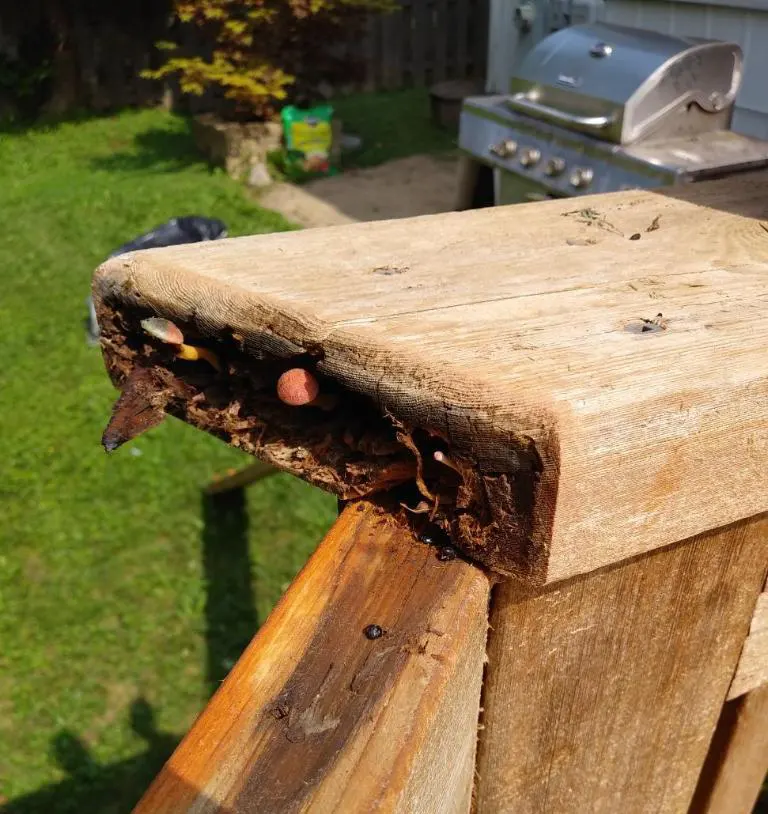
With your deck prepared and the right stain chosen, you're set to initiate the staining process. Stain application techniques can considerably impact the final outcome.
You can apply the stain using a brush, roller, or sprayer. The preferred method is brushing, as it works the stain deep into the wood fibers. For even penetration and to work the stain into the wood grain, back-brushing is recommended when using a roller or sprayer. Remember to wipe off any excess stain to prevent sticky, shiny spots.
Maintaining and Restaining Your Deck
Your deck requires regular maintenance to retain its beauty and durability, even after successful staining. Regular maintenance means a maintenance coat every 2 to 4 years, sooner on decks in full sun, and addressing the signs below as they appear.
Signs that it's time to restain your deck include:
- Fading and peeling stain
- Wood absorbing water
- Cracking wood
- Mold and mildew growth
- Difficulty cleaning
The longevity of deck stain can range from 2 to 5 years, with factors like weather conditions, maintenance, and foot traffic playing a role in this variance.
Professional Assistance for Deck Staining
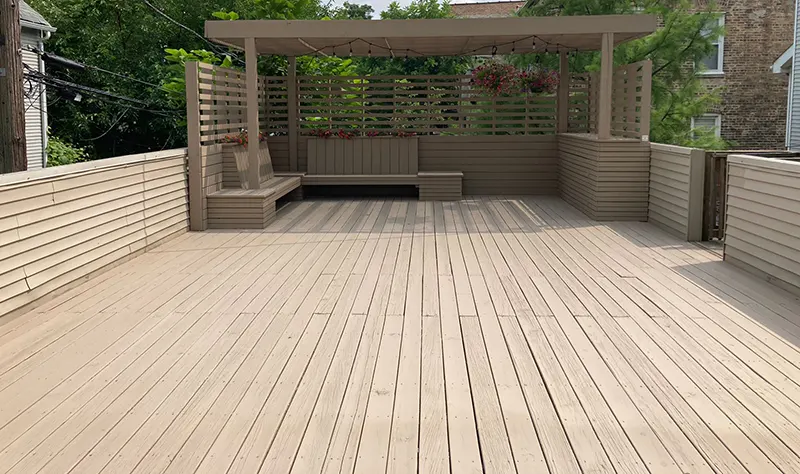
As a general rule, staining a deck can be a DIY project, but availing professional assistance guarantees a job well done, saving you time and effort when you decide to stain a new deck.
Professionals leverage their in-depth knowledge to:
- Apply quality stains and paints suitable for your deck's composition
- Address any underlying deck issues before applying finishes, contributing to the overall quality and longevity of the work performed
- Provide tailored advice on the best types of stains, colors, and sealants, ensuring a customized approach suited to your deck's requirements.
Conclusion
Various factors determine the critical aspect of staining your new deck's timing, including the wood type, weather conditions, and the preparation process. Adhering to the guidelines outlined in this post will help ensure your deck's beauty and longevity. If you're uncertain or prefer a hands-off approach, seeking professional assistance is always a sensible decision.
Frequently Asked Questions
How long should you wait to stain a new deck?
There is no fixed number of days. Most new pressure-treated decks in Chicago are ready two to four months after the build, while kiln-dried lumber and cedar are ready in a few weeks. Test it: sprinkle water on a board, and if it soaks in within a minute the wood is ready. If it beads, wait.
What happens if you stain a deck too soon?
Staining a deck too soon can result in the stain and sealant not penetrating the wood properly, leading to reduced protection from weather damage. It's important to allow the wood to dry before staining.
Does a new deck need 2 coats of stain?
Usually not. New wood that has just become ready is not very absorbent, so one thin coat of a penetrating stain is right. A second coat would sit on the surface and turn sticky. Plan a maintenance coat a year or two later instead.
How often should I restain my deck?
Every 2 to 4 years for most decks, sooner on boards in full sun and heavy traffic. The reliable signal is water: when it stops beading and soaks straight in, the deck is due.